Learn what every symbol on the card means.Full credits and sources at beakbrain.com/symbols
 WetlandPlatform nestLarge · 1.1 kg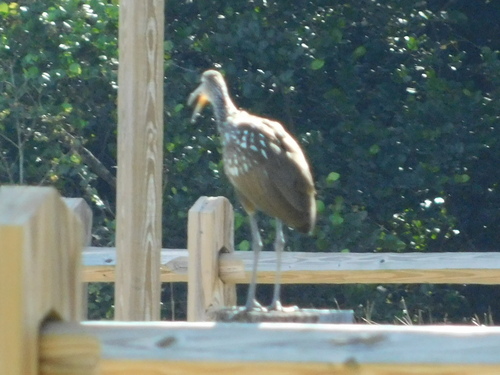


What the Limpkin sounds like


ID tip
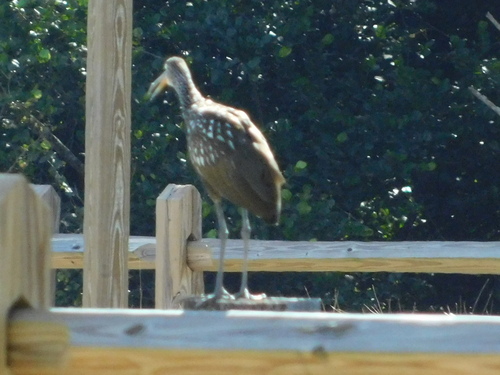
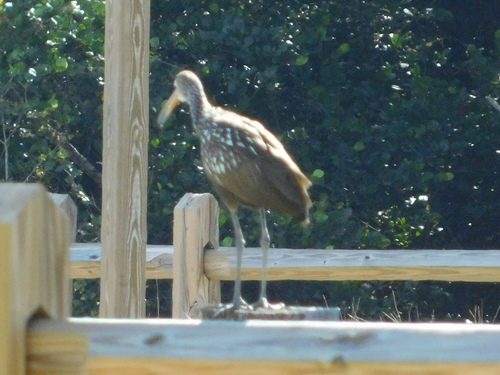
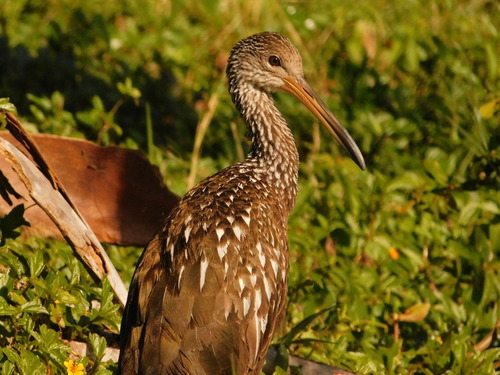
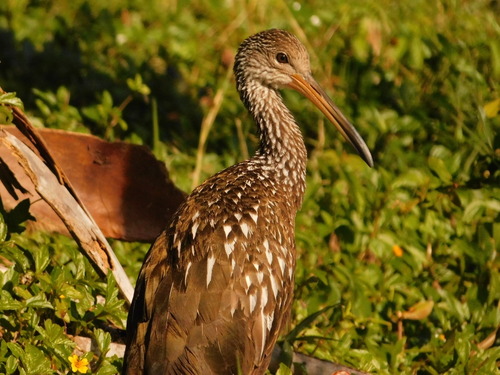
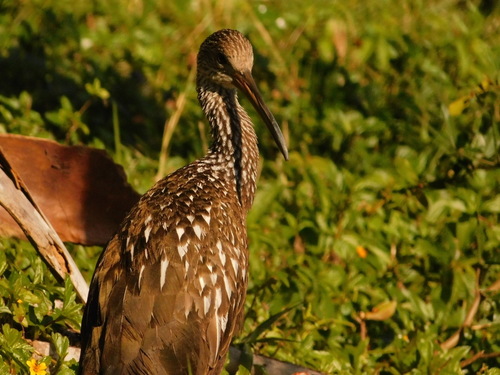
The limpkin is a somewhat large bird, 64–73 cm (25–29 in) long, with a wingspan of 101–107 cm (40–42 in). Body mass ranges from 900 to 1,300 g (2.0 to 2.9 lb), averaging 1,080 g (2.38 lb). The males are slightly larger than the females in size, but no difference in plumage is seen. Its plumage is drab—dark brown with an olive luster above. The feathers of the head, neck, wing coverts, and much of the back and underparts (except the rear) are marked with white, making the body look streaked and the head and neck light gray. It has long, dark-gray legs and a long neck.
Text from Wikipedia, licensed CC BY-SA 4.0.
When to see the Limpkin
One bar for each month, and every month is filled: this bird is recorded here in all twelve. The wide bar is January, the month with the most records.
Where to see the Limpkin
The map shades 30 countries with regular records, and 4 more in a lighter tone where the bird turns up only as a stray. Everything unshaded has no records. Countries are listed below the map.
Recorded as a rare visitor in Canada, Chile, Aruba, Guadeloupe.
About the Limpkin
The limpkin, also called carrao, courlan, and crying bird, is a large wading bird related to rails and cranes, and the only extant species in the family Aramidae. It is found mostly in wetlands in warm parts of the Americas, from Florida to northern Argentina, but has been spotted as far north as Wisconsin and Southern Ontario. It feeds on molluscs, with the diet dominated by apple snails of the genus Pomacea. Its name derives from its seeming limp when it walks.
Text adapted from Wikipedia, licensed CC BY-SA 4.0.
Learn the Limpkin in the BeakBrain App
Photo and call practice. Coming soon to iPhone and Android.
Play today's Daily BirdEvery photo and recording on this page is credited to its author under the licence shown. Spotted a problem with this page, or have a better photo? Contribute.