Learn what every symbol on the card means.Full credits and sources at beakbrain.com/symbols
 GrasslandScrapeMedium · 79 g


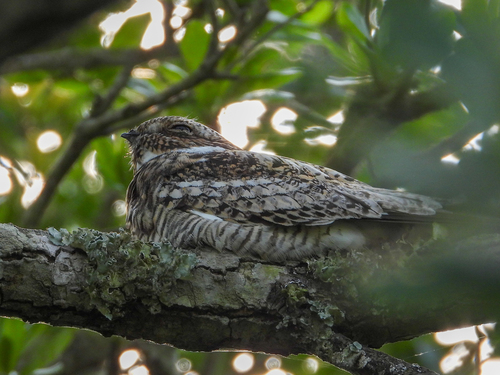
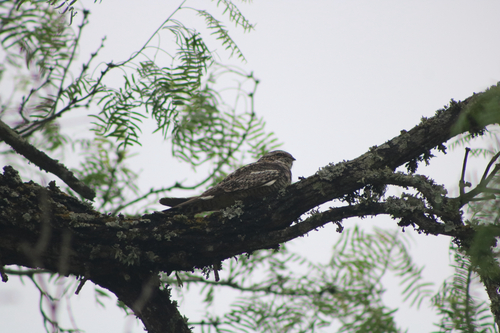
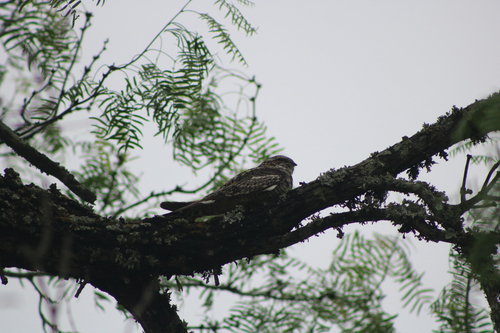
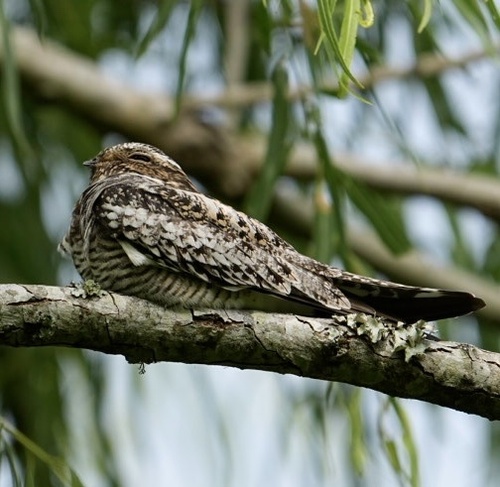
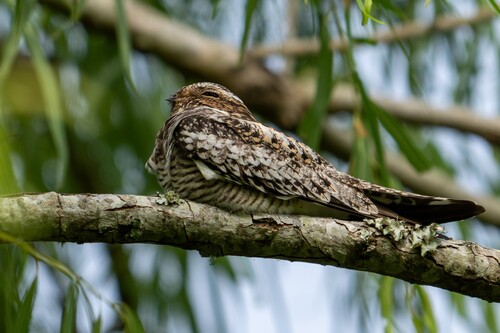
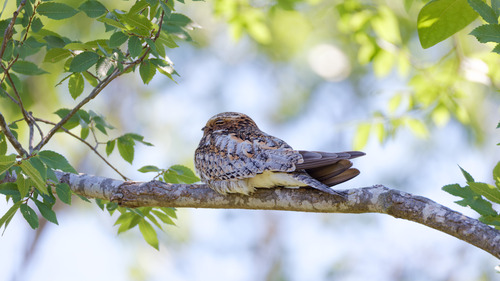
What the Common Nighthawk sounds like

ID tip
The common nighthawk is distinguished from other caprimulguids by its forked tail (includes a white bar in males); its long, unbarred, pointed wings with distinctive white patches; its lack of rictal bristles, and the key identifier – their unmistakable calls. These birds range from 21 to 25 cm (8.3 to 9.8 in) in total length and from 51 to 61 cm (20 to 24 in) in wingspan. Body mass can vary from 55 to 98 g (1.9 to 3.5 oz). Among standard measurements, the wing chord is 17.2 to 21.3 cm (6.8 to 8.4 in), the tail is 13 to 15.1 cm (5.1 to 5.9 in), the bill is 0.5 to 0.8 cm (0.20 to 0. Voice: There are no differences between the calls and song of the common nighthawk. The most conspicuous vocalization is a nasal peent or beernt during flight. Peak vocalizations are reported 30 to 45 minutes after sunset. A croaking auk auk auk is vocalized by males while in the presence of a female during courtship.
Text from Wikipedia, licensed CC BY-SA 4.0.
When to see the Common Nighthawk
One bar for each month. Filled bars are the 6 months with records; pale bars are months with none. The wide bar is May, the month with the most records.
Where to see the Common Nighthawk
The map shades 33 countries with regular records, and 9 more in a lighter tone where the bird turns up only as a stray. Everything unshaded has no records. Countries are listed below the map.
Recorded as a rare visitor in United Kingdom, Spain, France, Grenada, Jamaica, Venezuela, Ireland, St. Barthélemy, U.S. Virgin Islands.
About the Common Nighthawk
The common nighthawk or bullbat is a medium-sized crepuscular or nocturnal bird of the Americas within the nightjar (Caprimulgidae) family, whose presence and identity are best revealed by its vocalization. Typically dark, displaying cryptic colouration and intricate patterns, this bird is difficult to spot with the naked eye during the day. This bird is most conspicuous when in its buoyant and erratic flight. The most remarkable feature of this aerial insectivore is its small beak that belies the massiveness of its mouth. Some claim appearance similarities to owls.
Text adapted from Wikipedia, licensed CC BY-SA 4.0.
Easily confused with
 Lesser NighthawkChordeiles acutipennisThe lesser nighthawk is known for its large mouth and small feet.
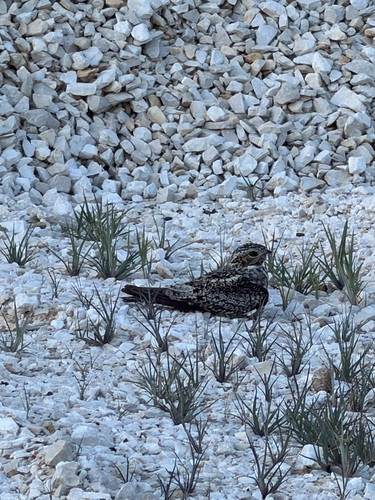 Antillean NighthawkChordeiles gundlachiiThe adults are dark with brown, grey and white patterning on the upperparts and breast; the long wings are black and show a white bar in flight.
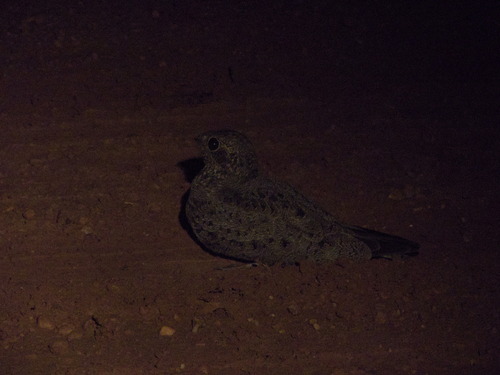 Nacunda NighthawkChordeiles nacundaThe nacunda nighthawk is not only the largest of the highly aerial nightjars known as nighthawks and the largest species of nightjar in the neotropics, it is one of the largest nightjar species in the world.
Side by side: Common Nighthawk vs Lesser Nighthawk · Antillean Nighthawk vs Common Nighthawk · Common Nighthawk vs Nacunda Nighthawk
Learn the Common Nighthawk in the BeakBrain App
Photo and call practice. Coming soon to iPhone and Android.
Play today's Daily BirdEvery photo and recording on this page is credited to its author under the licence shown. Spotted a problem with this page, or have a better photo? Contribute.