Learn what every symbol on the card means.Full credits and sources at beakbrain.com/symbols
 ShrublandCup nestTiny · 15 g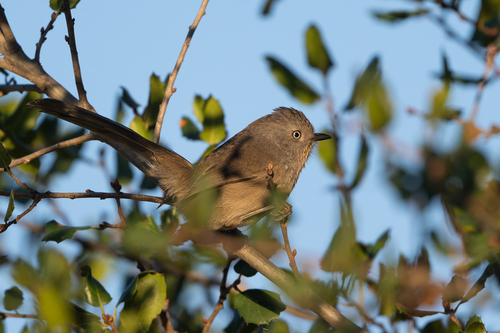

What the Wrentit sounds like


ID tip
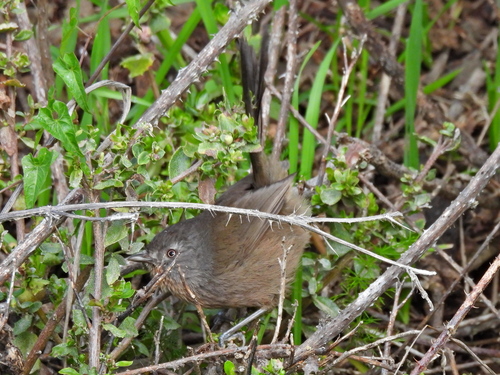
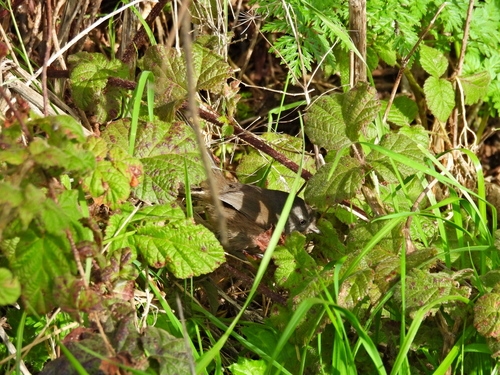
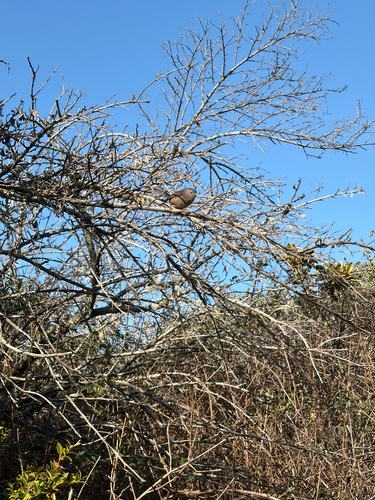
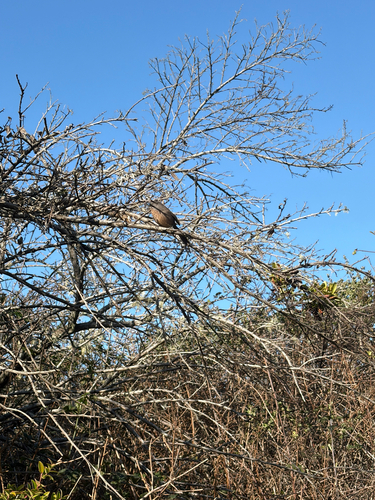
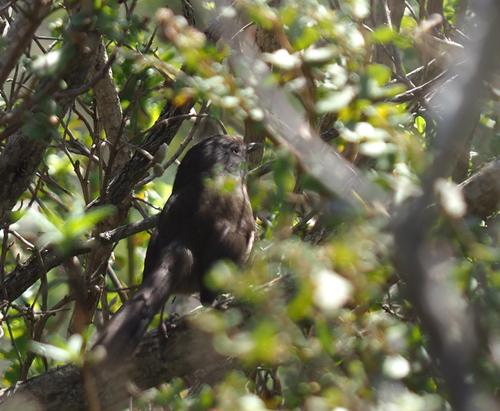
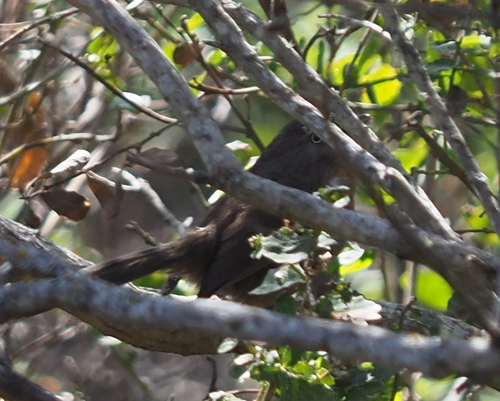
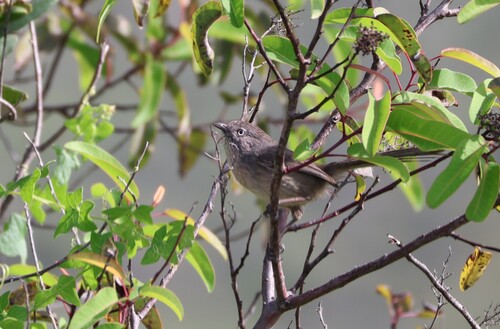
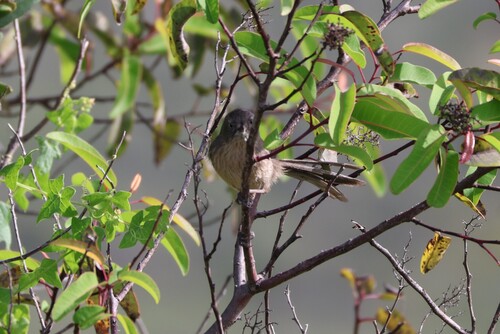
The wrentit is a small, 14–16 cm (5.5–6.3 in) bird with uniform dull olive, brown, or grayish plumage. It has short wings and a long tail often held high (hence the comparison to wrens). It has a short bill and a pale iris. Given its retiring nature and loud voice, the wrentit is more likely to be detected by its call than by sight. The distinct sound that it makes is similar to the sound of a ping-pong ball falling on the table.
Text from Wikipedia, licensed CC BY-SA 4.0.
When to see the Wrentit
One bar for each month, and every month is filled: this bird is recorded here in all twelve. The wide bar is April, the month with the most records.
Where to see the Wrentit
The map shades 2 countries with regular records, and 1 more in a lighter tone where the bird turns up only as a stray. Everything unshaded has no records. Countries are listed below the map.
Recorded as a rare visitor in Costa Rica.
About the Wrentit
The wrentit is a small bird that lives in chaparral, oak woodlands, and bushland on the western coast of North America, from Oregon south through California to northern Baja California. It is the only species in the genus Chamaea.
Text adapted from Wikipedia, licensed CC BY-SA 4.0.
Easily confused with
 Vinous-throated ParrotbillSuthora webbianaThe vinous-throated parrotbill is a relatively small and long-tailed parrotbill.
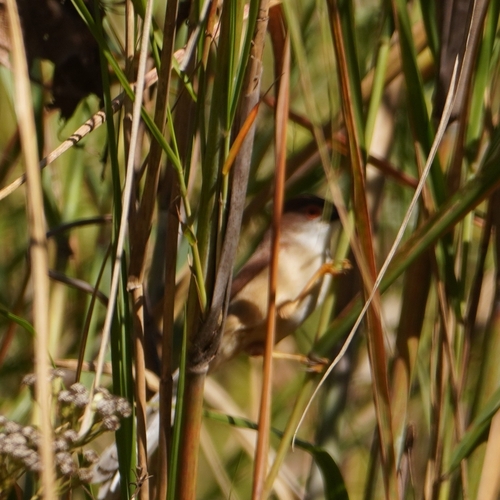 Yellow-eyed BabblerChrysomma sinenseThe yellow-eyed babbler is about 18 centimetres (7.1 in) long with a short bill and a long graduated tail.
 White-browed FulvettaFulvetta vinipectusThe white-browed fulvetta is a bird species in the family Paradoxornithidae.
Side by side: Vinous-throated Parrotbill vs Wrentit · Wrentit vs Yellow-eyed Babbler
Learn the Wrentit in the BeakBrain App
Photo and call practice. Coming soon to iPhone and Android.
Play today's Daily BirdEvery photo and recording on this page is credited to its author under the licence shown. Spotted a problem with this page, or have a better photo? Contribute.