Learn what every symbol on the card means.Full credits and sources at beakbrain.com/symbols
 ShrublandCavity nestTiny · 11 g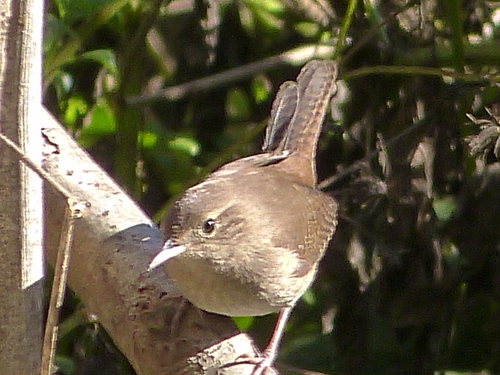

What the Northern House Wren sounds like


ID tip
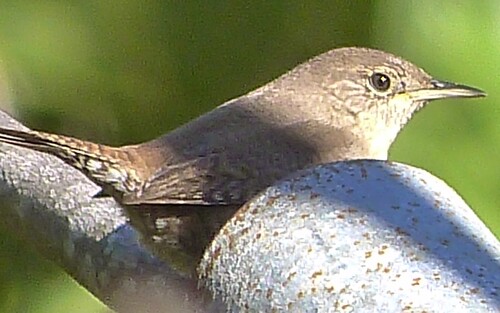
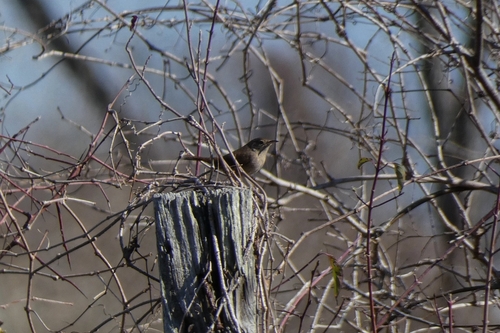
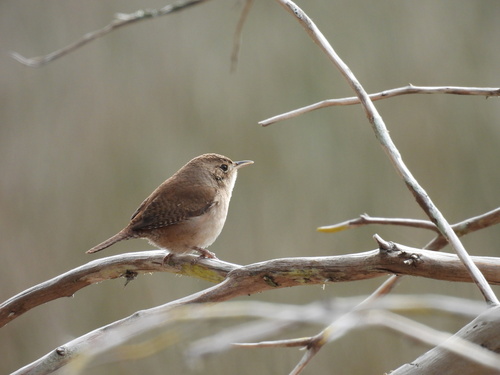
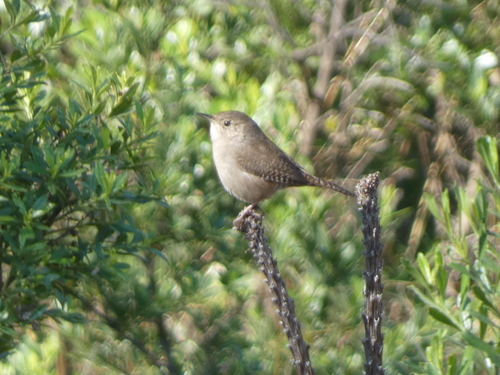
Adult northern house wrens are about 11 to 13 cm (4.3 to 5.1 in) long, with a 15 cm (5.9 in) wingspan and weigh about 10 to 12 g (0.35 to 0.42 oz). Among standard measurements, the wing chord is 4.7 to 5.3 cm (1.9 to 2.1 in), the tail is 3.9 to 4.4 cm (1.5 to 1.7 in), the culmen is 1.1 to 1.3 cm (0.43 to 0.51 in) and the tarsus is 1.6 to 1.8 cm (0.63 to 0.71 in). The subspecies vary greatly, with upper parts ranging from dull greyish-brown to rich rufescent-brown, and the underparts ranging from brown, over buff and pale grey, to pure white.
Text from Wikipedia, licensed CC BY-SA 4.0.
When to see the Northern House Wren
One bar for each month. Filled bars are the 7 months with records; pale bars are months with none. The wide bar is May, the month with the most records.
Where to see the Northern House Wren
The map shades 25 countries with regular records, and 2 more in a lighter tone where the bird turns up only as a stray. Everything unshaded has no records. Countries are listed below the map.
About the Northern House Wren
The northern house wren is a very small passerine in the wren family Troglodytidae. It is found in southern Canada, the USA and Mexico. It occurs in most suburban areas in its range. It formerly included many subspecies resident in South America and in the Caribbean that are now considered as separate species. The name troglodytes means "hole dweller", and is a reference to the bird's tendency to disappear into crevices when hunting insects or to seek shelter.
Text adapted from Wikipedia, licensed CC BY-SA 4.0.
Easily confused with
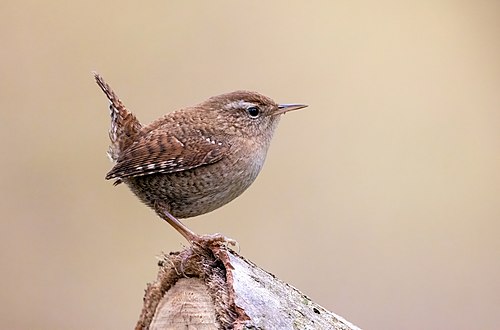 Eurasian WrenTroglodytes troglodytesThe Eurasian wren is a plump, sturdy bird with rounded wings and a short tail, which is usually held cocked up.
 Southern House WrenTroglodytes musculusThe southern house wren is a very small passerine bird in the wren family Troglodytidae.
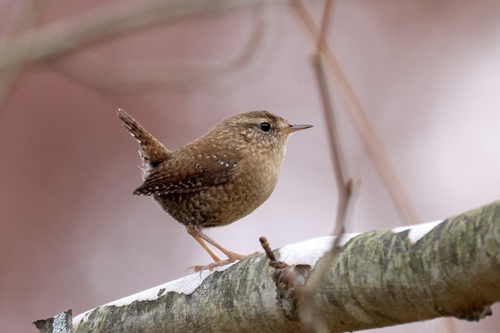 Winter WrenTroglodytes hiemalisSmall tail is often cocked above its back, and short neck gives the appearance of a small brown ball.
Side by side: Carolina Wren vs Northern House Wren · Eurasian Wren vs Northern House Wren · Northern House Wren vs Winter Wren
Learn the Northern House Wren in the BeakBrain App
Photo and call practice. Coming soon to iPhone and Android.
Play today's Daily BirdEvery photo and recording on this page is credited to its author under the licence shown. Spotted a problem with this page, or have a better photo? Contribute.