Learn what every symbol on the card means.Full credits and sources at beakbrain.com/symbols
 ForestPlatform nestMedium · 93 g


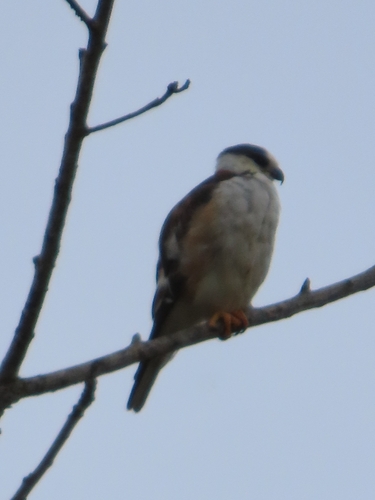
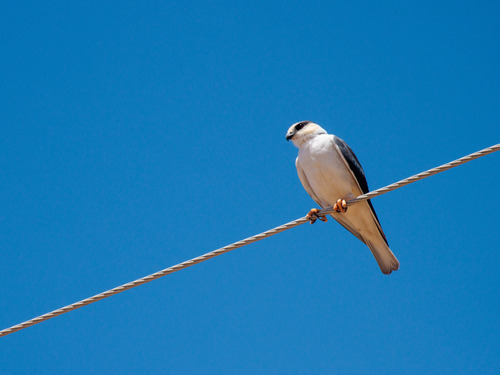
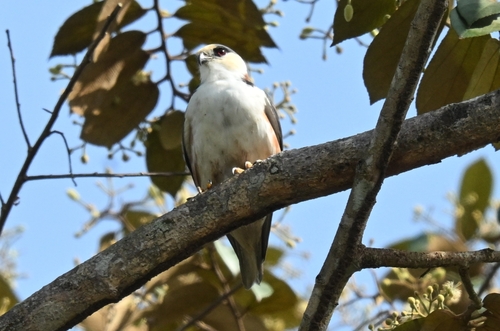
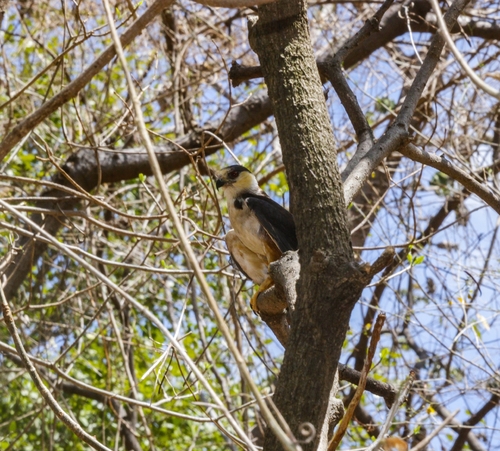
ID tip
The pearl kite is 20.3–23 cm (8.0–9.1 in) in length and weighs 80–95 g (2.8–3.4 oz). It is the smallest raptor in the Americas and one of the two smallest accipitrids in the world (besides the little sparrowhawk). The tiny hawk, another neotropical species, attains a slightly higher weight than the pearl kite. The adult has a black crown, upperparts, wing and tail, a rufous edged white collar, yellow forehead and cheeks, mainly white underparts, and yellow legs.
Text from Wikipedia, licensed CC BY-SA 4.0.
When to see the Pearl Kite
One bar for each month, and every month is filled: this bird is recorded here in all twelve. The wide bar is October, the month with the most records.
Where to see the Pearl Kite
The map shades 18 countries with regular records, and 1 more in a lighter tone where the bird turns up only as a stray. Everything unshaded has no records. Countries are listed below the map.
Recorded as a rare visitor in Uruguay.
About the Pearl Kite
The pearl kite is a very small raptor found in open savanna habitat adjacent to deciduous woodland in Central and South America. It is the only member of the genus Gampsonyx. The scientific name commemorates the English naturalist William Swainson.
Text adapted from Wikipedia, licensed CC BY-SA 4.0.
Easily confused with
 African Hawk-EagleAquila spilogasterThe African hawk-eagle has a somewhat small head but one that protrudes quite well due its quite long neck and relatively prominent beak.
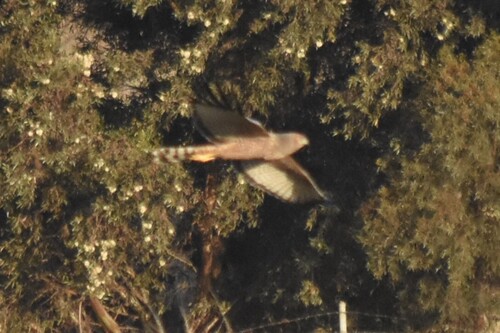 Spotted HarrierCircus assimilisThe spotted harrier is a medium-sized, slender bird of prey with adult females reaching 58–61 cm.
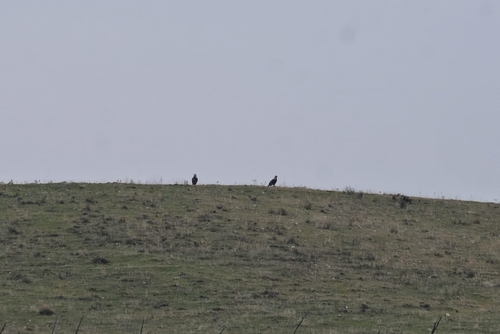 Spanish Imperial EagleAquila adalbertiThis is a large raptor and quite large eagle, broadly similar in size to its cousin, the eastern imperial eagle, which is found in a considerably different distributional range.
Side by side: African Hawk-Eagle vs Pearl Kite · Pearl Kite vs Spotted Harrier · Pearl Kite vs Spanish Imperial Eagle · Lappet-faced Vulture vs Pearl Kite
Learn the Pearl Kite in the BeakBrain App
Photo and call practice. Coming soon to iPhone and Android.
Play today's Daily BirdEvery photo and recording on this page is credited to its author under the licence shown. Spotted a problem with this page, or have a better photo? Contribute.