Learn what every symbol on the card means.Full credits and sources at beakbrain.com/symbols
 WetlandPlatform nestLarge · 643 g


ID tip
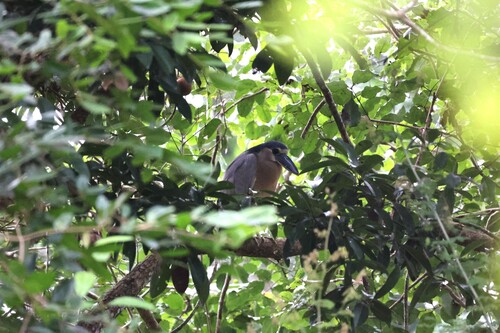
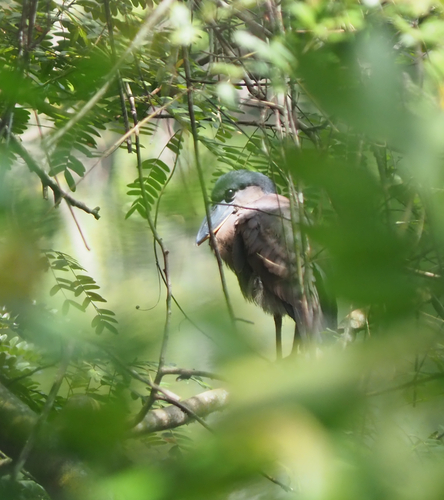
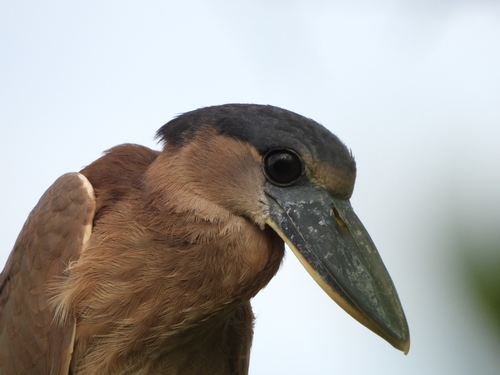
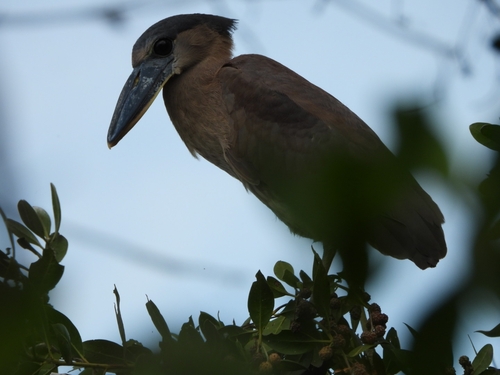
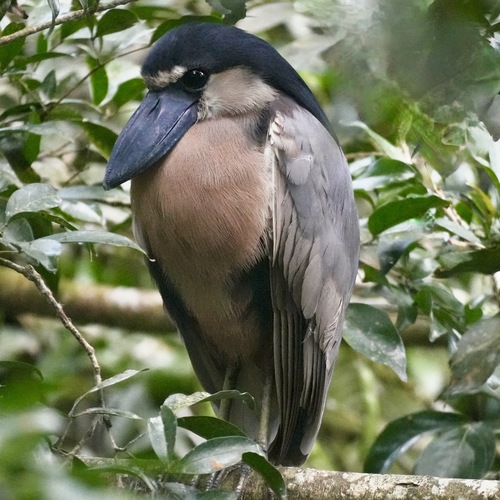
The boat-billed heron grows to about 54 cm (21 in) long. Adults are pale grey to white in color, with chestnut-colored abdomens and black flanks. The massive, broad, scoop-like bill, which gives rise to this species' name, is mainly black. This bird is also adorned with a crest which is thought to be used in mate attraction as it is larger in males. The sexes are similar in appearance, the main differences being that females are slightly smaller, grayer in appearance, and have shorter crests than males.
Text from Wikipedia, licensed CC BY-SA 4.0.
When to see the Boat-billed Heron
One bar for each month. Filled bars are the 11 months with records; pale bars are months with none. The wide bar is February, the month with the most records.
Where to see the Boat-billed Heron
The map shades 20 countries with regular records. Everything unshaded has no records. Countries are listed below the map.
About the Boat-billed Heron
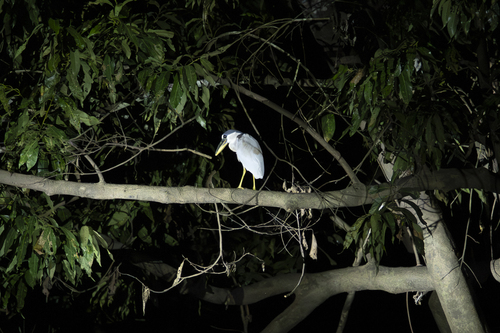
The boat-billed heron, colloquially known as the boatbill, is an atypical member of the heron family. It is the only member of the genus Cochlearius and was formerly placed in a monotypic family, the Cochleariidae. It lives in mangrove swamps from Mexico south to Peru and Brazil. It is a nocturnal bird, and breeds semi-colonially in mangrove trees, laying two to four bluish-white eggs in a twig nest.
Text adapted from Wikipedia, licensed CC BY-SA 4.0.
Easily confused with
 Goliath HeronArdea goliathIt is the world's largest living heron (though the extinct Bennu heron was larger).
 Malayan Night HeronGorsachius melanolophusThe Malayan night heron is about 48 cm (19 in) long.
 Western Reef HeronEgretta gularisThis bird has two plumage colour forms.
Side by side: Boat-billed Heron vs Goliath Heron · Boat-billed Heron vs Malayan Night Heron · Boat-billed Heron vs Western Reef Heron
Learn the Boat-billed Heron in the BeakBrain App
Photo and call practice. Coming soon to iPhone and Android.
Play today's Daily BirdEvery photo and recording on this page is credited to its author under the licence shown. Spotted a problem with this page, or have a better photo? Contribute.