Learn what every symbol on the card means.Full credits and sources at beakbrain.com/symbols
 MarinePlatform nestLarge · 1.5 kg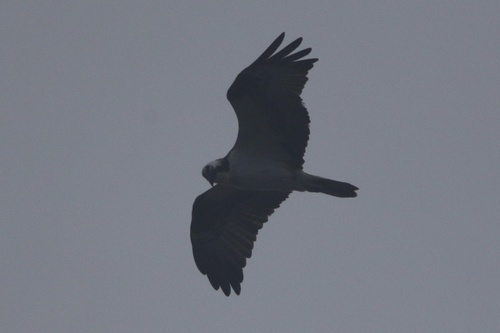
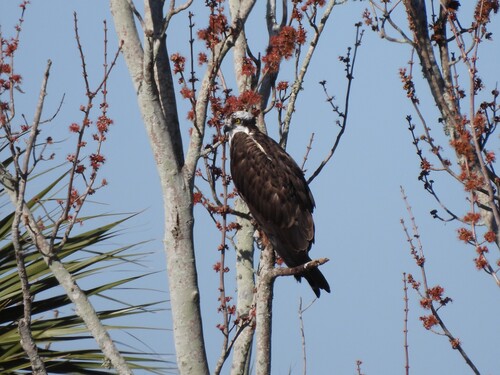
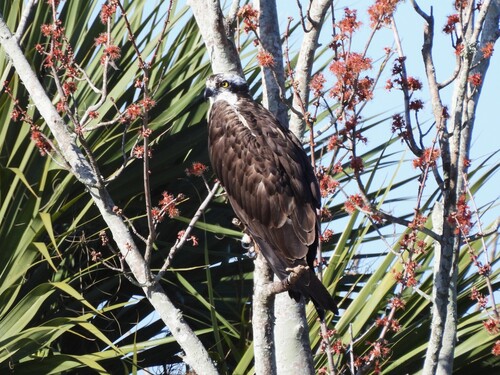


What the Osprey sounds like


ID tip
The osprey differs in several respects from other diurnal birds of prey. Its toes are of equal length, its tarsi are reticulated, and its talons are rounded, rather than grooved. The osprey and owls are the only raptors whose outer toes are reversible, allowing them to grasp their prey with two toes in front and two behind. This is particularly helpful when they grab slippery fish. The osprey is 0.9–2.1 kg (2.0–4.6 lb) in weight and 50–66 cm (20–26 in) in length with a 127–180 cm (50–71 in) wingspan. It is, thus, of similar size to the largest members of the Buteo or Falco genera.
Text from Wikipedia, licensed CC BY-SA 4.0.
When to see the Osprey
One bar for each month, and every month is filled: this bird is recorded here in all twelve. The wide bar is April, the month with the most records.
Where to see the Osprey
The map shades 198 countries with regular records, and 4 more in a lighter tone where the bird turns up only as a stray. Everything unshaded has no records. Countries are listed below the map.
Recorded as a rare visitor in Iceland, Madagascar, Mayotte, Andorra.
About the Osprey
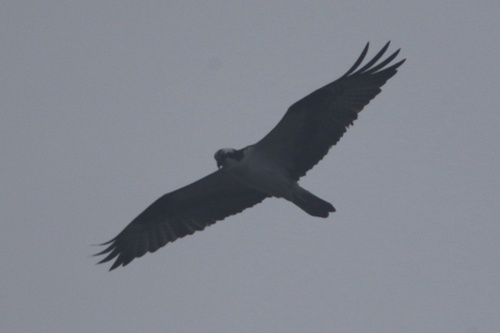
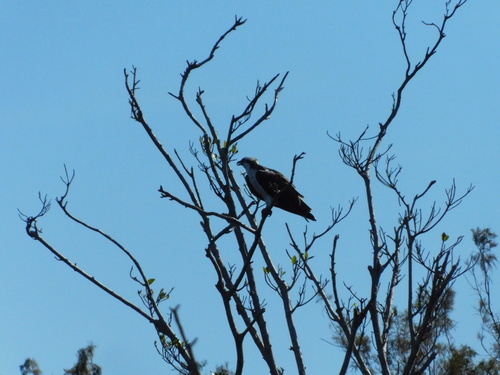
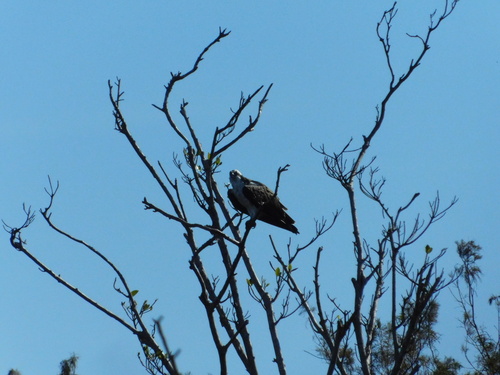
The osprey, historically known as sea hawk, river hawk, and fish hawk, is a diurnal, fish-eating bird of prey with a cosmopolitan range. It is a large raptor, reaching more than 60 cm (24 in) in length and a wingspan of 180 cm (71 in). It is brown on the upperparts and predominantly greyish on the head and underparts.
Text adapted from Wikipedia, licensed CC BY-SA 4.0.
Watch the Osprey on live cams
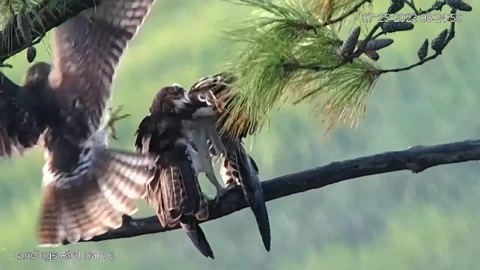 RETURNS MARCH
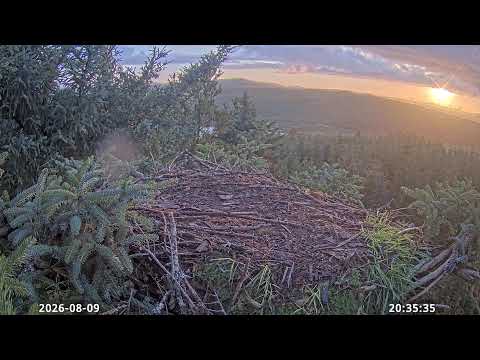 RETURNS APRIL
Browse all 118 bird cams worldwide, live and seasonal, by region and species.
Learn the Osprey in the BeakBrain App
Photo and call practice. Coming soon to iPhone and Android.
Play today's Daily BirdEvery photo and recording on this page is credited to its author under the licence shown. Spotted a problem with this page, or have a better photo? Contribute.