Learn what every symbol on the card means.Full credits and sources at beakbrain.com/symbols


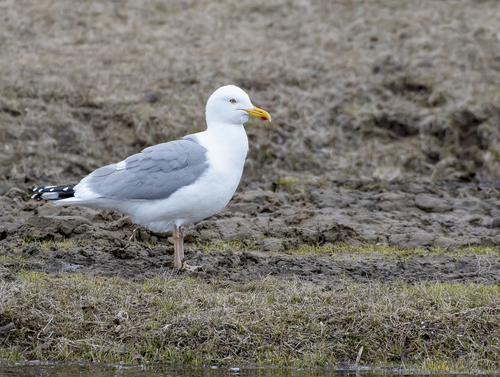
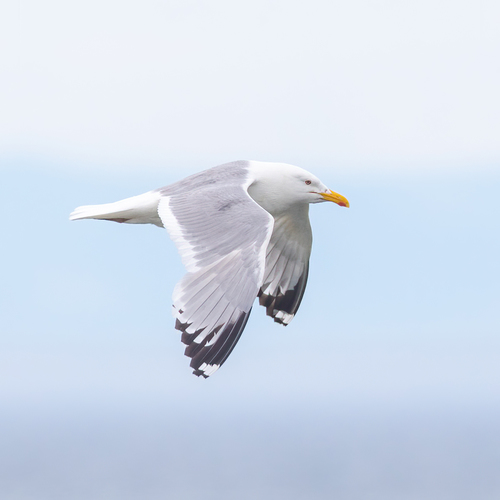
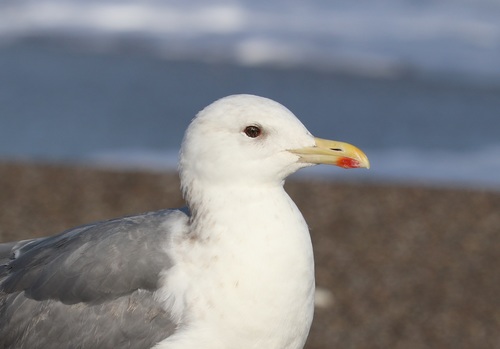
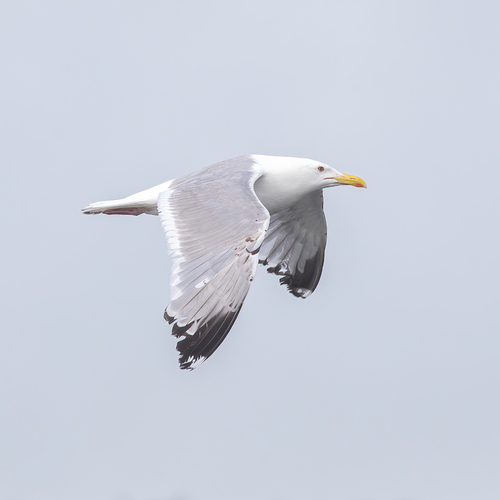
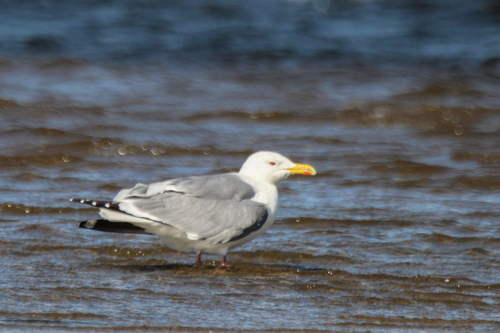
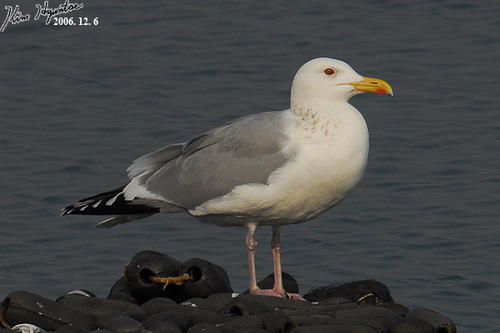
ID tip
Mongolian gull is closely similar to its relatives Caspian gull and Vega gull, and also to the European herring gull (Larus argentatus), with identification needing careful examination of the wing pattern and moult, and in young birds, the wing and tail patterns. In weight, at 1.15–1.58 kg for males and 0.85–1.1 kg for females, it is somewhat heavier than Caspian gull but about the same as Vega gull and the nominate subspecies of European herring gull.
Text from Wikipedia, licensed CC BY-SA 4.0.
When to see the Mongolian Gull
One bar for each month, and every month is filled: this bird is recorded here in all twelve. The wide bar is January, the month with the most records.
Where to see the Mongolian Gull
The map shades 199 countries with regular records, and 25 more in a lighter tone where the bird turns up only as a stray. Everything unshaded has no records. Countries are listed below the map.
Recorded as a rare visitor in Benin, BV, Guam, IO, British Virgin Islands, Indonesia, Malawi, Malaysia, Solomon Islands, Mayotte, Anguilla, Central African Republic, Kiribati, Laos, Liberia, Marshall Islands, South Sudan, Togo, St. Vincent & Grenadines, Andorra, CC, Comoros, New Caledonia, Niger, Niue.
About the Mongolian Gull
The Mongolian gull is a large gull in the large white-headed gull (Larus) complex which breeds in interior eastern Asia.
Text adapted from Wikipedia, licensed CC BY-SA 4.0.
Easily confused with
 Olrog's GullLarus atlanticusOlrog's gull is a large gull with a white head, neck, rump, breast, and belly.
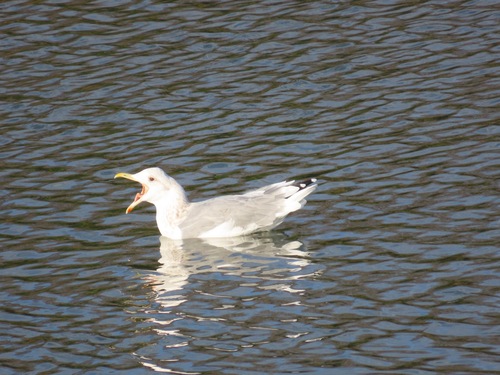 Vega GullLarus vegaeThe Vega gull is similar to the herring gull but is slightly darker grey above.
 Yellow-footed GullLarus livensAdults are similar in appearance to the western gull with a white head, dark, slate-colored back and wings, and a thick yellow bill.
Learn the Mongolian Gull in the BeakBrain App
Photo and call practice. Coming soon to iPhone and Android.
Play today's Daily BirdEvery photo and recording on this page is credited to its author under the licence shown. Spotted a problem with this page, or have a better photo? Contribute.