Learn what every symbol on the card means.Full credits and sources at beakbrain.com/symbols
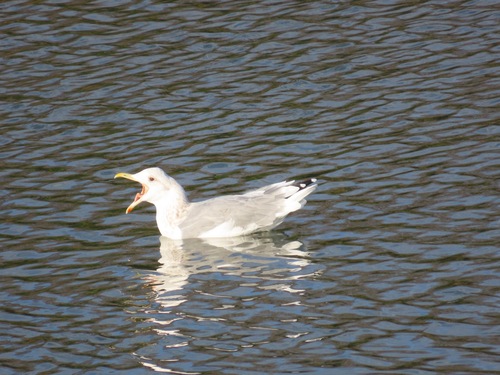
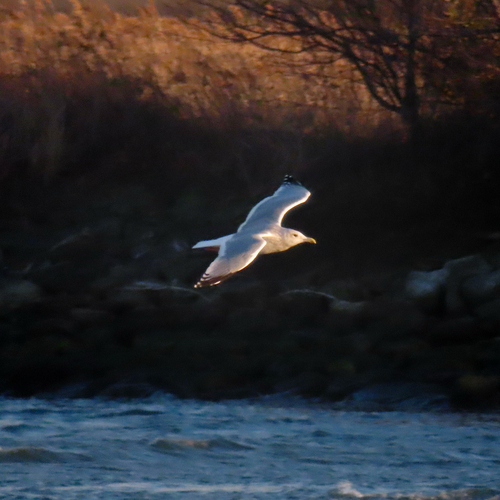
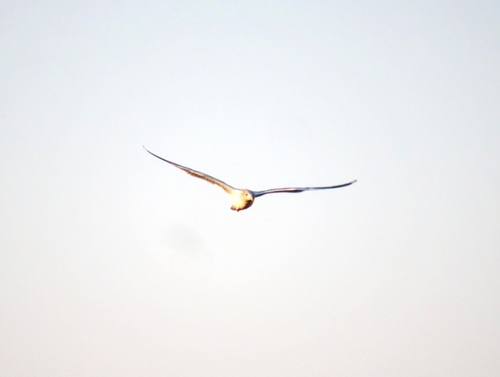
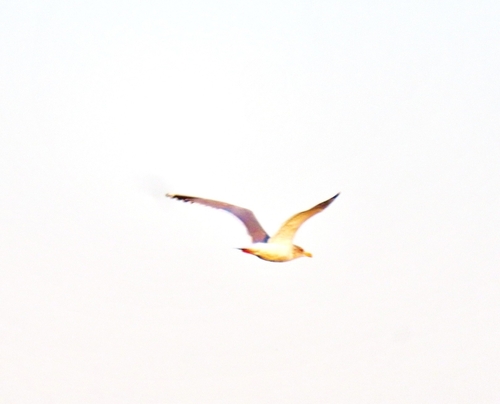
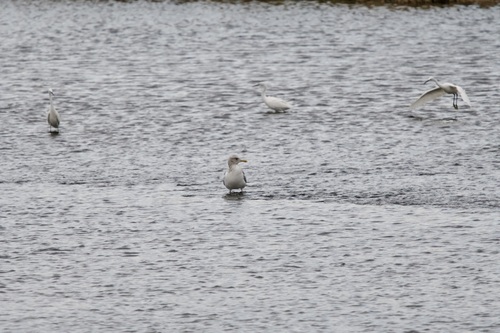
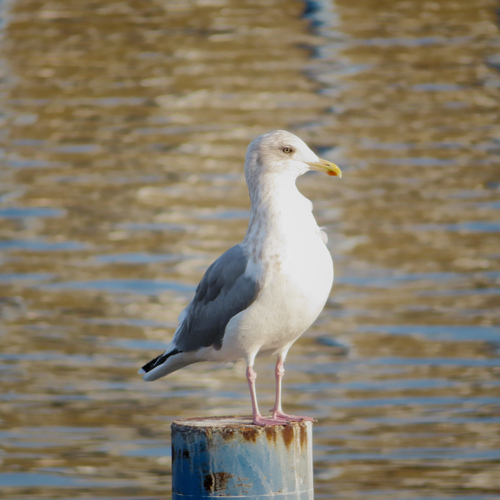
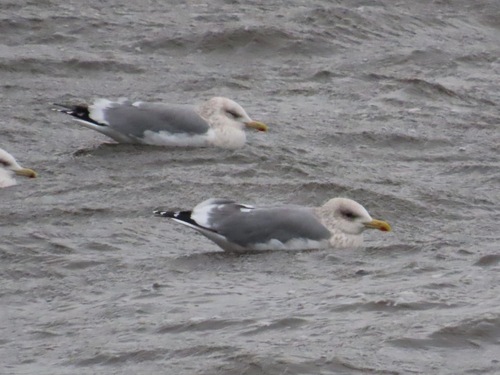


ID tip
The Vega gull is similar to the herring gull but is slightly darker grey above. The head of the Vega gull is heavily streaked with brown in winter, especially on the back and sides of the neck forming a collar. The legs are usually bright pink. First- and second-winter Vega gulls are darker than the similar Mongolian gull, notably on the crown of the head where Mongolian gulls even in first- and second-winter are a bit paler. Almost the full body of first- and second-winter Vega gulls displays darker brown flecks and streaks.
Text from Wikipedia, licensed CC BY-SA 4.0.
When to see the Vega Gull
One bar for each month. Filled bars are the 10 months with records; pale bars are months with none. The wide bar is June, the month with the most records.
Where to see the Vega Gull
The map shades 10 countries with regular records, and 1 more in a lighter tone where the bird turns up only as a stray. Everything unshaded has no records. Countries are listed below the map.
Recorded as a rare visitor in Canada.
About the Vega Gull
The Vega gull, East Siberian gull, or East Siberian herring gull is a large gull of the herring gull/lesser black-backed gull complex which breeds in Northeast Asia. Its classification is still controversial and uncertain. It is variously treated as a separate species, as a subspecies of the American herring gull or included with both the American herring gull and European herring gull in L. argentatus. The Mongolian gull Larus mongolicus was formerly regarded as a subspecies of Vega gull. It was described in 1887 from specimens collected on the 1878–1880 Vega Expedition on the Swedish ship SS Vega.
Text adapted from Wikipedia, licensed CC BY-SA 4.0.
Easily confused with
 Yellow-footed GullLarus livensAdults are similar in appearance to the western gull with a white head, dark, slate-colored back and wings, and a thick yellow bill.
 Slaty-backed GullLarus schistisagusIt is tied with the yellow-footed gull for fourth-largest gull species, measuring 55–68.5 cm (21.7–27.0 in) in length, 132–160 cm (52–63 in) in wingspan, and 1.05–1.7 kg (2.3–3.7 lb) in weight.
 Belcher's GullLarus belcheriBelcher's gull is 48–54 centimetres (19–21 in), with a wingspan of about 120 cm (47 in).
Side by side: Vega Gull vs Yellow-footed Gull · Slaty-backed Gull vs Vega Gull · Belcher's Gull vs Vega Gull · Olrog's Gull vs Vega Gull
Learn the Vega Gull in the BeakBrain App
Photo and call practice. Coming soon to iPhone and Android.
Play today's Daily BirdEvery photo and recording on this page is credited to its author under the licence shown. Spotted a problem with this page, or have a better photo? Contribute.