Learn what every symbol on the card means.Full credits and sources at beakbrain.com/symbols
 WetlandPlatform nestLarge · 463 g


ID tip
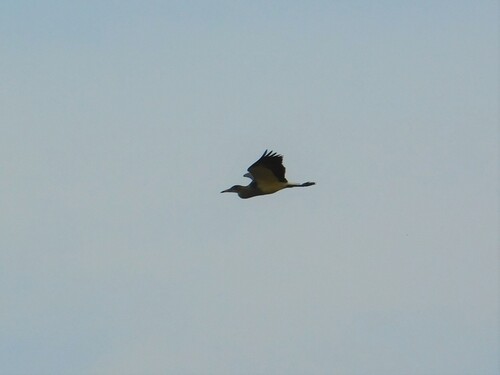
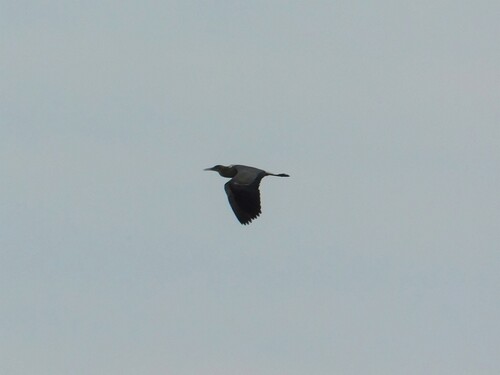
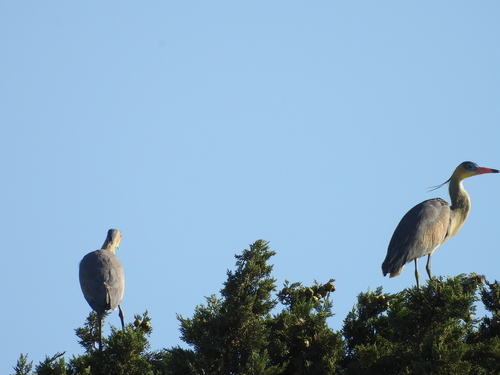
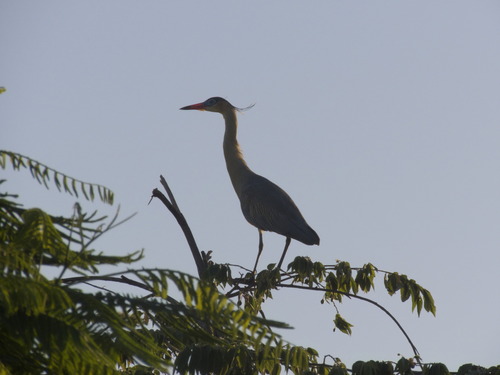
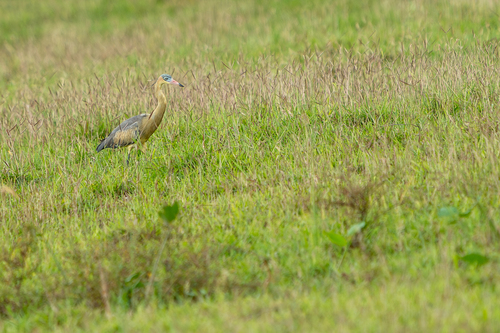
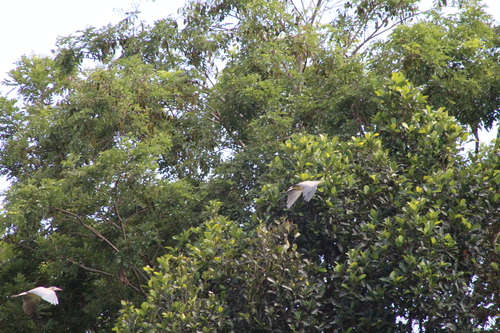
The whistling heron measures 53 to 64 cm in length and weighs 521 to 546 g. The southern subspecies is bigger but has a shorter bill in proportion to the body. The overall impression of standing birds is gray, with flying birds showing conspicuous white rear parts (lower back, belly, and tail). In both subspecies, adults' upperparts except the lower back are blue-gray.
Text from Wikipedia, licensed CC BY-SA 4.0.
When to see the Whistling Heron
One bar for each month, and every month is filled: this bird is recorded here in all twelve. The wide bar is October, the month with the most records.
Where to see the Whistling Heron
The map shades 13 countries with regular records, and 4 more in a lighter tone where the bird turns up only as a stray. Everything unshaded has no records. Countries are listed below the map.
Recorded as a rare visitor in Chile, Peru, Belize, Costa Rica.
About the Whistling Heron
The whistling heron is a medium-sized, often terrestrial heron of South America. It is the only species placed in the genus Syrigma. There are two subspecies, the southern S. s. sibilatrix and the northern S. s. fostersmithi.
Text adapted from Wikipedia, licensed CC BY-SA 4.0.
Easily confused with
 Bare-throated Tiger HeronTigrisoma mexicanumThe throat is bare and is greenish-yellow to orange in all plumages.
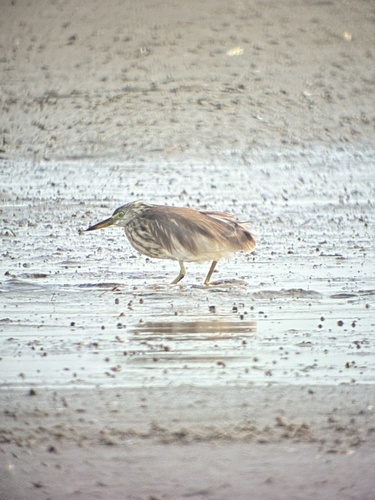 Chinese Pond HeronArdeola bacchusThe Chinese pond heron is an East Asian freshwater bird of the heron family, (Ardeidae).
 Rufescent Tiger HeronTigrisoma lineatumThe rufescent tiger heron is a medium-sized heron, measuring 26–30 in (66–76 cm) in length, with a mass between 630 and 980 g (22 and 35 oz).
Side by side: Bare-throated Tiger Heron vs Whistling Heron · Rufescent Tiger Heron vs Whistling Heron
Learn the Whistling Heron in the BeakBrain App
Photo and call practice. Coming soon to iPhone and Android.
Play today's Daily BirdEvery photo and recording on this page is credited to its author under the licence shown. Spotted a problem with this page, or have a better photo? Contribute.