Learn what every symbol on the card means.Full credits and sources at beakbrain.com/symbols
 WoodlandCup nestSmall · 54 g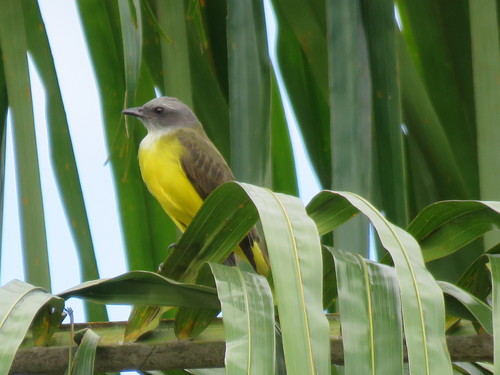
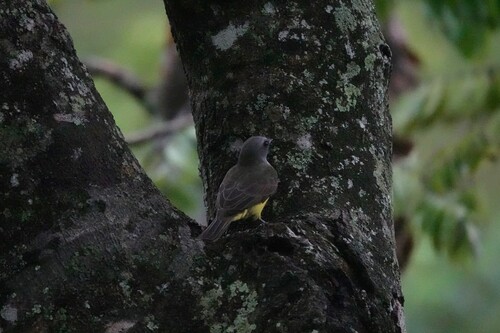
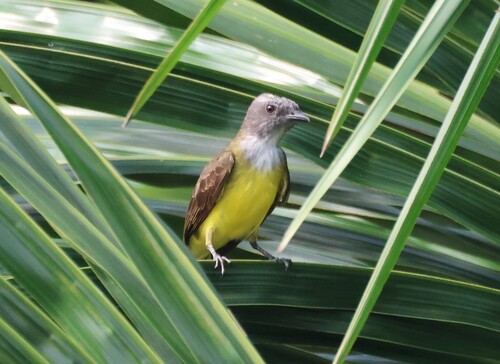
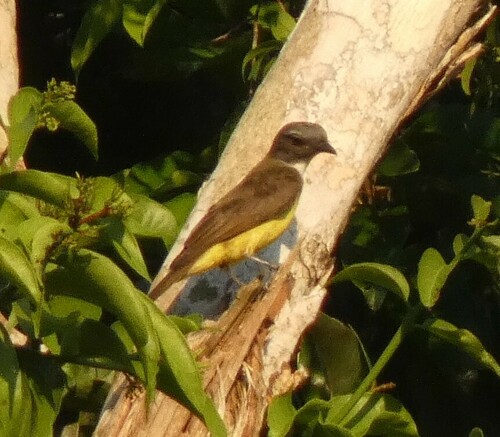
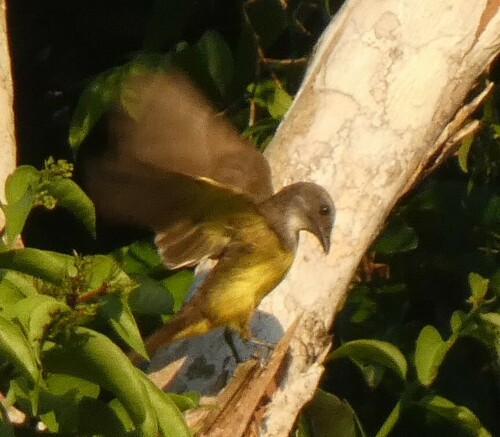

ID tip
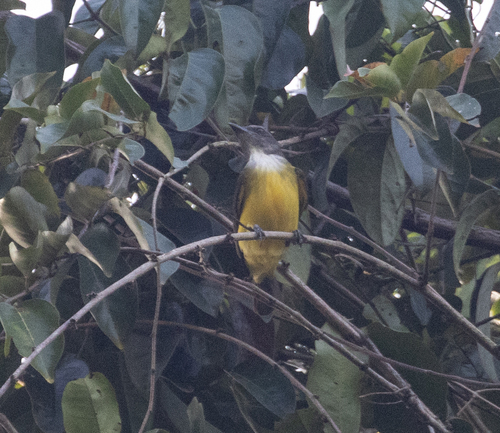
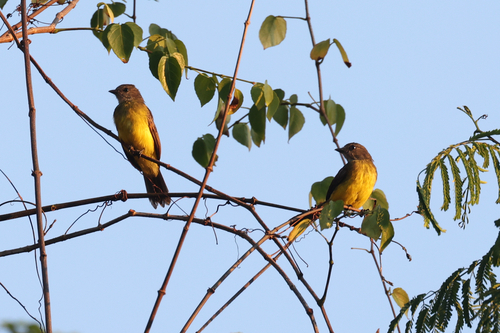
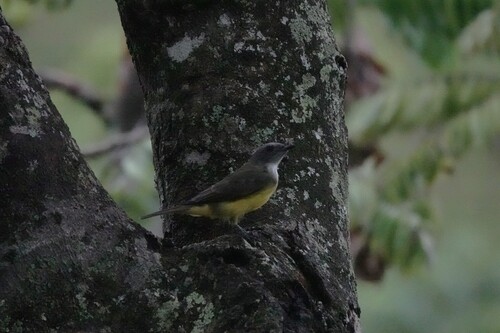
The sulphury flycatcher is about 19 to 20 cm (7.5 to 7.9 in) long and weighs 48 to 61 g (1.7 to 2.2 oz). The sexes have the same plumage. Adults have a mostly dusky head with a mostly hidden orange-yellow patch in the center of the crown, an indistinct whitish supercilium, and a blackish band from the lores to the ear coverts. Their upperparts and tail are dull olive brown. Their wings are dark brownish dusky. Their throat is whitish with blurry dark gray streaks on its sides. Their upper breast is white and the rest of their underparts bright yellow. Voice: The sulphury flycatcher is not highly vocal. One description of its song is a "high-pitched, penetrating ser of blurred trills, zhr'dek ... zhr'r're'k ... zhr'dek'dek ..., like pulses of electric energy". Another is "a shrill, buzzy DZEE'E'E djeeh-chew djeeh-chew! often in duet". One call is "abrupt, high-energy outbursts of strident, almost electrified screeches, zhrEEEEEEEE!, zhr-zhrEEEEEEEEE!".
Text from Wikipedia, licensed CC BY-SA 4.0.
When to see the Sulphury Flycatcher
One bar for each month, and every month is filled: this bird is recorded here in all twelve. The wide bar is January, the month with the most records.
Where to see the Sulphury Flycatcher
The map shades 10 countries with regular records, and 1 more in a lighter tone where the bird turns up only as a stray. Everything unshaded has no records. Countries are listed below the map.
Recorded as a rare visitor in Costa Rica.
About the Sulphury Flycatcher
The sulphury flycatcher is a passerine bird of the family Tyrannidae, the tyrant flycatchers. It is found on Trinidad and in every mainland South American country except Argentina, Chile, Paraguay, and Uruguay.
Text adapted from Wikipedia, licensed CC BY-SA 4.0.
Easily confused with
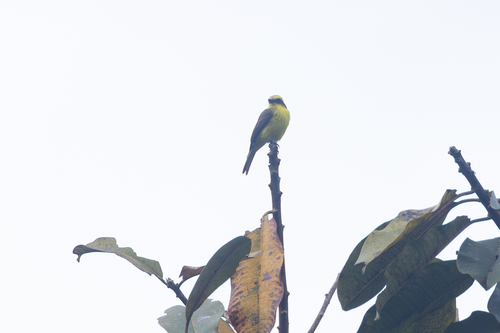 Lemon-browed FlycatcherConopias cinchonetiThe lemon-browed flycatcher is 15.5 to 16 cm (6.1 to 6.3 in) long.
 Fulvous-faced Scrub TyrantEuscarthmus fulvicepsThe fulvous-faced scrub tyrant is 10 to 12 cm (3.9 to 4.7 in) long and weighs 5.3 to 7.6 g (0.19 to 0.27 oz).
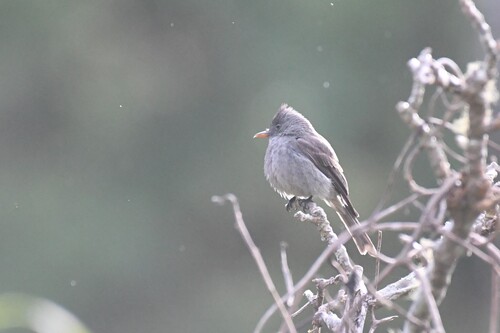 Dark PeweeContopus lugubrisThe dark pewee is a small passerine bird in the tyrant flycatcher family.
Side by side: Fulvous-faced Scrub Tyrant vs Sulphury Flycatcher
Learn the Sulphury Flycatcher in the BeakBrain App
Photo and call practice. Coming soon to iPhone and Android.
Play today's Daily BirdEvery photo and recording on this page is credited to its author under the licence shown. Spotted a problem with this page, or have a better photo? Contribute.