Learn what every symbol on the card means.Full credits and sources at beakbrain.com/symbols
 WetlandPlatform nestLarge · 340 g


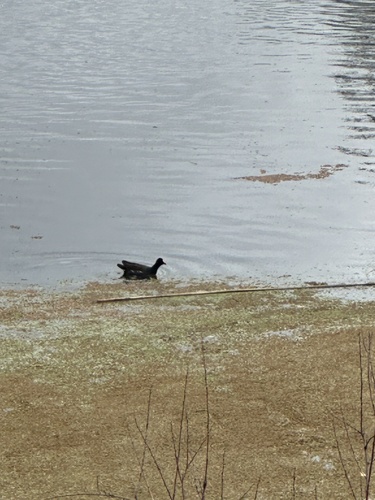
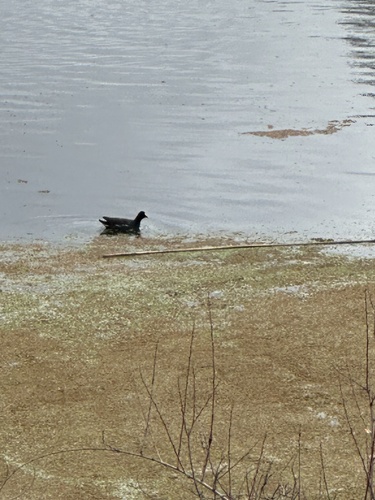
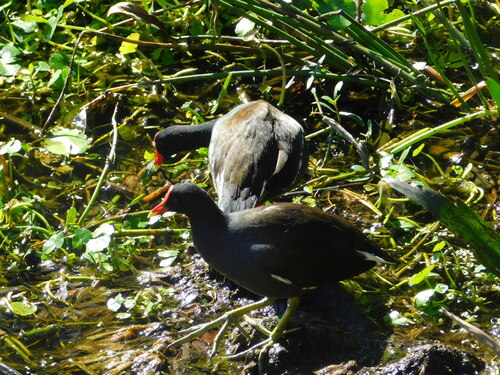
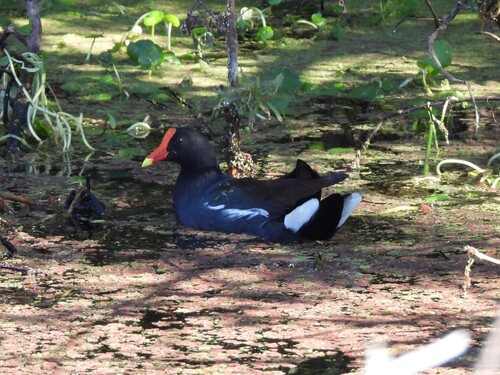

What the Common Moorhen sounds like


ID tip
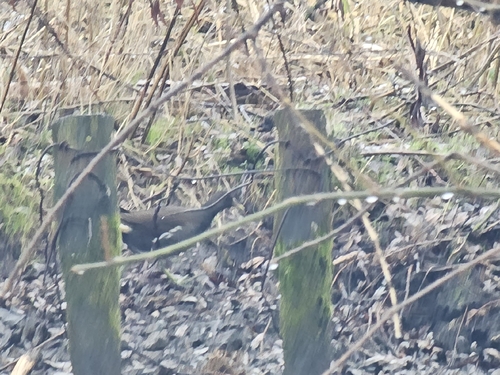
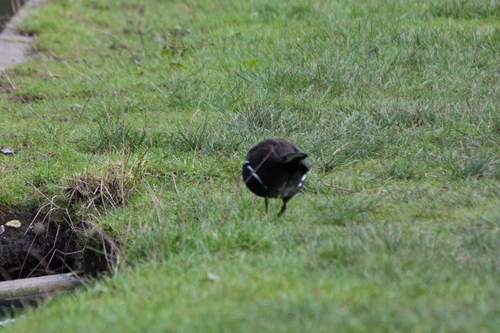
The moorhen is a distinctive species, with predominantly black and brown plumage, with the exception of a white under-tail, white streaks on the flanks, yellow legs and a red frontal shield. The bill is red with a yellow tip. The young are browner and lack the red shield. The frontal shield of the adult has a rounded top and fairly parallel sides; the tailward margin of the red unfeathered area is a smooth waving line. The subspecies G. c. meridionalis is smaller than the nominate, has slaty blue-grey upperwing coverts and lacks the olive wash. Subspecies G. c. orientalis is similar to G. c.
Text from Wikipedia, licensed CC BY-SA 4.0.
When to see the Common Moorhen
One bar for each month, and every month is filled: this bird is recorded here in all twelve. The wide bar is January, the month with the most records.
Where to see the Common Moorhen
The map shades 199 countries with regular records, and 7 more in a lighter tone where the bird turns up only as a stray. Everything unshaded has no records. Countries are listed below the map.
Recorded as a rare visitor in Australia, Central African Republic, Burundi, Equatorial Guinea, Guinea, Sierra Leone, Monaco.
About the Common Moorhen
The common moorhen, also known as the waterhen, is a bird species in the rail family (Rallidae). It is distributed across many parts of the Old World, across Africa, Europe, and Asia. It lives around well-vegetated marshes, ponds, canals and other wetlands. The species is not found in the polar regions or many tropical rainforests; generally it is one of the most common Old World rail species, together with the Eurasian coot in some regions.
Text adapted from Wikipedia, licensed CC BY-SA 4.0.
Easily confused with
 Dusky MoorhenGallinula tenebrosaThe dusky moorhen is a medium-sized bird, slightly smaller than the purple swamphen.
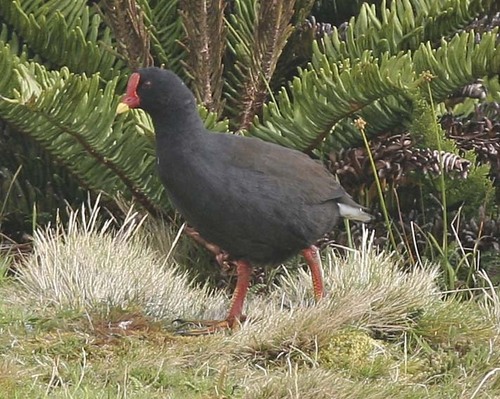 Gough MoorhenGallinula comeriThe Gough moorhen is a medium-sized, almost flightless bird that is similar to the common moorhen, but is smaller, stockier, and has shorter wings.
 Common GallinuleGallinula galeataThe common gallinule is a bird in the family Rallidae.
Side by side: Common Moorhen vs Dusky Moorhen
Learn the Common Moorhen in the BeakBrain App
Photo and call practice. Coming soon to iPhone and Android.
Play today's Daily BirdEvery photo and recording on this page is credited to its author under the licence shown. Spotted a problem with this page, or have a better photo? Contribute.