Learn what every symbol on the card means.Full credits and sources at beakbrain.com/symbols
 ForestCup nestMedium · 61 g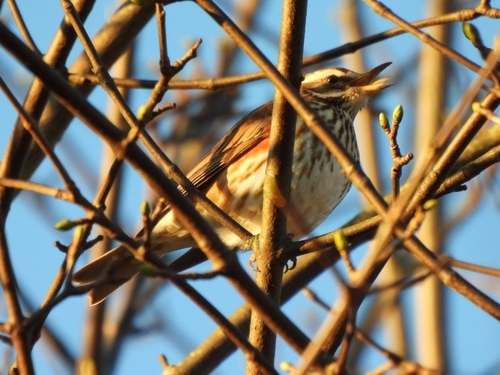

What the Redwing sounds like


ID tip
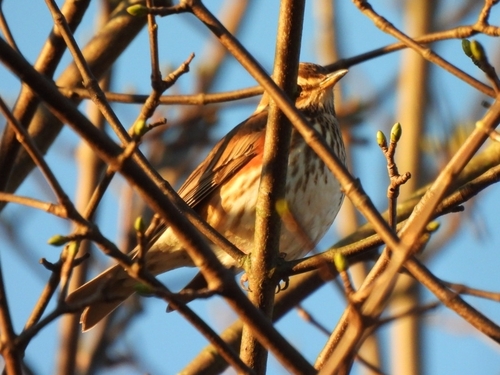
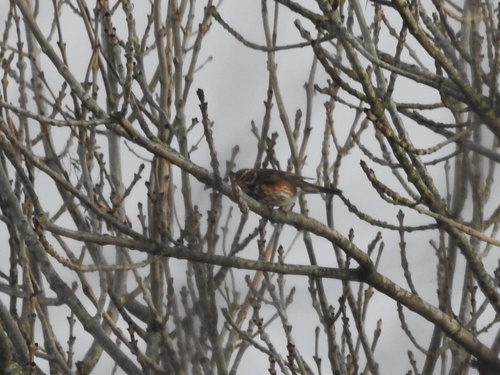
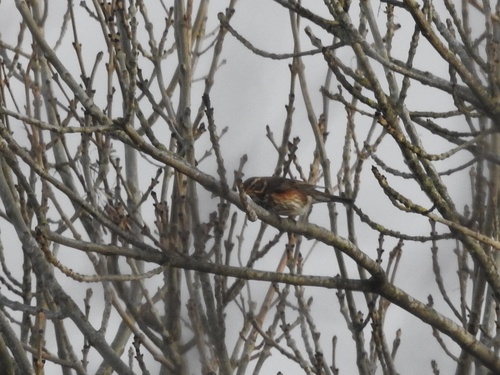
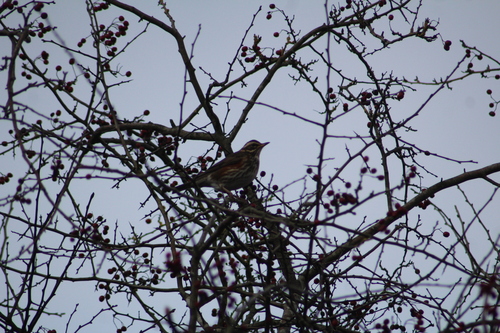
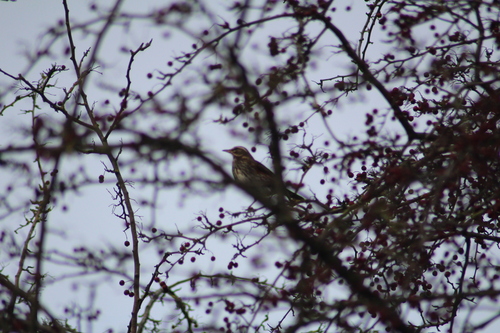
The thrush is 20–24 cm long with a wingspan of 33–34.5 cm and a weight of 50–75 g. The sexes are similar, with plain brown backs and with dark brown spots on the white underparts. The most striking identification features are the red flanks and underwing, and the creamy white stripe above the eye. Adults moult between June and September, which means that some start to replace their flight feathers while still feeding young. Voice: The male has a varied short song, and a whistling flight call. Redwings show a distinct dialectic variation in song, having a considerable similarity in song patterns among birds within a local population. The Redwing song consists of a number of introductory elements of descending or ascending frequency.
Text from Wikipedia, licensed CC BY-SA 4.0.
When to see the Redwing
One bar for each month. Filled bars are the 11 months with records; pale bars are months with none. The wide bar is June, the month with the most records.
Where to see the Redwing
The map shades 65 countries with regular records, and 10 more in a lighter tone where the bird turns up only as a stray. Everything unshaded has no records. Countries are listed below the map.
Recorded as a rare visitor in United States, Canada, Libya, Tajikistan, Egypt, Tunisia, Kyrgyzstan, Uzbekistan, Gibraltar, Liechtenstein.
About the Redwing
The redwing is a bird in the thrush family, Turdidae, native to Europe and the Palearctic, slightly smaller than the related song thrush.
Text adapted from Wikipedia, licensed CC BY-SA 4.0.
Easily confused with
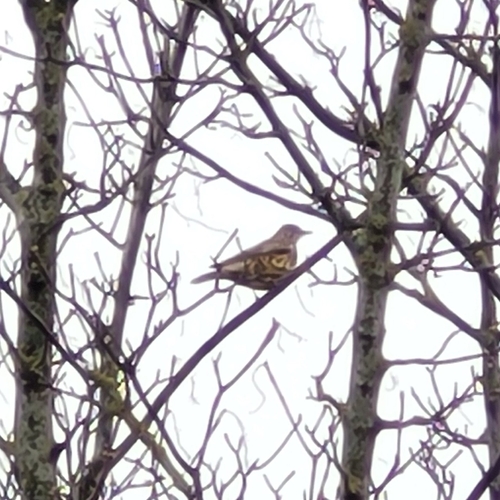 Mistle ThrushTurdus viscivorusThe mistle thrush is the largest thrush native to Europe.
 Clay-colored ThrushTurdus grayiIn general appearance and habits it resembles other Turdus thrushes such as the American robin.
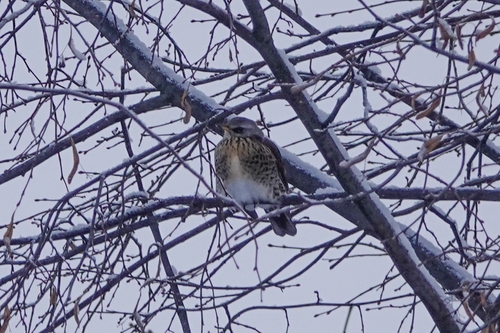 FieldfareTurdus pilarisThe fieldfare is easily recognisable with its slate-grey head, nape and rump, dark brown back, blackish tail and boldly speckled breast.
Side by side: Common Blackbird vs Redwing · Redwing vs Song Thrush · Fieldfare vs Redwing · Redwing vs Wood Thrush · Mistle Thrush vs Redwing · Clay-colored Thrush vs Redwing
Learn the Redwing in the BeakBrain App
Photo and call practice. Coming soon to iPhone and Android.
Play today's Daily BirdEvery photo and recording on this page is credited to its author under the licence shown. Spotted a problem with this page, or have a better photo? Contribute.