Learn what every symbol on the card means.Full credits and sources at beakbrain.com/symbols
 ForestCup nestMedium · 117 g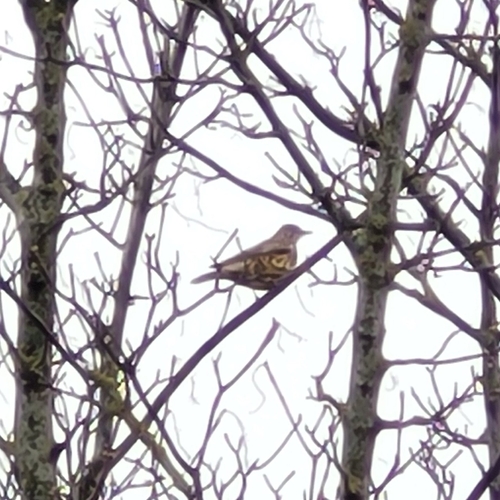
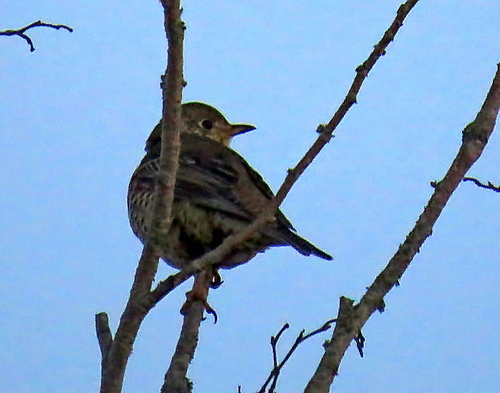

What the Mistle Thrush sounds like


ID tip
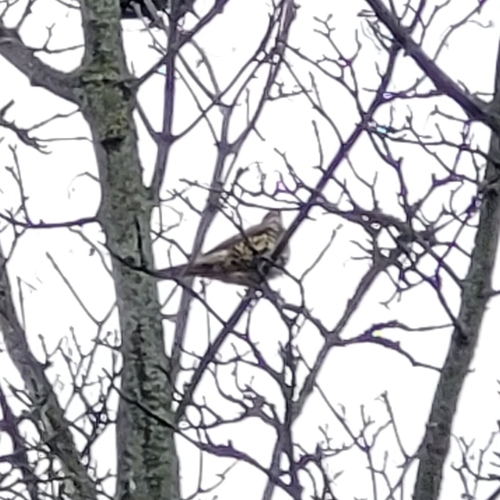
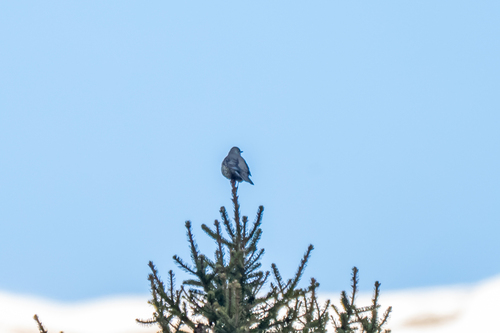
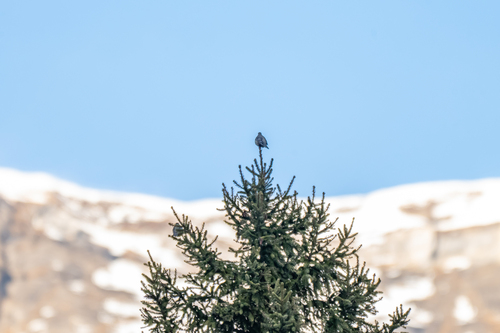
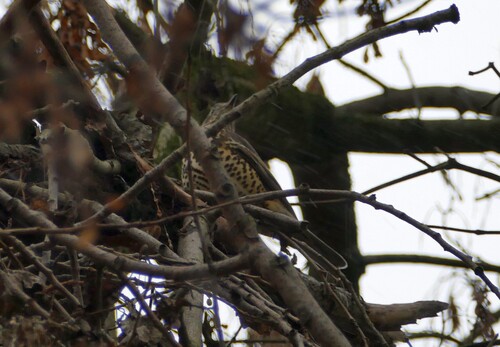
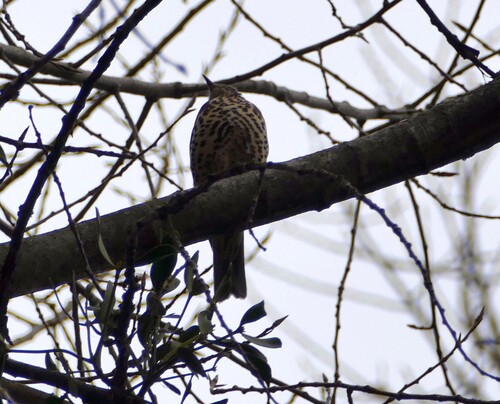
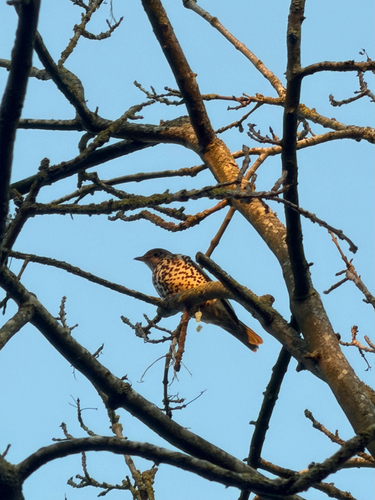
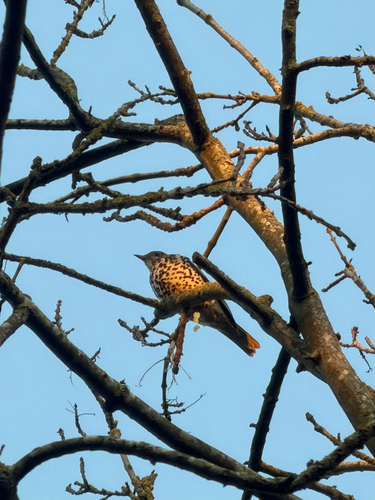
The mistle thrush is the largest thrush native to Europe. The nominate subspecies measures 27–28 cm (11–11 in) in length, with a 45 cm (18 in) wingspan. It weighs 93 to 167 g (3.3 to 5.9 oz), with an average of around 130 g (4.6 oz). It has a stocky upright posture when on the ground. It has pale grey-brown upperparts, the chin and throat are greyish-white, and the yellowish-buff breast and off-white belly are marked with round black spots. The spotting becomes denser on the lower chest. The long tail has white tips on the outer feathers, and the underwing coverts are white. Voice: The male mistle thrush has a loud melodious song with fluted whistles, sounding like chewee-trewuu ... trureetruuruu or similar, repeated three to six times, and used to advertise his territory, attract a mate and maintain the pair bond. The tone resembles that of the song thrush or blackbird, but compared to its relatives the mistle thrush's repertoire is less varied and the delivery is slower.
Text from Wikipedia, licensed CC BY-SA 4.0.
When to see the Mistle Thrush
One bar for each month. Filled bars are the 11 months with records; pale bars are months with none. The wide bar is April, the month with the most records.
Where to see the Mistle Thrush
The map shades 70 countries with regular records, and 6 more in a lighter tone where the bird turns up only as a stray. Everything unshaded has no records. Countries are listed below the map.
Recorded as a rare visitor in Canada, Japan, Jordan, Oman, Monaco, Malta.
About the Mistle Thrush
The mistle thrush is a bird common to much of Europe, temperate Asia and North Africa. It is a year-round resident in a large part of its range, but northern and eastern populations migrate south for the winter, often in small flocks. It is a large thrush with pale grey-brown upper parts, a greyish-white chin and throat, and black spots on its pale yellow and off-white under parts. The sexes are similar in plumage, and its three subspecies show only minimal differences. The male has a loud, far-carrying song which is delivered even in wet and windy weather, earning the bird the old name of stormcock. Historically, the name was also sometimes spelled "missel thrush".
Text adapted from Wikipedia, licensed CC BY-SA 4.0.
Easily confused with
 Clay-colored ThrushTurdus grayiIn general appearance and habits it resembles other Turdus thrushes such as the American robin.
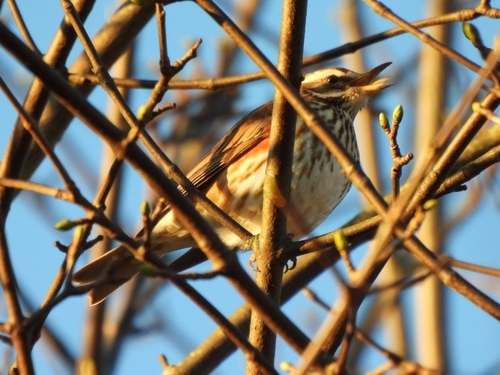 RedwingTurdus iliacusThe thrush is 20–24 cm long with a wingspan of 33–34.5 cm and a weight of 50–75 g.
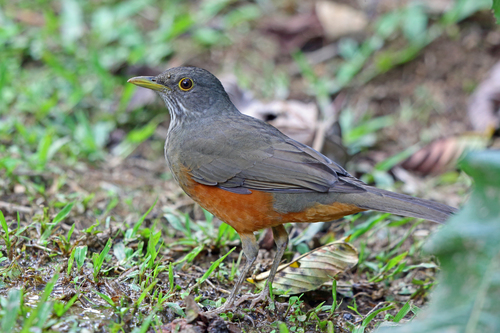 Rufous-bellied ThrushTurdus rufiventrisThis species is named after its distinctive reddish-orange underparts.
Side by side: Mistle Thrush vs Song Thrush · Fieldfare vs Mistle Thrush · Mistle Thrush vs Redwing · Clay-colored Thrush vs Mistle Thrush · Mistle Thrush vs Rufous-bellied Thrush
Learn the Mistle Thrush in the BeakBrain App
Photo and call practice. Coming soon to iPhone and Android.
Play today's Daily BirdEvery photo and recording on this page is credited to its author under the licence shown. Spotted a problem with this page, or have a better photo? Contribute.