Learn what every symbol on the card means.Full credits and sources at beakbrain.com/symbols
 GrasslandPlatform nestHuge · 2.6 kg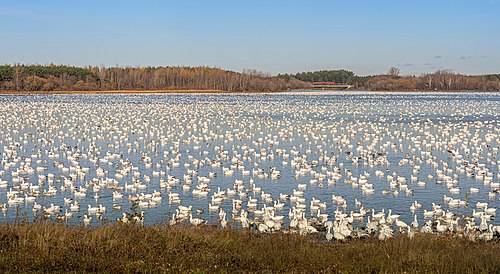


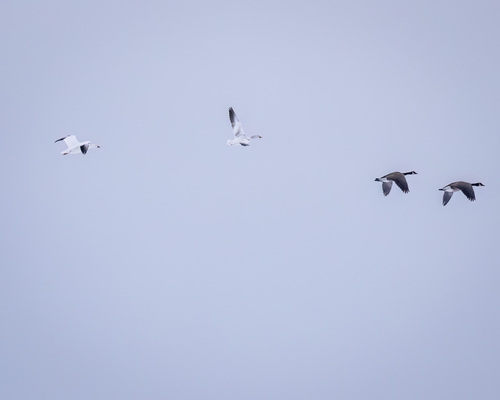
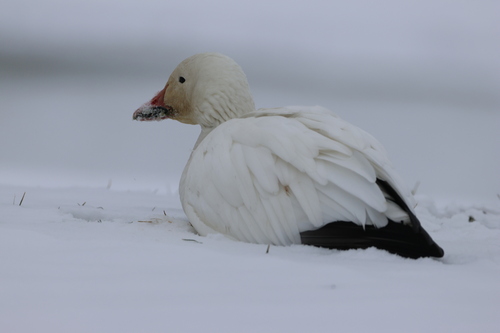
ID tip
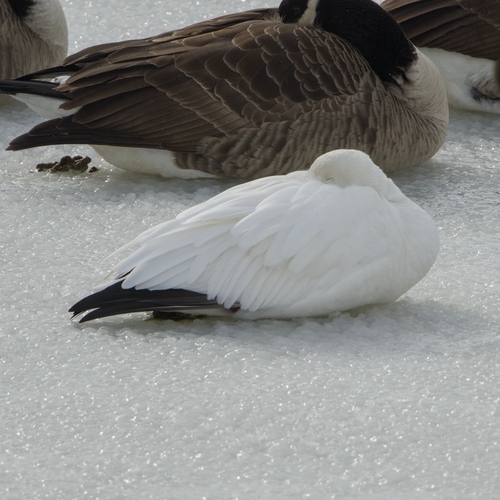
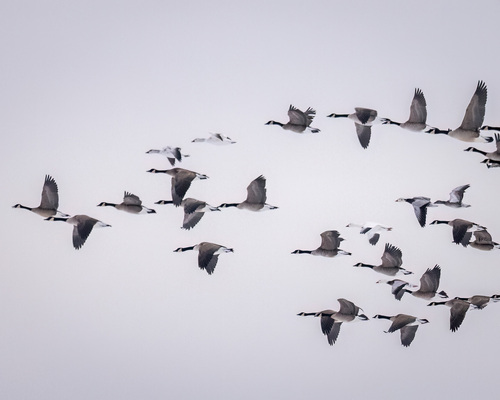
The snow goose has two color plumage morphs, white (snow) or gray/blue (blue), thus the common description as "snows" and "blues". White-morph birds are white except for black wing tips, but blue-morph geese have bluish-gray plumage replacing the white except on the head, neck, and tail tip. The immature blue phase is drab or slate-gray with little to no white on the head, neck, or belly. Both snow and blue phases have rose-red feet and legs and pink bills with black tomia ("cutting edges"), giving them a black "grin patch". These colors distinguish the species from white domesticated geese.
Text from Wikipedia, licensed CC BY-SA 4.0.
When to see the Snow Goose
One bar for each month. Filled bars are the 8 months with records; pale bars are months with none. The wide bar is January, the month with the most records.
Where to see the Snow Goose
The map shades 36 countries with regular records, and 4 more in a lighter tone where the bird turns up only as a stray. Everything unshaded has no records. Countries are listed below the map.
Recorded as a rare visitor in Finland, Italy, Morocco, Ukraine.
About the Snow Goose
The snow goose is a species of goose native to North America. Both white and dark morphs exist, the latter often known as blue goose. Its name derives from the typically white plumage. The species was previously placed in the genus Chen, but is now typically included in the "gray goose" genus Anser.
Text adapted from Wikipedia, licensed CC BY-SA 4.0.
Easily confused with
 Greater White-fronted GooseAnser albifronsGreater white-fronted geese are 64–81 cm (25–32 in) in length, have a 130–165 cm (51–65 in) wingspan, and weigh 1.93–3.31 kg (4 lb 4 oz – 7 lb 5 oz).
 Pink-footed GooseAnser brachyrhynchusIt is a medium-sized goose, 60–75 cm (24–30 in) long, the wingspan 135–170 cm (53–67 in), and weighing 1.8–3.4 kg (4.0–7.5 lb).
 Ross's GooseAnser rossiiRoss's goose has a rounded head above a short neck.
Side by side: Greylag Goose vs Snow Goose · Egyptian Goose vs Snow Goose · Greater White-fronted Goose vs Snow Goose · Pink-footed Goose vs Snow Goose · Ross's Goose vs Snow Goose
Watch the Snow Goose on live cams
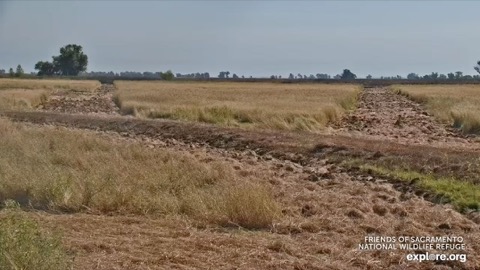 LIVE
LIVEBrowse all 118 bird cams worldwide, live and seasonal, by region and species.
Learn the Snow Goose in the BeakBrain App
Photo and call practice. Coming soon to iPhone and Android.
Play today's Daily BirdEvery photo and recording on this page is credited to its author under the licence shown. Spotted a problem with this page, or have a better photo? Contribute.