Learn what every symbol on the card means.Full credits and sources at beakbrain.com/symbols
 GrasslandScrapeSmall · 23 g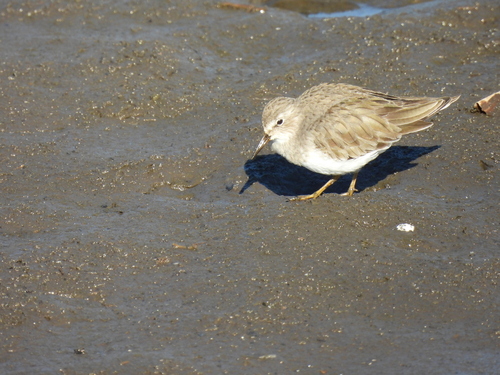
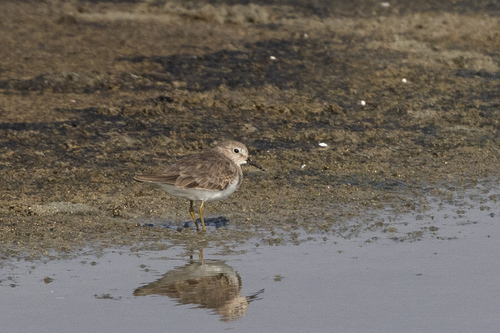
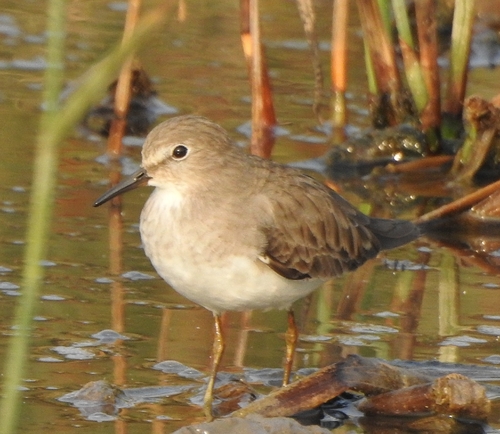
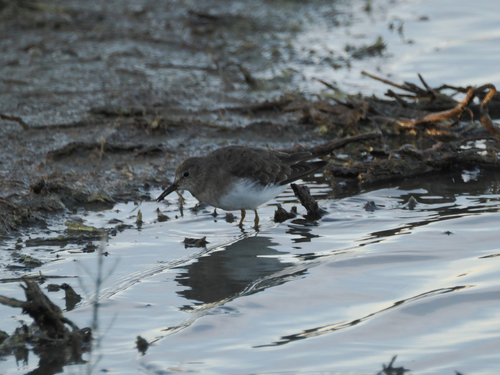
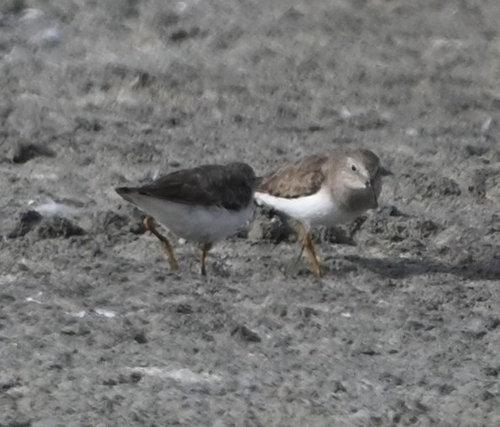


What the Temminck's Stint sounds like


ID tip
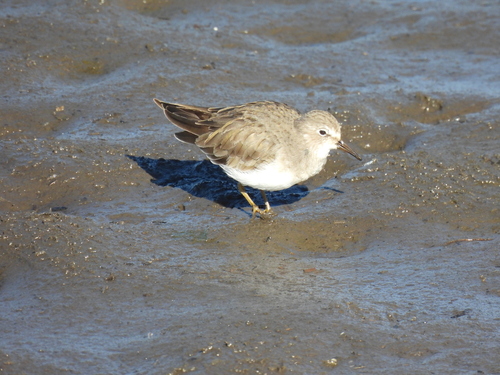
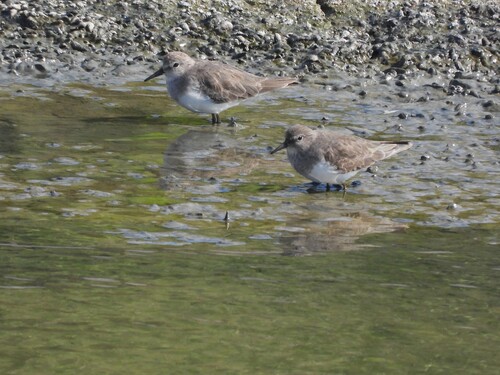
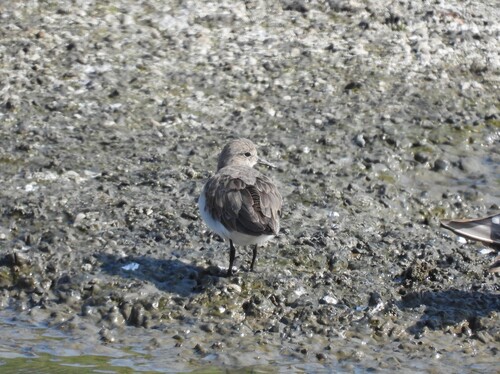
These birds are very small waders, at 13.5–15 cm (5.3–5.9 in) length. They are similar in size to the little stint (Calidris minuta) but shorter legged and longer winged. The legs are dull yellowish or brown, and the outer tail feathers white, in contrast to little stint's black legs and grey outer tail feathers. This is a rather drab wader, with mainly plain brown upperparts and head, and underparts white apart from a darker breast. The breeding adult has some brighter rufous and/or blackish mantle feathers to relieve the generally undistinguished appearance.
Text from Wikipedia, licensed CC BY-SA 4.0.
When to see the Temminck's Stint
One bar for each month. Filled bars are the 10 months with records; pale bars are months with none. The wide bar is May, the month with the most records.
Where to see the Temminck's Stint
The map shades 98 countries with regular records, and 13 more in a lighter tone where the bird turns up only as a stray. Everything unshaded has no records. Countries are listed below the map.
Recorded as a rare visitor in United States, Canada, Australia, Iceland, Luxembourg, Eritrea, Somalia, Niger, Nigeria, Seychelles, Lebanon, Macao SAR China, North Macedonia.
About the Temminck's Stint
Temminck's stint is a small wader native to the Old World. This bird's common name and Latin binomial commemorate the Dutch naturalist Coenraad Jacob Temminck. The genus name is from Ancient Greek kalidris or skalidris, a term used by Aristotle for some grey-coloured waterside birds.
Text adapted from Wikipedia, licensed CC BY-SA 4.0.
Easily confused with
 Purple SandpiperCalidris maritimaAdults have short yellow legs and a medium thin dark bill with a yellow base.
 White-rumped SandpiperCalidris fuscicollisThe white-rumped sandpiper is a relatively small bird measuring only 15–18 cm (5.9–7.1 in), with a wingspan of 36–38 cm (14–15 in).
 Baird's SandpiperCalidris bairdiiAdults have black legs and a short, straight, thin dark bill.
Side by side: Stilt Sandpiper vs Temminck's Stint · Baird's Sandpiper vs Temminck's Stint · Temminck's Stint vs White-rumped Sandpiper · Purple Sandpiper vs Temminck's Stint · Red-necked Stint vs Temminck's Stint
Learn the Temminck's Stint in the BeakBrain App
Photo and call practice. Coming soon to iPhone and Android.
Play today's Daily BirdEvery photo and recording on this page is credited to its author under the licence shown. Spotted a problem with this page, or have a better photo? Contribute.