Learn what every symbol on the card means.Full credits and sources at beakbrain.com/symbols
 CoastalPlatform nestMedium · 118 g
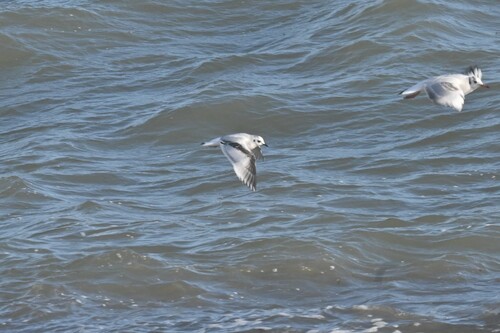


ID tip
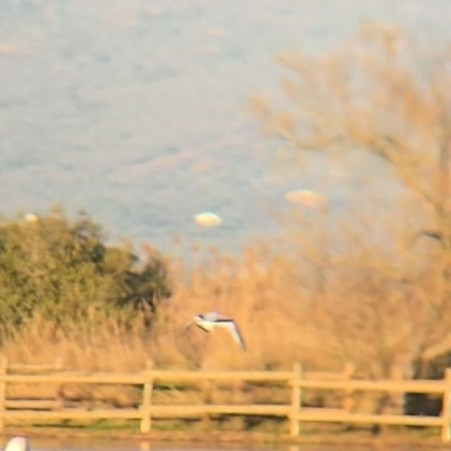
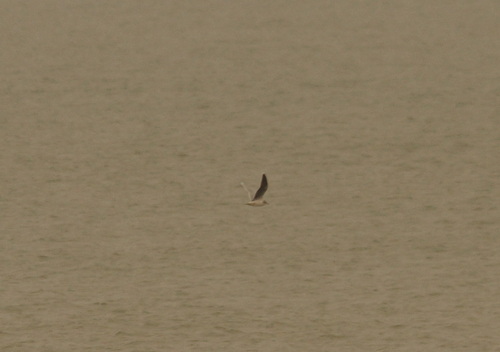
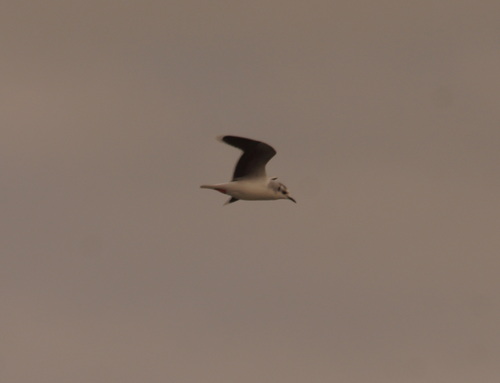
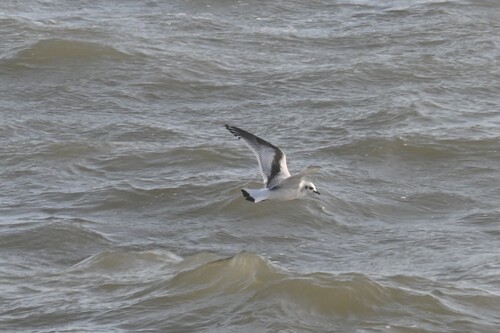
The little gull has a body length of 24 to 28 cm (9.4 to 11.0 in) and a wing span of 62 to 69 cm (24 to 27 in), making it the smallest gull species in the world. The adults in breeding plumage have a black hood, dark red bill, bright red legs, and sometimes a rosy flush to the underside. In non-breeding plumage the adults have a black cap and spot on the ear, white underparts, a black bill and the red on the legs is duller. In all plumages the adults have a pale grey back and upperwings with white primaries contrasting with very dark grey underwing.
Text from Wikipedia, licensed CC BY-SA 4.0.
When to see the Little Gull
One bar for each month. Filled bars are the 8 months with records; pale bars are months with none. The wide bar is May, the month with the most records.
Where to see the Little Gull
The map shades 68 countries with regular records, and 10 more in a lighter tone where the bird turns up only as a stray. Everything unshaded has no records. Countries are listed below the map.
Recorded as a rare visitor in India, Japan, Algeria, Mexico, Ecuador, French Guiana, Guatemala, St. Pierre & Miquelon, Luxembourg, Greenland.
About the Little Gull
The little gull is a species of gull belonging to the family Laridae which is mainly found in the Palearctic with some small colonies in North America. It breeds on freshwater lakes and marshes, and spends winters at sea. It is the smallest species of gull in the world, and the only species in the monospecific genus Hydrocoloeus.
Text adapted from Wikipedia, licensed CC BY-SA 4.0.
Easily confused with
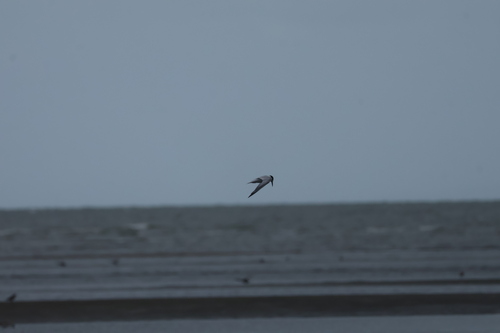 Little TernSternula albifronsThis is a small tern, 21–25 cm long with a 41–47 cm wingspan.
 Greater Crested TernThalasseus bergiiThe greater crested tern is a large tern with a long (5.4–6.5 cm or 2.1–2.6 in) yellow bill, black legs, and a glossy black crest that is noticeably shaggy at its rear.
 Glaucous GullLarus hyperboreusThis is a large and powerful gull, second-largest of all gull species and very pale in all plumage, with no black on either the wings or the tail.
Side by side: Little Gull vs Little Tern · Greater Crested Tern vs Little Gull · Glaucous Gull vs Little Gull
Learn the Little Gull in the BeakBrain App
Photo and call practice. Coming soon to iPhone and Android.
Play today's Daily BirdEvery photo and recording on this page is credited to its author under the licence shown. Spotted a problem with this page, or have a better photo? Contribute.