Learn what every symbol on the card means.Full credits and sources at beakbrain.com/symbols
 CoastalPlatform nestHuge · 1.5 kg


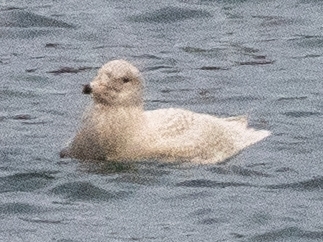
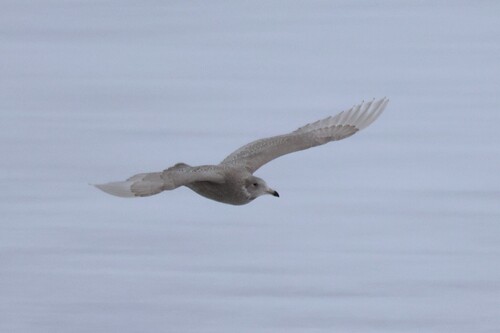
ID tip
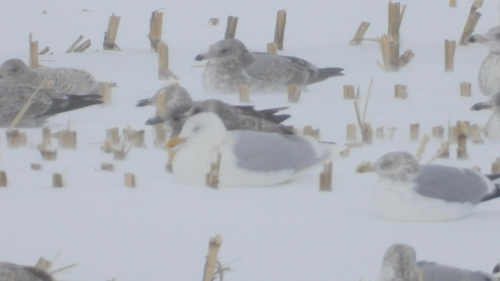
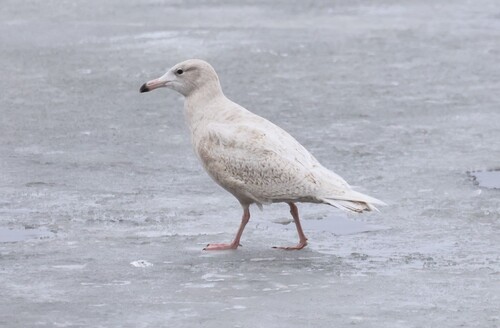
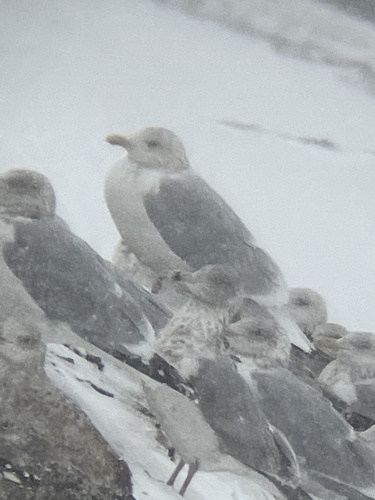
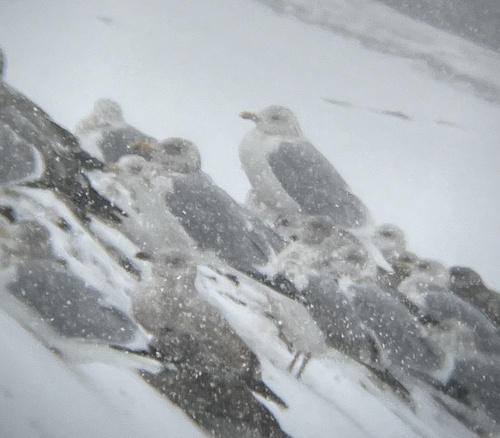
This is a large and powerful gull, second-largest of all gull species and very pale in all plumage, with no black on either the wings or the tail. Adults are pale grey above, with a thick, yellow bill. Juveniles are very pale grey with a pink and black bill. This species is considerably larger, bulkier, and thicker-billed than the similar Iceland gull, and can sometimes equal the size of the great black-backed gull, the oft-titled largest gull species. In some areas, glaucous gulls are about the same weight as great black-backed gulls or even heavier, and their maximum weight is greater.
Text from Wikipedia, licensed CC BY-SA 4.0.
When to see the Glaucous Gull
One bar for each month. Filled bars are the 9 months with records; pale bars are months with none. The wide bar is January, the month with the most records.
Where to see the Glaucous Gull
The map shades 34 countries with regular records, and 11 more in a lighter tone where the bird turns up only as a stray. Everything unshaded has no records. Countries are listed below the map.
Recorded as a rare visitor in Mexico, Taiwan, Morocco, Switzerland, Italy, Azerbaijan, North Korea, Mongolia, Guernsey, Latvia, Romania.
About the Glaucous Gull
The glaucous gull is a large gull, the second-largest gull in the world. The genus name is from Latin larus, which appears to have referred to a gull or other large seabird. The specific name hyperboreus is Latin for "northern" from the Ancient Greek Huperboreoi people from the far north "Glaucous" is from Latin glaucus and denotes the grey colour of the gull. An older English name for this species is burgomaster.
Text adapted from Wikipedia, licensed CC BY-SA 4.0.
Easily confused with
 Heermann's GullLarus heermanniThis species looks distinctly different from other gulls.
 Iceland GullLarus glaucoidesThe Iceland gull is a medium-sized gull, although relatively slender and light in weight.
 Caspian GullLarus cachinnansIt is a large gull at 56–68 cm (22–27 in) long, with a 137 to 155 cm (54 to 61 in) wingspan and a body mass of 680–1,590 g (1.50–3.51 lb).
Side by side: Glaucous Gull vs Iceland Gull · Glaucous Gull vs Heermann's Gull · Glaucous Gull vs Little Gull · Caspian Gull vs Glaucous Gull
Learn the Glaucous Gull in the BeakBrain App
Photo and call practice. Coming soon to iPhone and Android.
Play today's Daily BirdEvery photo and recording on this page is credited to its author under the licence shown. Spotted a problem with this page, or have a better photo? Contribute.