Learn what every symbol on the card means.Full credits and sources at beakbrain.com/symbols
 CoastalPlatform nestLarge · 1.1 kg


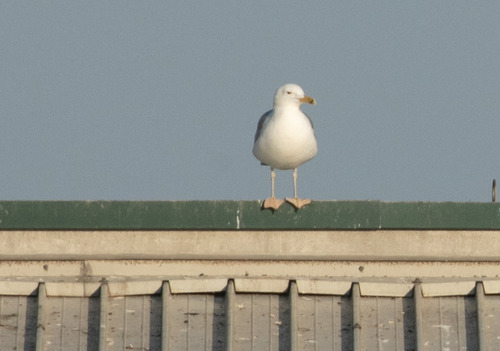
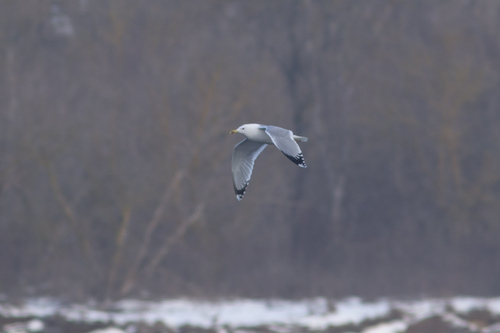
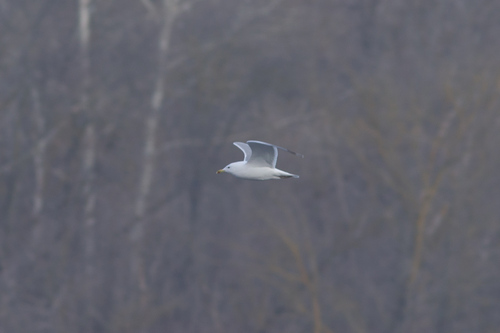
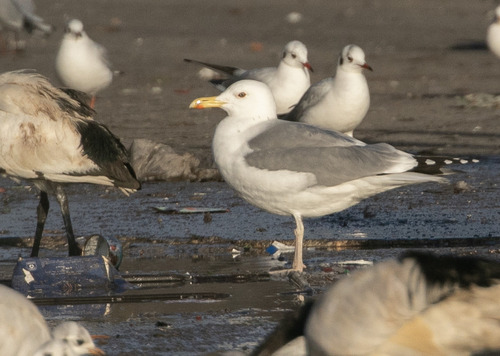
What the Caspian Gull sounds like

ID tip
It is a large gull at 56–68 cm (22–27 in) long, with a 137 to 155 cm (54 to 61 in) wingspan and a body mass of 680–1,590 g (1.50–3.51 lb). Among standard measurements, the wing chord is 38.5 to 48 cm (15.2 to 18.9 in), the bill is 4.6 to 6.4 cm (1.8 to 2.5 in) and the tarsus is 5.8 to 7.7 cm (2.3 to 3.0 in). The Caspian gull has a long, slender bill, accentuated by the sloping forehead. The legs, wings, and neck are longer than those of the herring gull and yellow-legged gull. The eye is small and often dark, and the legs vary from pale pink to a pale yellowish colour.
Text from Wikipedia, licensed CC BY-SA 4.0.
When to see the Caspian Gull
One bar for each month, and every month is filled: this bird is recorded here in all twelve. The wide bar is October, the month with the most records.
Where to see the Caspian Gull
The map shades 64 countries with regular records, and 10 more in a lighter tone where the bird turns up only as a stray. Everything unshaded has no records. Countries are listed below the map.
Recorded as a rare visitor in India, Taiwan, Luxembourg, Ireland, Thailand, Morocco, Iceland, Tunisia, Syria, Faroe Islands.
About the Caspian Gull
The Caspian gull is a large gull and a member of the herring and lesser black-backed gull complex. The scientific name is from Latin. Larus appears to have referred to a gull or other large seabird, and cachinnans means 'laughing', from cachinnare 'to laugh'.
Text adapted from Wikipedia, licensed CC BY-SA 4.0.
Easily confused with
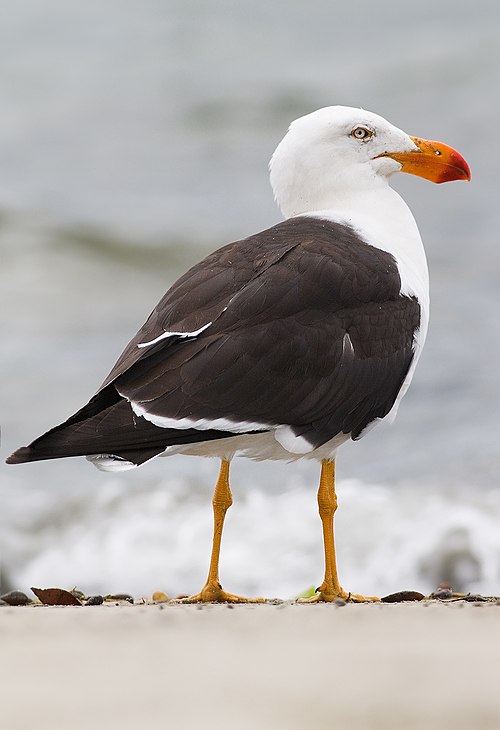 Pacific GullLarus pacificusPacific gulls are the only large gulls in their range, besides the occasional kelp gull.
 Glaucous GullLarus hyperboreusThis is a large and powerful gull, second-largest of all gull species and very pale in all plumage, with no black on either the wings or the tail.
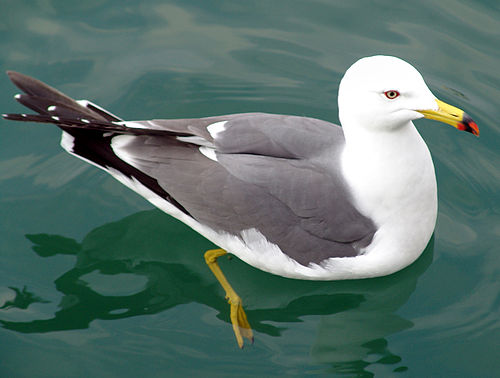 Black-tailed GullLarus crassirostrisThe black-tailed gull is medium-sized (46 cm or 18.1 in), with a wingspan of 126–128 cm (49.6–50.4 in).
Side by side: Caspian Gull vs Glaucous Gull · Caspian Gull vs Pacific Gull · Black-tailed Gull vs Caspian Gull
Learn the Caspian Gull in the BeakBrain App
Photo and call practice. Coming soon to iPhone and Android.
Play today's Daily BirdEvery photo and recording on this page is credited to its author under the licence shown. Spotted a problem with this page, or have a better photo? Contribute.