Learn what every symbol on the card means.Full credits and sources at beakbrain.com/symbols
 GrasslandPlatform nestHuge · 7.0 kg


ID tip
The lappet-faced vulture is a very large species, ranking as the longest and largest winged vulture in its range, behind the closely related cinereous vulture, although some co-occurring Gyps vultures tend to be heavier on average, especially the Cape vulture and Eurasian griffon. This species measures around 95–115 cm (37–45 in) in body length, with a wingspan of 2.5–2.9 m (8.2–9.5 ft). Among the standard measurements, the wing chord is 71.5–82.5 cm (28.1–32.5 in), the tail is 33–36 cm (13–14 in) and the tarsus is 12.2–15 cm (4.8–5.9 in). The bill, at up to 10 cm (3.9 in) long and 5 cm (2.
Text from Wikipedia, licensed CC BY-SA 4.0.
When to see the Lappet-faced Vulture
One bar for each month, and every month is filled: this bird is recorded here in all twelve. The wide bar is November, the month with the most records.
Where to see the Lappet-faced Vulture
The map shades 30 countries with regular records, and 2 more in a lighter tone where the bird turns up only as a stray. Everything unshaded has no records. Countries are listed below the map.
About the Lappet-faced Vulture
The lappet-faced vulture or Nubian vulture is an Old World vulture belonging to the bird order Accipitriformes, which also includes eagles, kites, buzzards and hawks. It is the only extant member of the genus Torgos. It is not closely related to the superficially similar New World vultures, and does not share the good sense of smell of some members of that family of birds.
Text adapted from Wikipedia, licensed CC BY-SA 4.0.
Easily confused with
 Pearl KiteGampsonyx swainsoniiThe pearl kite is 20.3–23 cm (8.0–9.1 in) in length and weighs 80–95 g (2.8–3.4 oz).
 African Hawk-EagleAquila spilogasterThe African hawk-eagle has a somewhat small head but one that protrudes quite well due its quite long neck and relatively prominent beak.
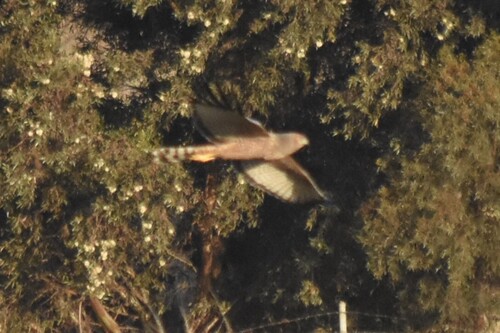 Spotted HarrierCircus assimilisThe spotted harrier is a medium-sized, slender bird of prey with adult females reaching 58–61 cm.
Side by side: Lappet-faced Vulture vs Pearl Kite · African Hawk-Eagle vs Lappet-faced Vulture · Lappet-faced Vulture vs Spotted Harrier
Learn the Lappet-faced Vulture in the BeakBrain App
Photo and call practice. Coming soon to iPhone and Android.
Play today's Daily BirdEvery photo and recording on this page is credited to its author under the licence shown. Spotted a problem with this page, or have a better photo? Contribute.