Learn what every symbol on the card means.Full credits and sources at beakbrain.com/symbols
 GrasslandCup nestSmall · 21 g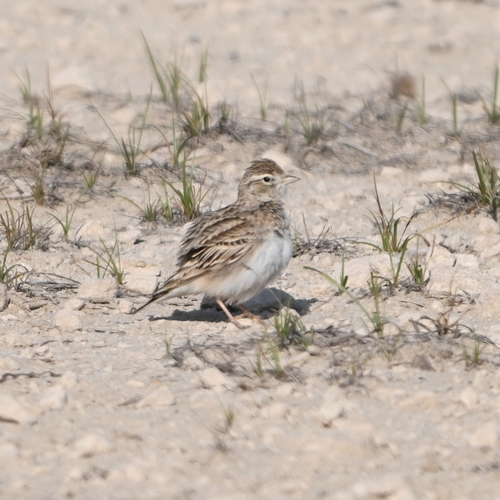
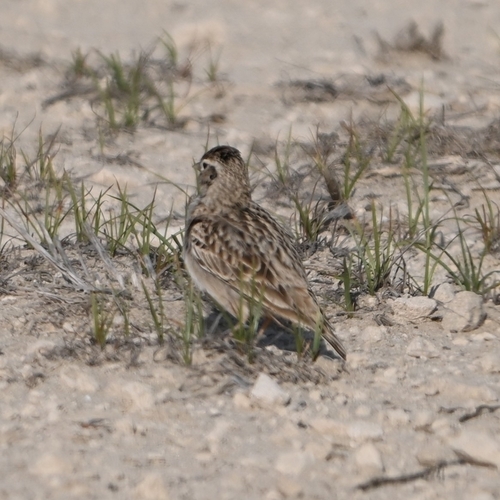
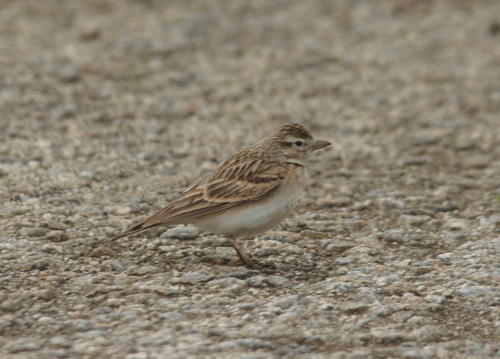


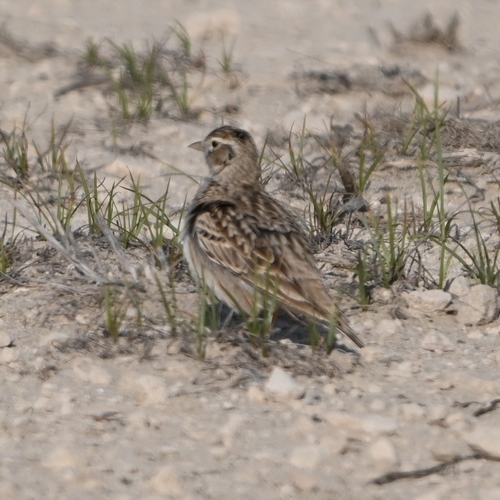
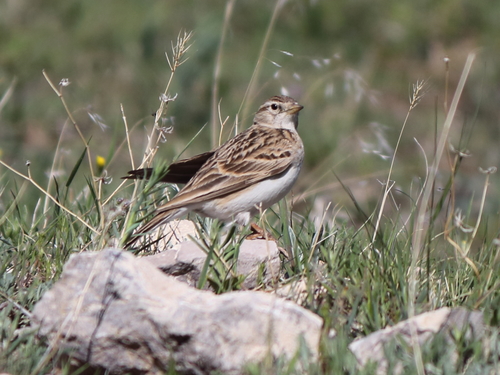
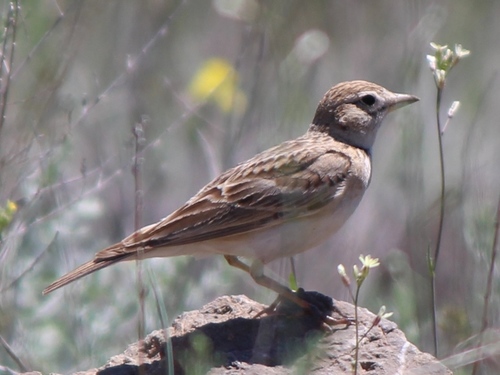
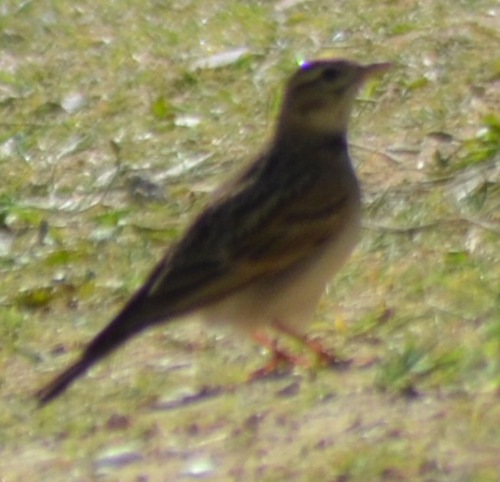
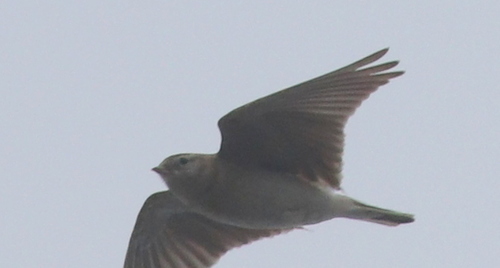
What the Greater Short-toed Lark sounds like


ID tip
Several subspecies have been named but there is considerable geneflow and the species itself forms part of a larger complex. This is a small pale lark, smaller than the skylark. It is dark-streaked greyish-brown above, and white below, and has a strong pointed bill that is pinkish with a grey culmen. It has a pale supercilium, dark patches on each side of its neck and a dark tail. Some birds in the west of the range have a rufous crown. The sexes are similar. The greater short-toed lark is paler than the Mongolian short-toed lark which also has a shorter bill.
Text from Wikipedia, licensed CC BY-SA 4.0.
When to see the Greater Short-toed Lark
One bar for each month. Filled bars are the 11 months with records; pale bars are months with none. The wide bar is May, the month with the most records.
Where to see the Greater Short-toed Lark
The map shades 75 countries with regular records, and 10 more in a lighter tone where the bird turns up only as a stray. Everything unshaded has no records. Countries are listed below the map.
Recorded as a rare visitor in Belgium, Finland, Netherlands, Taiwan, Czechia, Nigeria, Seychelles, Turkmenistan, Eritrea, Estonia.
About the Greater Short-toed Lark
The greater short-toed lark is a small passerine bird. The current scientific name is from Ancient Greek. The genus name, Calandrella, is a diminutive of kalandros, the calandra lark, and brachydactila is from brakhus, "short", and daktulos, "toe".
Text adapted from Wikipedia, licensed CC BY-SA 4.0.
Easily confused with
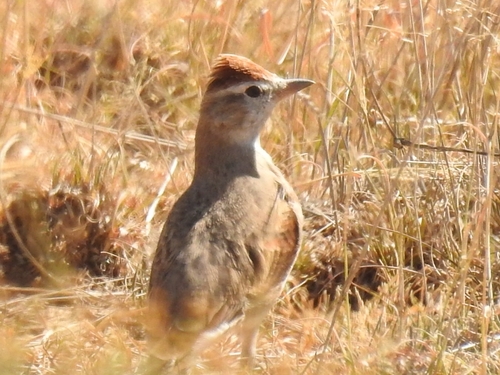 Red-capped LarkCalandrella cinereaThe red-capped lark is 14–15 cm (5.5–5.9 in) in length, with a typically upright stance.
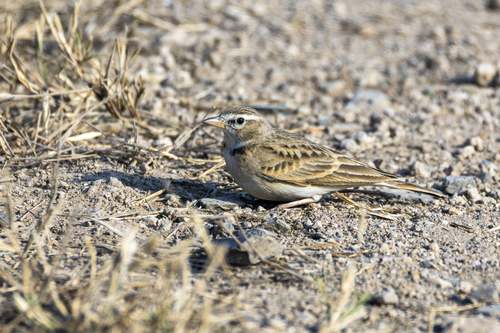 Hume's Short-toed LarkCalandrella acutirostrisHume's short-toed lark is similar in size and appearance to the greater short-toed lark but is generally a duller-looking bird with slightly darker plumage and a slightly smaller beak.
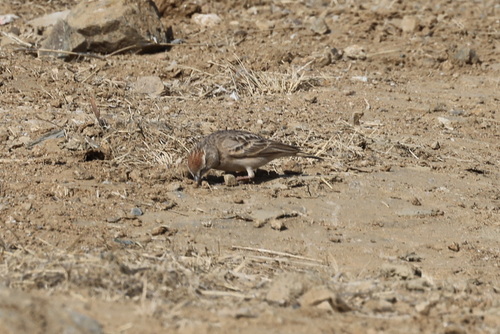 Blanford's LarkCalandrella blanfordiBlanford's lark is 14–15 centimetres long.
Side by side: Greater Short-toed Lark vs Red-capped Lark
Learn the Greater Short-toed Lark in the BeakBrain App
Photo and call practice. Coming soon to iPhone and Android.
Play today's Daily BirdEvery photo and recording on this page is credited to its author under the licence shown. Spotted a problem with this page, or have a better photo? Contribute.