Learn what every symbol on the card means.Full credits and sources at beakbrain.com/symbols
 GrasslandCup nestSmall · 20 g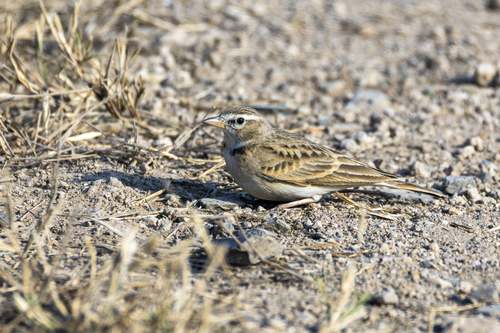
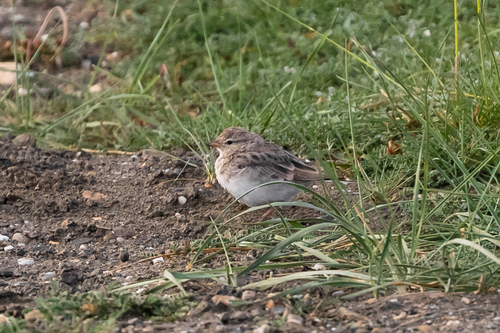
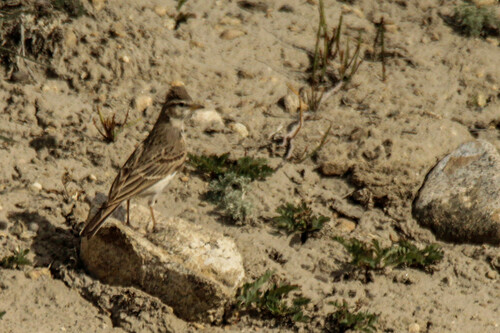
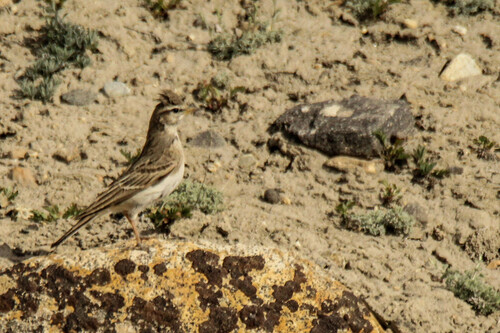


ID tip
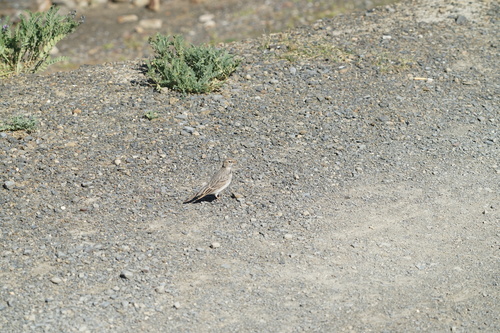
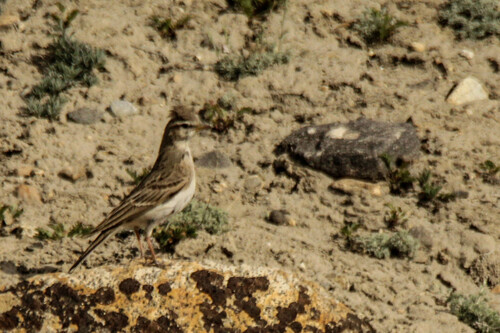
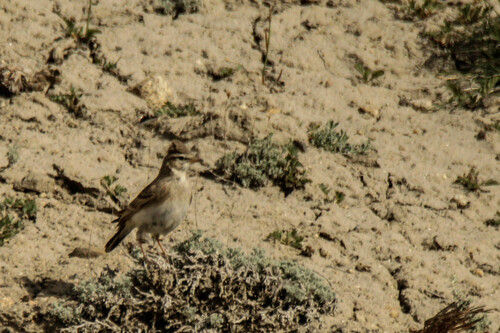
Hume's short-toed lark is similar in size and appearance to the greater short-toed lark but is generally a duller-looking bird with slightly darker plumage and a slightly smaller beak. As with the greater short-toed lark, the colour varies across the broad range and is not a good distinguishing feature. Hume's short-toed lark grows to a length of from 13 to 14 cm (5.1 to 5.5 in) and the sexes are similar. The crown is brown with slight diffuse streaking, the cheeks are rufous-brown and the supercilium white.
Text from Wikipedia, licensed CC BY-SA 4.0.
When to see the Hume's Short-toed Lark
One bar for each month. Filled bars are the 7 months with records; pale bars are months with none. The wide bar is July, the month with the most records.
Where to see the Hume's Short-toed Lark
The map shades 8 countries with regular records, and 1 more in a lighter tone where the bird turns up only as a stray. Everything unshaded has no records. Countries are listed below the map.
Recorded as a rare visitor in Pakistan.
About the Hume's Short-toed Lark
Hume's short-toed lark is a species of lark in the family Alaudidae. It is found in south-central Asia from Iran and Kazakhstan to China.
Text adapted from Wikipedia, licensed CC BY-SA 4.0.
Easily confused with
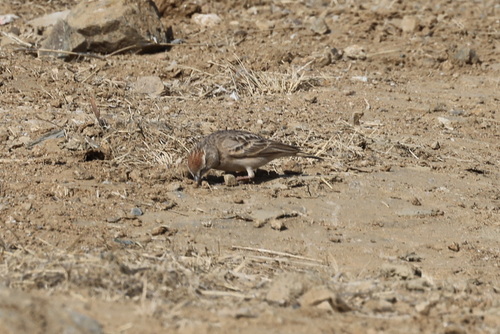 Blanford's LarkCalandrella blanfordiBlanford's lark is 14–15 centimetres long.
 Rufous-capped LarkCalandrella eremicaThe rufous-capped lark is a small passerine bird of the lark family found in southwestern Arabia and the Horn of Africa.
 Mongolian Short-toed LarkCalandrella dukhunensisThe Mongolian short-toed lark is darker and has a shorter bill than the greater short-toed lark.
Learn the Hume's Short-toed Lark in the BeakBrain App
Photo and call practice. Coming soon to iPhone and Android.
Play today's Daily BirdEvery photo and recording on this page is credited to its author under the licence shown. Spotted a problem with this page, or have a better photo? Contribute.