Learn what every symbol on the card means.Full credits and sources at beakbrain.com/symbols
 GrasslandSmall · 24 g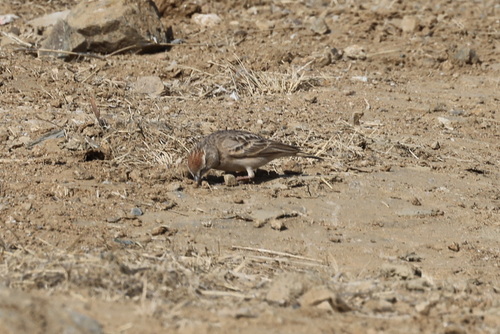
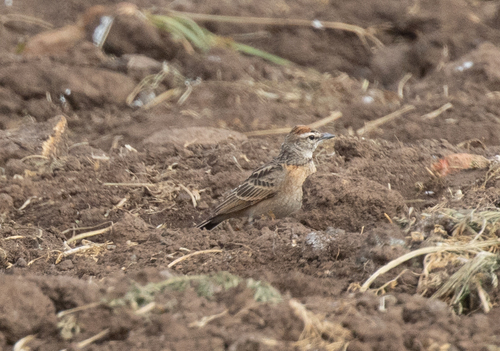
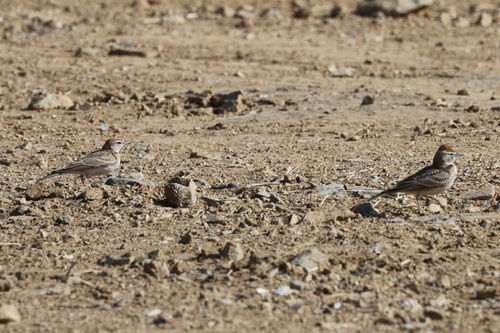
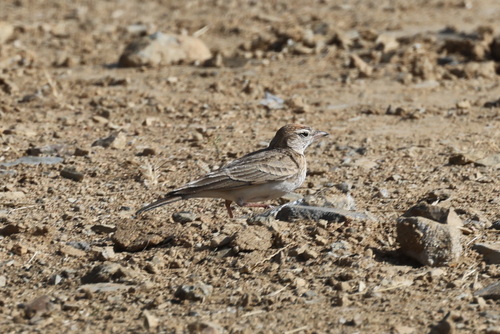
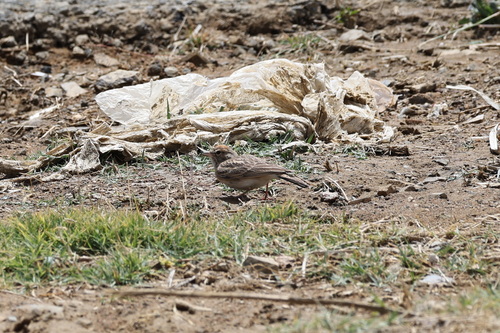
ID tip
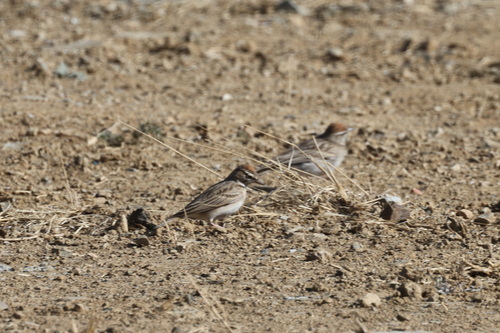
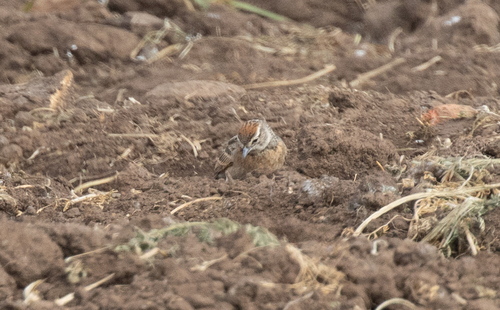
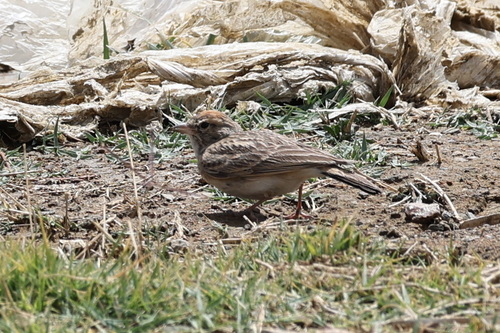
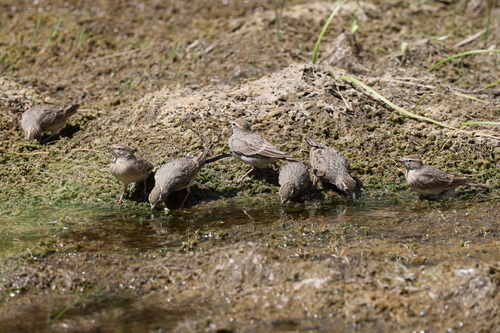
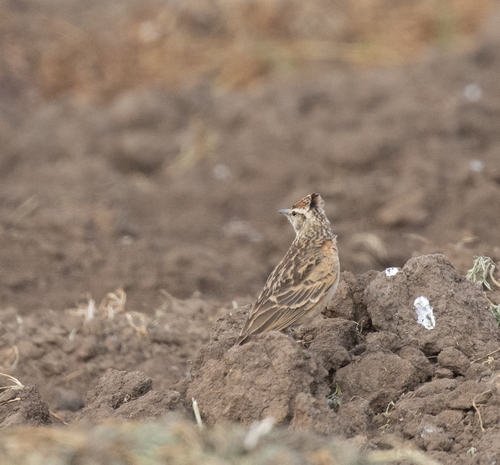
Blanford's lark is 14–15 centimetres long. The upperparts are pale sandy-brown with some darker streaking and the crown is rufous. The underparts are pale and plain apart from a small dark patch on the side of the neck made up of vertical streaks. The greater short-toed lark is similar but has a greyer, more-streaked crown. Erlanger's and red-capped larks have darker upperparts with more streaking and a darker rufous crown. Erlanger's lark has larger dark neck-patches while in red-capped lark the patches are rufous. Blanford's lark has a sparrow-like flight-call.
Text from Wikipedia, licensed CC BY-SA 4.0.
When to see the Blanford's Lark
One bar for each month. Filled bars are the 10 months with records; pale bars are months with none. The wide bar is November, the month with the most records.
Where to see the Blanford's Lark
The map shades 5 countries with regular records. Everything unshaded has no records. Countries are listed below the map.
About the Blanford's Lark
Blanford's lark or Blanford's short-toed lark is a small passerine bird of the lark family, Alaudidae, which is native to north-eastern Africa. Its common name commemorates the English zoologist William Thomas Blanford.
Text adapted from Wikipedia, licensed CC BY-SA 4.0.
Easily confused with
 Rufous-capped LarkCalandrella eremicaThe rufous-capped lark is a small passerine bird of the lark family found in southwestern Arabia and the Horn of Africa.
 Mongolian Short-toed LarkCalandrella dukhunensisThe Mongolian short-toed lark is darker and has a shorter bill than the greater short-toed lark.
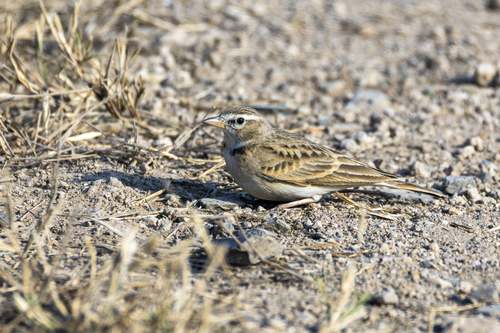 Hume's Short-toed LarkCalandrella acutirostrisHume's short-toed lark is similar in size and appearance to the greater short-toed lark but is generally a duller-looking bird with slightly darker plumage and a slightly smaller beak.
Learn the Blanford's Lark in the BeakBrain App
Photo and call practice. Coming soon to iPhone and Android.
Play today's Daily BirdEvery photo and recording on this page is credited to its author under the licence shown. Spotted a problem with this page, or have a better photo? Contribute.