Learn what every symbol on the card means.Full credits and sources at beakbrain.com/symbols
 ShrublandCup nestSmall · 36 g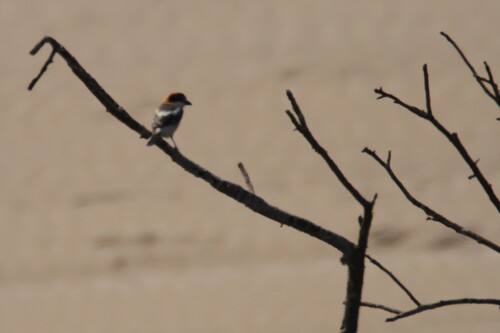


ID tip
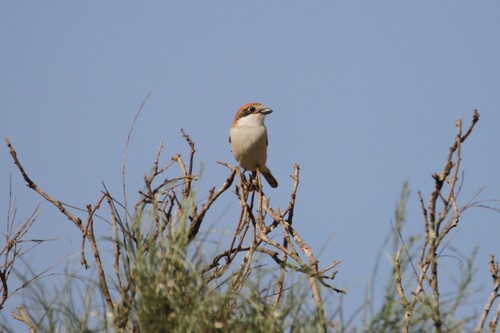
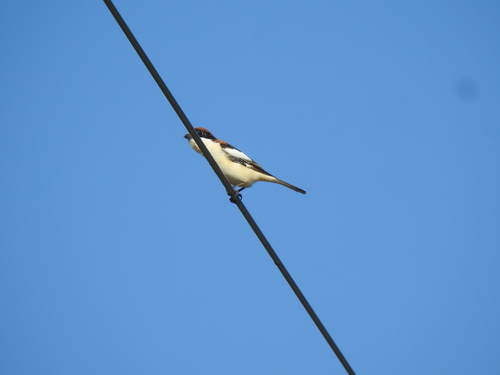
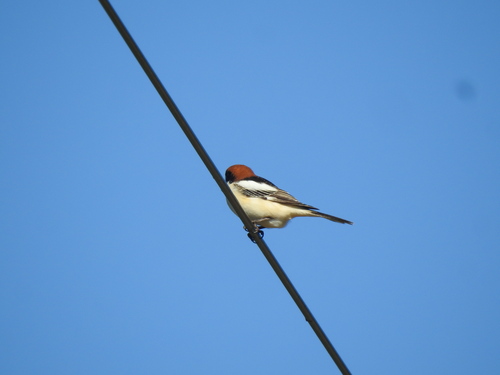
The woodchat shrike is 17–19 cm (6.7–7.5 in) in overall length which is slightly larger than a red-backed shrike. The male is a striking bird with black and white upper parts, a chestnut crown and pure white underparts. The race L. s. badius of the western Mediterranean lacks the large white wing patches. In the female and young birds, the upperparts are brown and white and vermiculated. Underparts are buff and also vermiculated.
Text from Wikipedia, licensed CC BY-SA 4.0.
When to see the Woodchat Shrike
One bar for each month. Filled bars are the 7 months with records; pale bars are months with none. The wide bar is April, the month with the most records.
Where to see the Woodchat Shrike
The map shades 80 countries with regular records, and 5 more in a lighter tone where the bird turns up only as a stray. Everything unshaded has no records. Countries are listed below the map.
Recorded as a rare visitor in Netherlands, Finland, Luxembourg, Somalia, Andorra.
About the Woodchat Shrike
The woodchat shrike is a member of the shrike family Laniidae. It can be identified by its red-brown crown and nape. It is mainly insectivorous and favours open wooded areas with scattered trees such as orchards, particularly when there is bare or sandy ground. The woodchat shrike breeds in southern Europe, the Middle East and northwest Africa, and winters in tropical Africa.
Text adapted from Wikipedia, licensed CC BY-SA 4.0.
Easily confused with
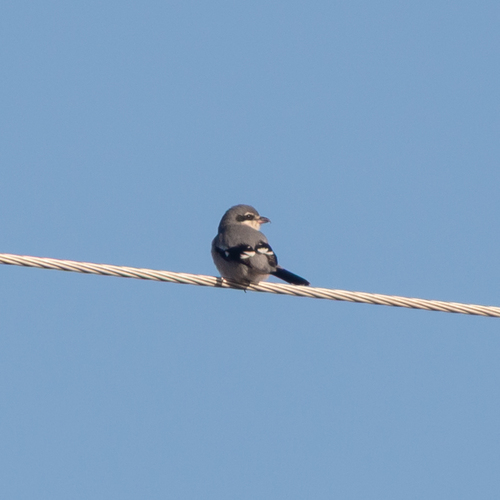 Iberian Grey ShrikeLanius meridionalisThe Iberian grey shrike is similar in size to the great grey shrikes found in northern Europe but is may have a slightly larger head, stronger bill and thinner tail.
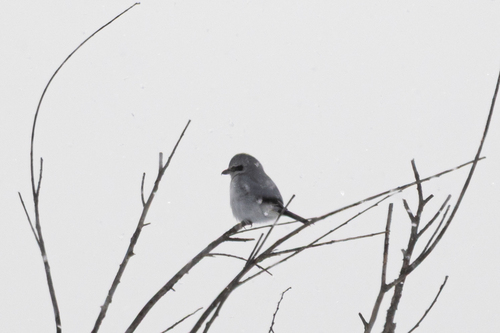 Northern ShrikeLanius borealisThe loggerhead shrike can be distinguished from the northern shrike by its smaller size, darker grey plumage and larger black face mask that covers the eye completely.
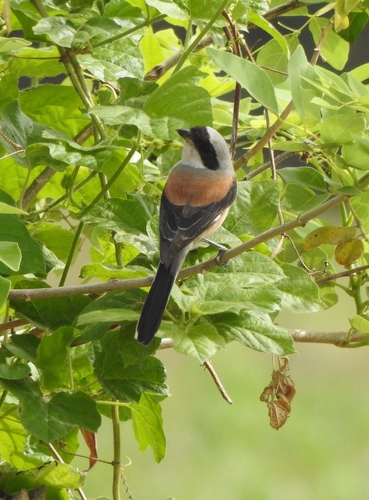 Bay-backed ShrikeLanius vittatusIt is smallish shrike at 17 cm, maroon-brown above with a pale rump and long black tail with white edges.
Side by side: Northern Shrike vs Woodchat Shrike · Iberian Grey Shrike vs Woodchat Shrike
Learn the Woodchat Shrike in the BeakBrain App
Photo and call practice. Coming soon to iPhone and Android.
Play today's Daily BirdEvery photo and recording on this page is credited to its author under the licence shown. Spotted a problem with this page, or have a better photo? Contribute.