Learn what every symbol on the card means.Full credits and sources at beakbrain.com/symbols
 ShrublandCup nestSmall · 21 g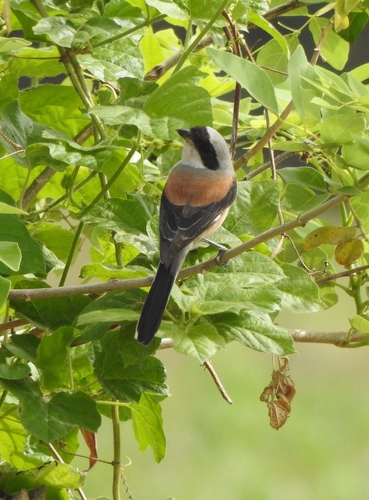
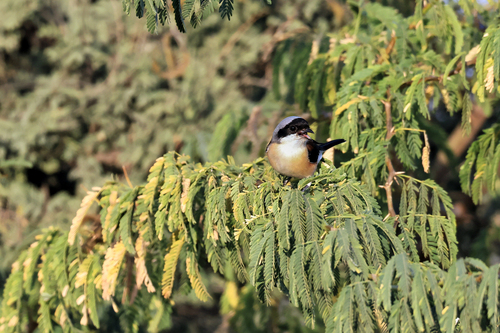
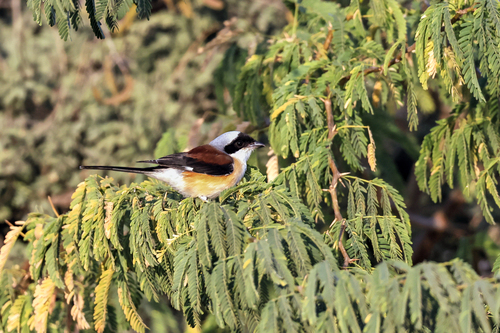
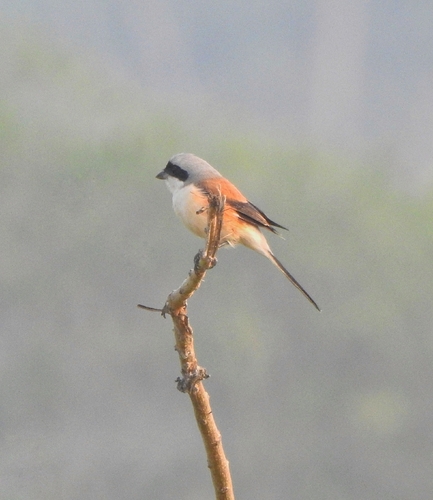
ID tip
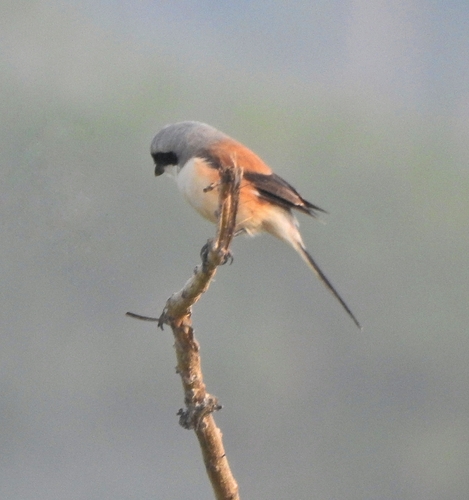
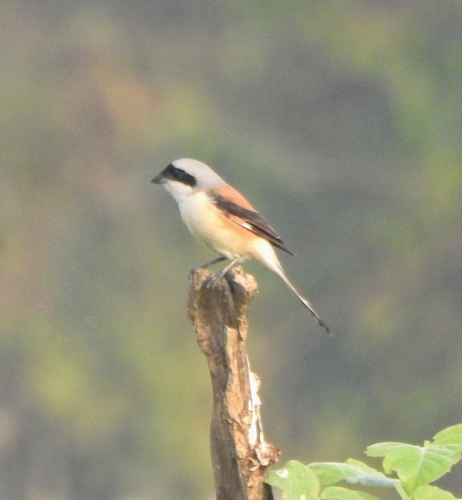
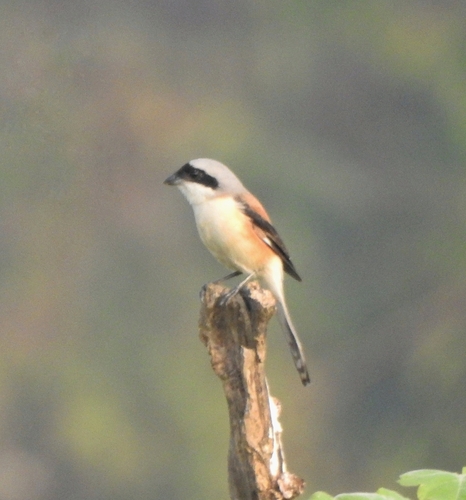
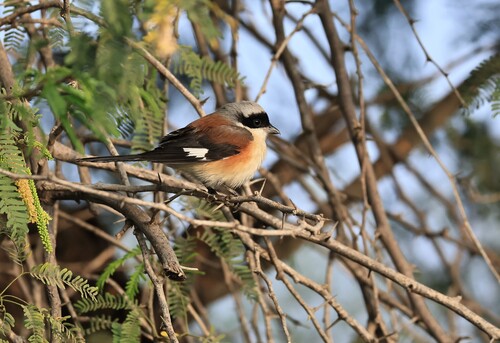
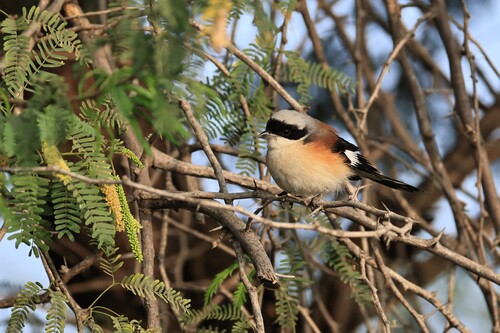
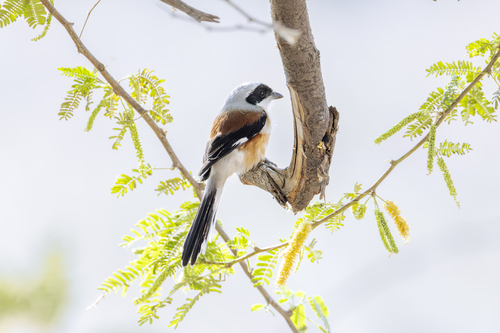
It is smallish shrike at 17 cm, maroon-brown above with a pale rump and long black tail with white edges. The underparts are white, but with buff flanks. The crown and nape are grey, with a typical shrike black bandit mask through the eye. There is a small white wing patch, and the bill and legs are dark grey. Sexes are similar, but young birds are washed-out versions of the adults.
Text from Wikipedia, licensed CC BY-SA 4.0.
When to see the Bay-backed Shrike
One bar for each month. Filled bars are the 8 months with records; pale bars are months with none. The wide bar is December, the month with the most records.
Where to see the Bay-backed Shrike
The map shades 10 countries with regular records, and 2 more in a lighter tone where the bird turns up only as a stray. Everything unshaded has no records. Countries are listed below the map.
About the Bay-backed Shrike
The bay-backed shrike is a member of the bird family Laniidae, the shrikes, resident in South Asia.
Text adapted from Wikipedia, licensed CC BY-SA 4.0.
Easily confused with
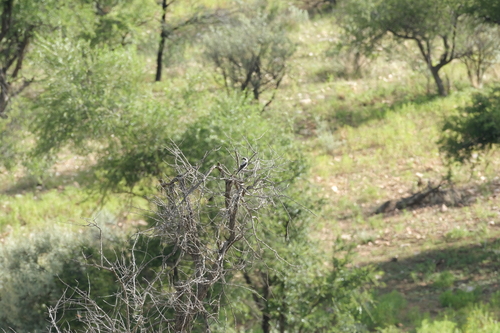 Lesser Grey ShrikeLanius minorThe adult male lesser grey shrike has its nape, cheeks, ear and eye coverts and front part of the crown black.
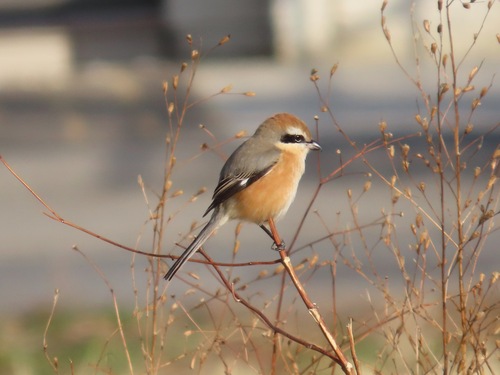 Bull-headed ShrikeLanius bucephalusThe bull-headed shrike is a passerine bird of eastern Asia belonging to the shrike family Laniidae.
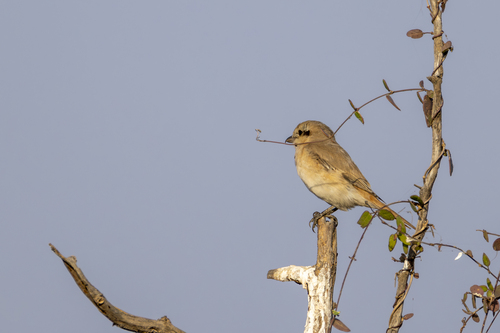 Isabelline ShrikeLanius isabellinusThe plumage is isabelline, the sandy colour which gives rise to its name.
Learn the Bay-backed Shrike in the BeakBrain App
Photo and call practice. Coming soon to iPhone and Android.
Play today's Daily BirdEvery photo and recording on this page is credited to its author under the licence shown. Spotted a problem with this page, or have a better photo? Contribute.