Learn what every symbol on the card means.Full credits and sources at beakbrain.com/symbols
 ShrublandCup nestSmall · 25 g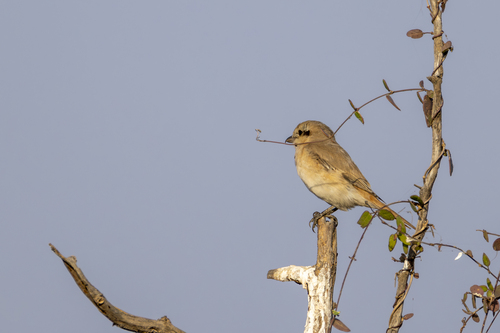


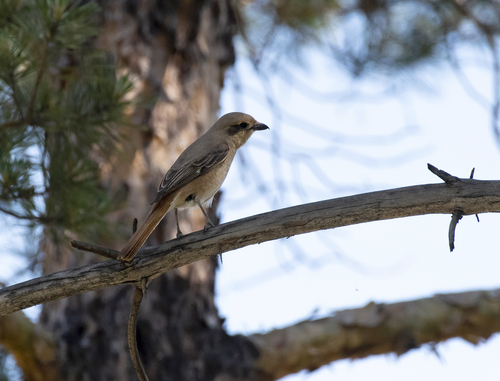
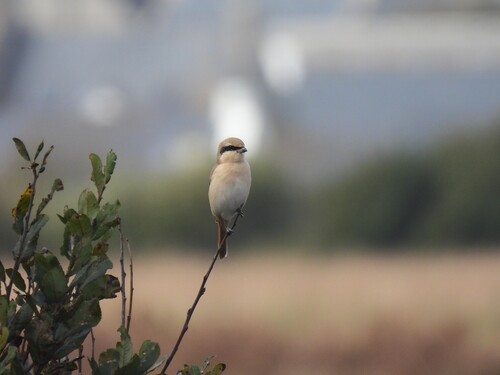
ID tip
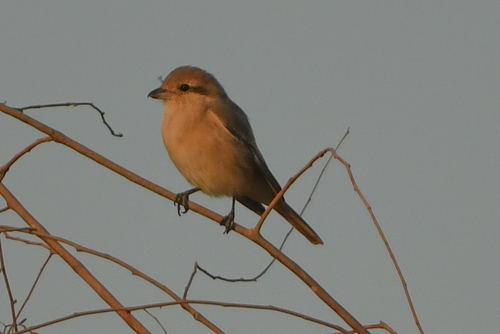
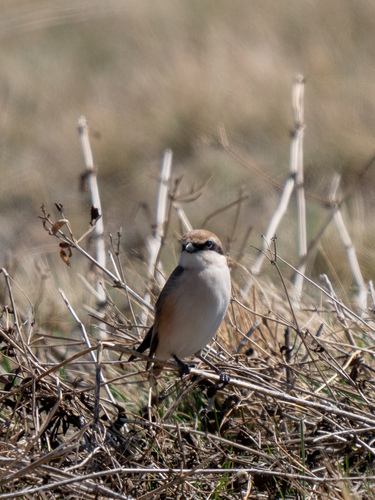
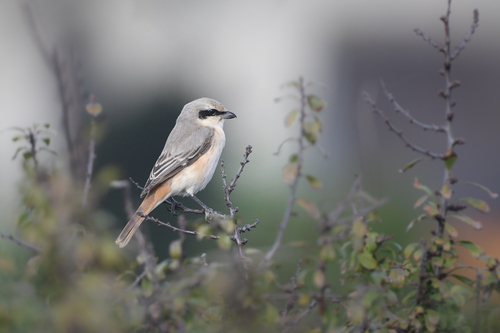
The plumage is isabelline, the sandy colour which gives rise to its name. It has a red tail. Young birds can be distinguished from young red-backed shrikes by the much sparser vermiculations on the underparts.
Text from Wikipedia, licensed CC BY-SA 4.0.
When to see the Isabelline Shrike
One bar for each month. Filled bars are the 8 months with records; pale bars are months with none. The wide bar is December, the month with the most records.
Where to see the Isabelline Shrike
The map shades 46 countries with regular records, and 16 more in a lighter tone where the bird turns up only as a stray. Everything unshaded has no records. Countries are listed below the map.
Recorded as a rare visitor in France, Belgium, Norway, Portugal, Netherlands, Finland, Morocco, Italy, Ireland, South Korea, Sudan, Nepal, Switzerland, Burundi, Rwanda, Syria.
About the Isabelline Shrike
The isabelline shrike or Daurian shrike is a member of the shrike family (Laniidae). It was previously considered conspecific with the red-backed shrike and red-tailed shrike. It is found in an extensive area between the Caspian Sea and north and central China southeast to the Qaidam Basin. Overwinters in Africa and Arabia.
Text adapted from Wikipedia, licensed CC BY-SA 4.0.
Easily confused with
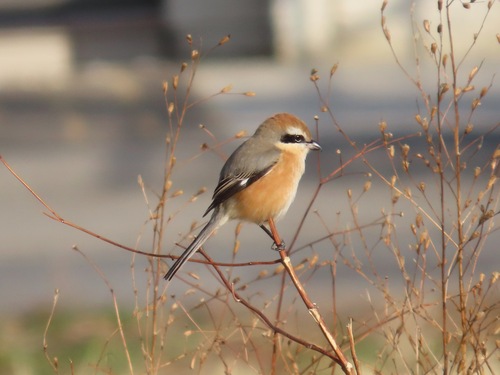 Bull-headed ShrikeLanius bucephalusThe bull-headed shrike is a passerine bird of eastern Asia belonging to the shrike family Laniidae.
 Masked ShrikeLanius nubicusThe masked shrike is the smallest of its genus, a slender bird which usually weighs 20–23 g (0.71–0.81 oz), measuring 17–18.5 cm (6.7–7.3 in) long with a 24–26.5 cm (9.4–10.4 in) wingspan.
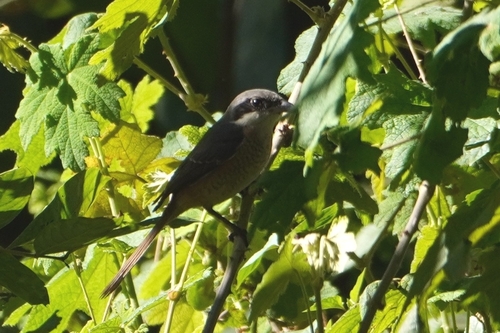 Grey-backed ShrikeLanius tephronotusThe species is 21–25 cm long and weighs 39-54 g.
Side by side: Isabelline Shrike vs Lesser Grey Shrike · Isabelline Shrike vs Masked Shrike · Grey-backed Shrike vs Isabelline Shrike · Isabelline Shrike vs Northern Fiscal
Learn the Isabelline Shrike in the BeakBrain App
Photo and call practice. Coming soon to iPhone and Android.
Play today's Daily BirdEvery photo and recording on this page is credited to its author under the licence shown. Spotted a problem with this page, or have a better photo? Contribute.