Learn what every symbol on the card means.Full credits and sources at beakbrain.com/symbols
 ShrublandCup nestMedium · 63 g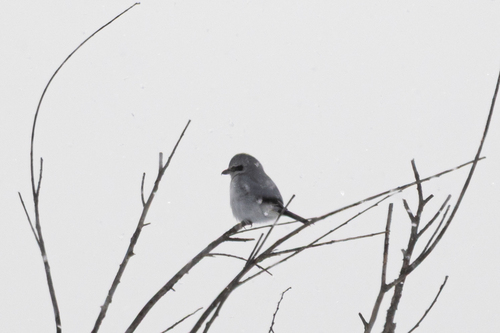
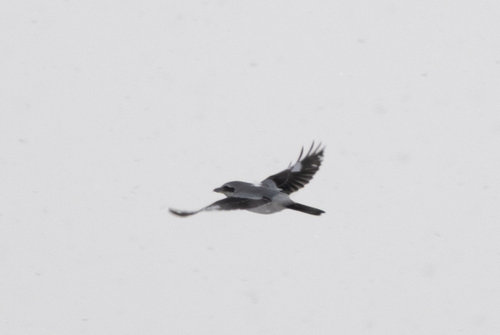
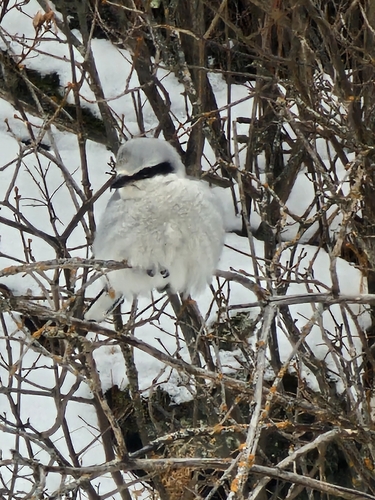
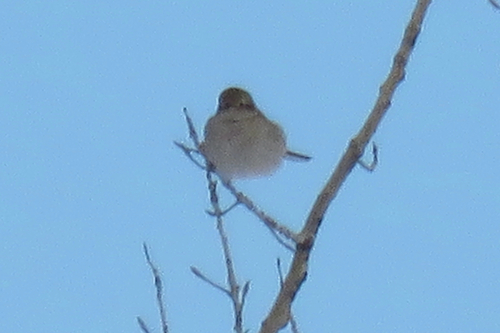
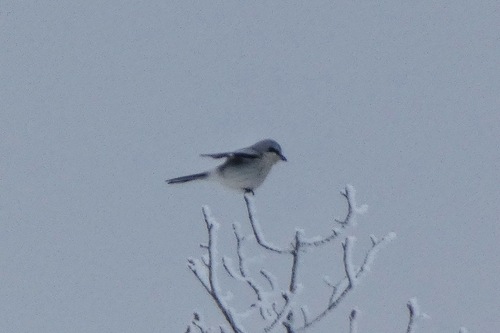
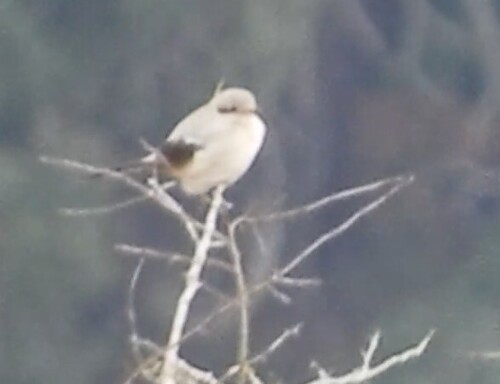
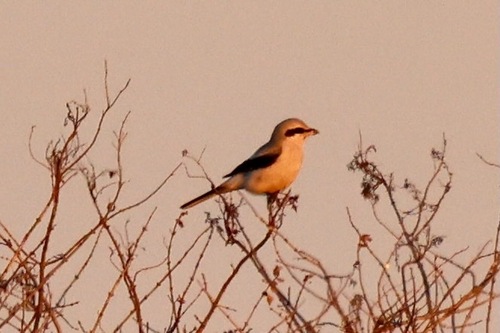
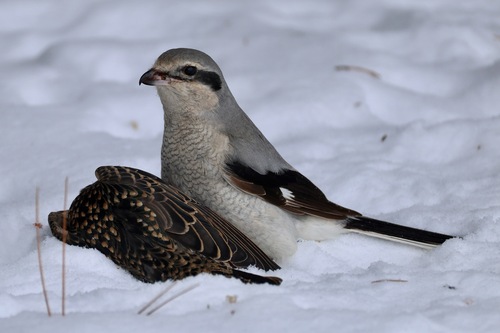

ID tip
The loggerhead shrike can be distinguished from the northern shrike by its smaller size, darker grey plumage and larger black face mask that covers the eye completely. It also has a shorter bill with less prominent hook. Their calls are similar. Measurements: Length: 9.1–9.4 in (23–24 cm) Weight: 2.0–2.8 oz (57–79 g) Wingspan: 11.8–13.8 in (30–35 cm)
Text from Wikipedia, licensed CC BY-SA 4.0.
When to see the Northern Shrike
One bar for each month. Filled bars are the 7 months with records; pale bars are months with none. The wide bar is January, the month with the most records.
Where to see the Northern Shrike
The map shades 9 countries with regular records, and 3 more in a lighter tone where the bird turns up only as a stray. Everything unshaded has no records. Countries are listed below the map.
Recorded as a rare visitor in Sweden, South Korea, Finland.
About the Northern Shrike
The northern shrike is a large songbird species in the shrike family (Laniidae) native to North America and Siberia. Long considered a subspecies of the great grey shrike, it was classified as a distinct species in 2017. Six subspecies are recognised.
Text adapted from Wikipedia, licensed CC BY-SA 4.0.
Easily confused with
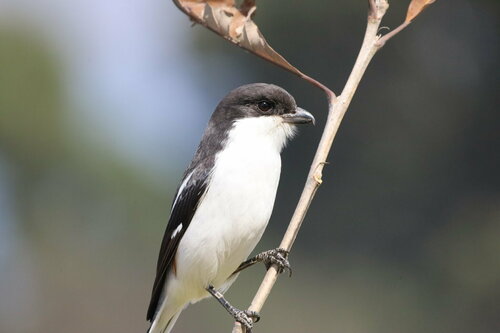 Southern FiscalLanius collarisThis is a fairly distinctive 21–23-cm long passerine with white underparts and black upperparts extending from the top of the head down to the tail.
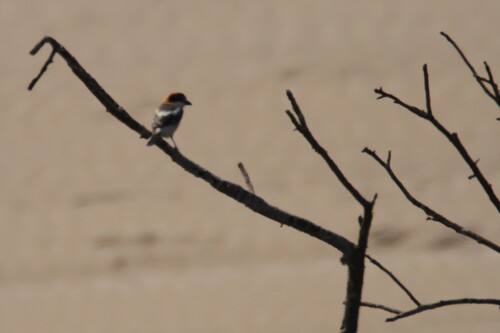 Woodchat ShrikeLanius senatorThe woodchat shrike is 17–19 cm (6.7–7.5 in) in overall length which is slightly larger than a red-backed shrike.
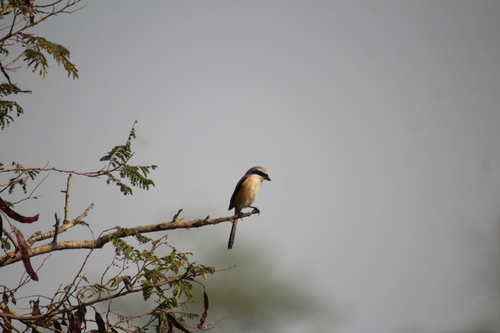 Long-tailed ShrikeLanius schachThe long-tailed shrike is a typical shrike, favouring dry open habitats and found perched prominently atop a bush or on a wire.
Side by side: Northern Shrike vs Southern Fiscal · Long-tailed Shrike vs Northern Shrike · Northern Shrike vs Woodchat Shrike
Learn the Northern Shrike in the BeakBrain App
Photo and call practice. Coming soon to iPhone and Android.
Play today's Daily BirdEvery photo and recording on this page is credited to its author under the licence shown. Spotted a problem with this page, or have a better photo? Contribute.