Learn what every symbol on the card means.Full credits and sources at beakbrain.com/symbols
 GrasslandScrapeSmall · 59 g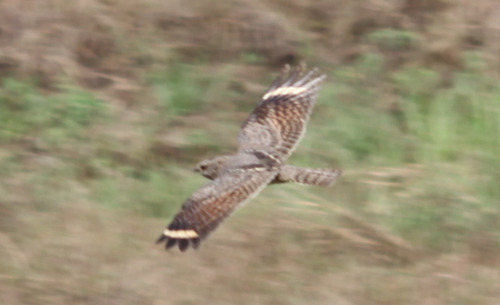
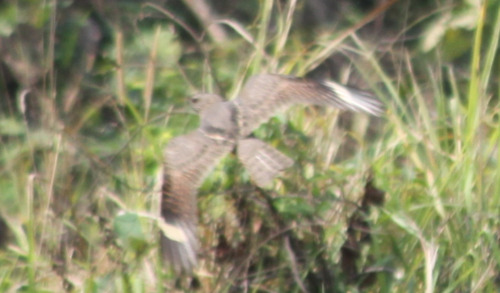
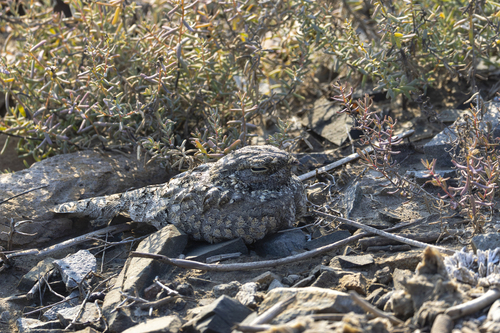
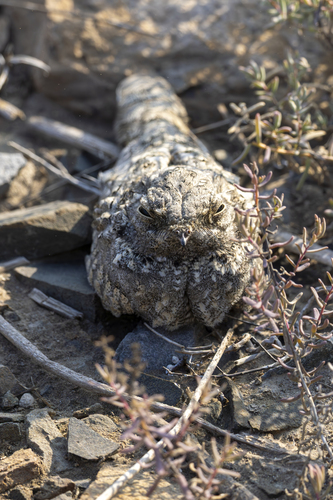
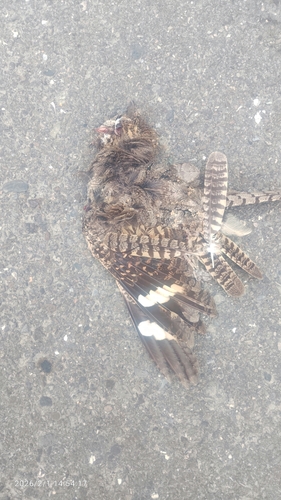
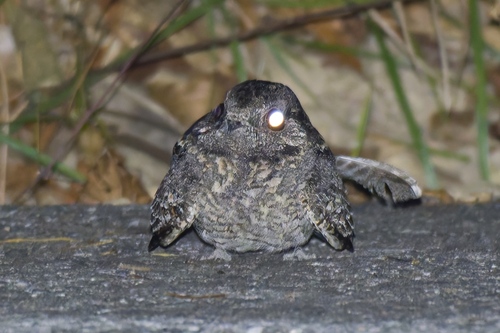
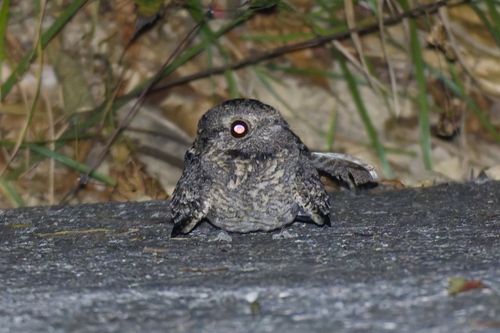
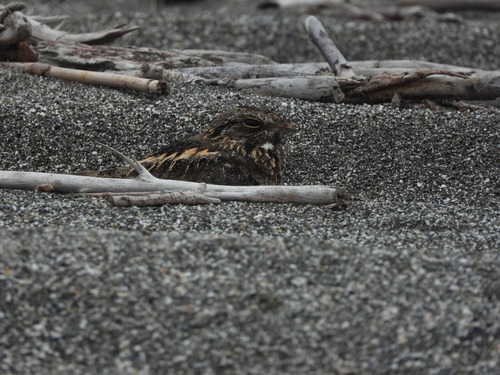


What the Savanna Nightjar sounds like


ID tip
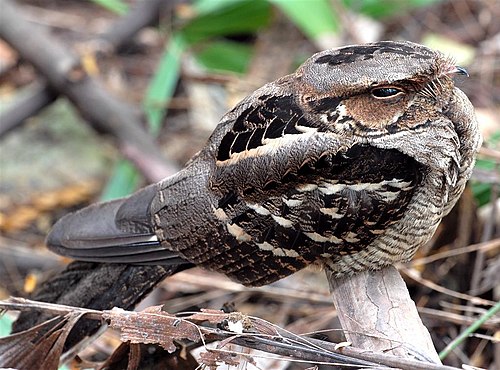
The savanna nightjar measures 20-26cm in length, has a body weight of 54-110g, and a wingspan of 64cm, with size varying by subspecies, ranging from small to medium-large. Like other nightjars, they have long pointed wings and small legs and feet, indicating their reliance on flight over walking. The bill is wide, revealing a large gape when opened, and is surrounded by facial feathers, called rictal bristles. Their vermiculated grey-brown plumage, characteristic of all nightjars, makes them difficult to tell apart from other species based on sight alone. Voice: Savanna nightjars begin vocalisation during early dusk and can be heard throughout the night until dawn, becoming especially vocal during breeding. The characteristic "chwip" call is used for both marking territory and attracting females during breeding season. Females vocalise less, emitting soft squeaks during brooding.
Text from Wikipedia, licensed CC BY-SA 4.0.
When to see the Savanna Nightjar
One bar for each month. Filled bars are the 8 months with records; pale bars are months with none. The wide bar is March, the month with the most records.
Where to see the Savanna Nightjar
The map shades 19 countries with regular records. Everything unshaded has no records. Countries are listed below the map.
About the Savanna Nightjar
The savanna nightjar, also known as allied nightjar or Franklin's nightjar, is a species of nightjar found in South and Southeast Asia. The IUCN Red List has assessed the species to be of least concern because it has a large range and its population trend is stable. As other nightjars, this nocturnal bird is characterised by its large eyes, gaping mouth and excellent camouflage. It can be distinguished from similar south Asian nightjar species, like the chirruping nightjar, by its unique vocalisations.
Text adapted from Wikipedia, licensed CC BY-SA 4.0.
Easily confused with
 Fiery-necked NightjarCaprimulgus pectoralisAn adult fiery-necked nightjar is relatively small measuring between 23 and 25 centimeters.
 Large-tailed NightjarCaprimulgus macrurusThe large-tailed nightjar measures approximately 31.5 to 33 cm in length.
 Indian NightjarCaprimulgus asiaticusThis nightjar is small and short-tailed with white corners to the tail, a golden nape and collar, dark cheeks and white patches on the sides of the throat.
Side by side: European Nightjar vs Savanna Nightjar · Common Poorwill vs Savanna Nightjar · Fiery-necked Nightjar vs Savanna Nightjar · Large-tailed Nightjar vs Savanna Nightjar · Indian Nightjar vs Savanna Nightjar
Learn the Savanna Nightjar in the BeakBrain App
Photo and call practice. Coming soon to iPhone and Android.
Play today's Daily BirdEvery photo and recording on this page is credited to its author under the licence shown. Spotted a problem with this page, or have a better photo? Contribute.