Learn what every symbol on the card means.Full credits and sources at beakbrain.com/symbols
 WoodlandScrapeMedium · 66 g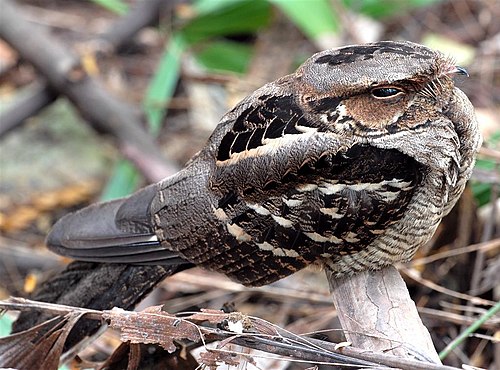
What the Large-tailed Nightjar sounds like


ID tip
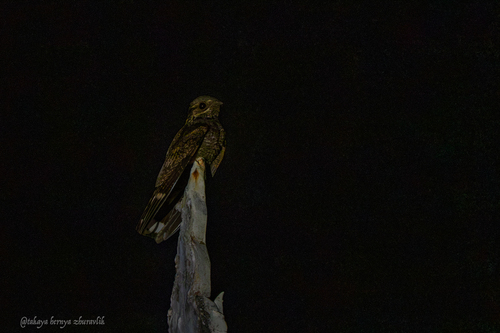
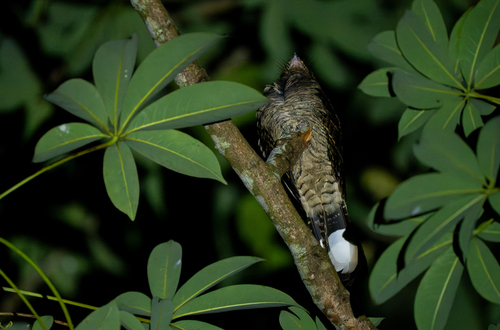
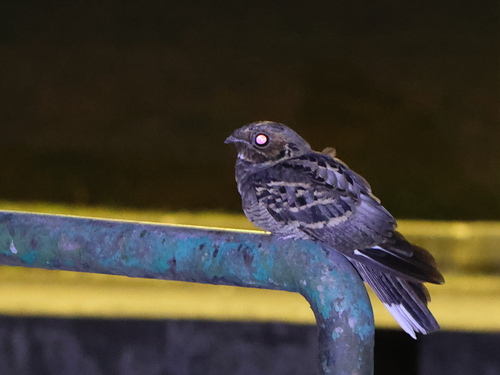
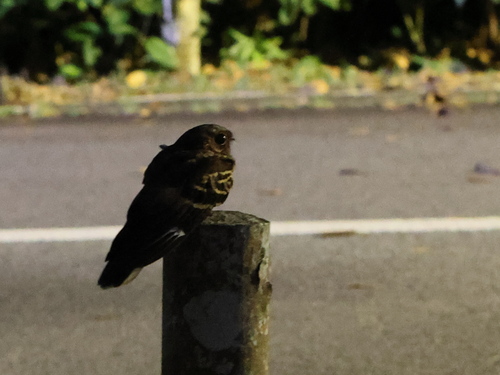
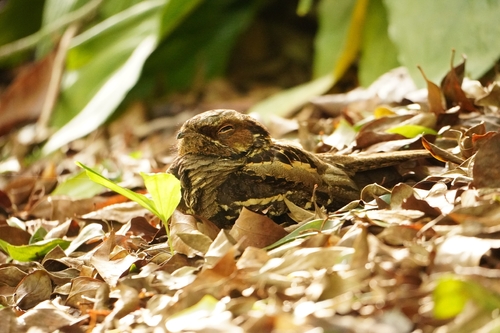
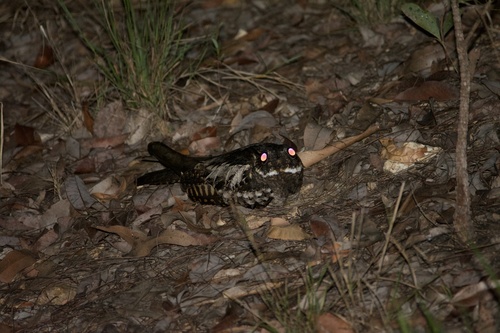
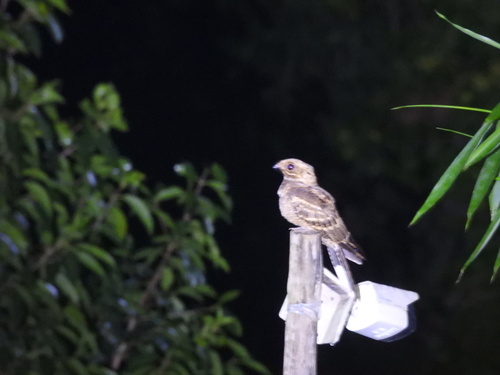
The large-tailed nightjar measures approximately 31.5 to 33 cm in length. The cryptic plumage and colouration of large-tailed nightjars provide effective camouflage within its natural habitat. Males exhibit distinctive markings, characterized by a pale crown with a dark median stripe. A prominent row of black scapular feathers, bordered by broad buff or whitish-buff fringes, enhances their striking appearance. Additionally, males possess a white throat patch and along, broad brown tail marked with uneven dark bars. Voice: Songs can be heard year-round, but vocal activity may vary depending on breeding activity, population density, and moon phase. The large-tailed nightjar has a distinctive, monotonous song that it uses to assert its territory. Territorial songs are typically given by males, but there are also reports of females giving these songs.
Text from Wikipedia, licensed CC BY-SA 4.0.
When to see the Large-tailed Nightjar
One bar for each month, and every month is filled: this bird is recorded here in all twelve. The wide bar is March, the month with the most records.
Where to see the Large-tailed Nightjar
The map shades 18 countries with regular records. Everything unshaded has no records. Countries are listed below the map.
About the Large-tailed Nightjar
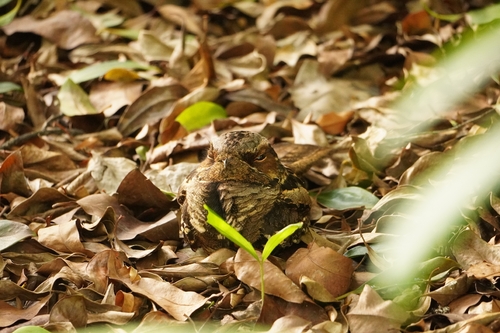
The large-tailed nightjar is a species of nightjar known for its distinctive long, broad tail and cryptic plumage that allows it to blend into its surroundings. Found along the southern Himalayan foothills, eastern South Asia, Southeast Asia and northern Australia, its natural habitats are subtropical or tropical moist lowland forest, subtropical or tropical mangrove forest, and subtropical or tropical moist montane forest.
Text adapted from Wikipedia, licensed CC BY-SA 4.0.
Easily confused with
 Indian NightjarCaprimulgus asiaticusThis nightjar is small and short-tailed with white corners to the tail, a golden nape and collar, dark cheeks and white patches on the sides of the throat.
 Jerdon's NightjarCaprimulgus atripennisLike other nightjars, it has a wide gape, long wings, soft downy plumage and nocturnal habits.
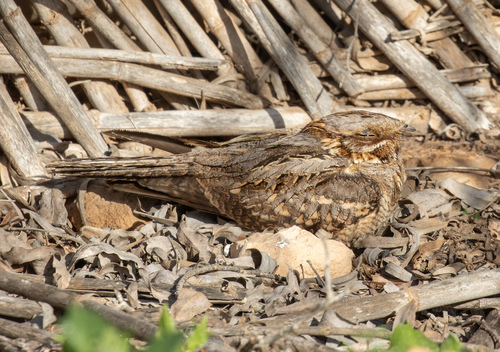 Red-necked NightjarCaprimulgus ruficollisThe variegated plumage resembles the European nightjar.
Side by side: European Nightjar vs Large-tailed Nightjar · Large-tailed Nightjar vs Savanna Nightjar · Fiery-necked Nightjar vs Large-tailed Nightjar · Indian Nightjar vs Large-tailed Nightjar · Jerdon's Nightjar vs Large-tailed Nightjar · Large-tailed Nightjar vs Red-necked Nightjar
Learn the Large-tailed Nightjar in the BeakBrain App
Photo and call practice. Coming soon to iPhone and Android.
Play today's Daily BirdEvery photo and recording on this page is credited to its author under the licence shown. Spotted a problem with this page, or have a better photo? Contribute.