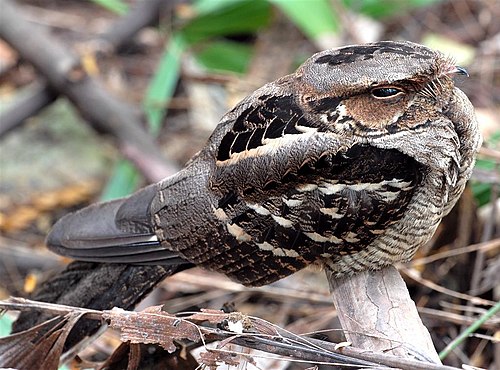
Large-tailed Nightjar
Caprimulgus macrurus
The large-tailed nightjar measures approximately 31.5 to 33 cm in length. The cryptic plumage and colouration of large-tailed nightjars provide effective camouflage within its natural habitat. Males exhibit distinctive markings, characterized by a pale crown with a dark median stripe. A prominent row of black scapular feathers, bordered by broad buff or whitish-buff fringes, enhances their striking appearance. Additionally, males possess a white throat patch and along, broad brown tail marked with uneven dark bars. Voice: Songs can be heard year-round, but vocal activity may vary depending on breeding activity, population density, and moon phase. The large-tailed nightjar has a distinctive, monotonous song that it uses to assert its territory. Territorial songs are typically given by males, but there are also reports of females giving these songs.
ID text from Wikipedia, CC BY-SA 4.0

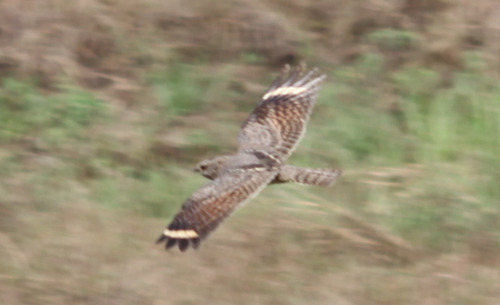
Savanna Nightjar
Caprimulgus affinis
The savanna nightjar measures 20-26cm in length, has a body weight of 54-110g, and a wingspan of 64cm, with size varying by subspecies, ranging from small to medium-large. Like other nightjars, they have long pointed wings and small legs and feet, indicating their reliance on flight over walking. The bill is wide, revealing a large gape when opened, and is surrounded by facial feathers, called rictal bristles. Their vermiculated grey-brown plumage, characteristic of all nightjars, makes them difficult to tell apart from other species based on sight alone. Voice: Savanna nightjars begin vocalisation during early dusk and can be heard throughout the night until dawn, becoming especially vocal during breeding. The characteristic "chwip" call is used for both marking territory and attracting females during breeding season. Females vocalise less, emitting soft squeaks during brooding.
ID text from Wikipedia, CC BY-SA 4.0

Where you might meet both
Learn this pair in the BeakBrain App
Photo and call practice. Coming soon to iPhone and Android.
Play today's Daily BirdPhotos and recordings are credited to their authors under the licence shown. Full profiles: Large-tailed Nightjar and Savanna Nightjar.