Learn what every symbol on the card means.Full credits and sources at beakbrain.com/symbols
 ForestScrapeMedium · 69 g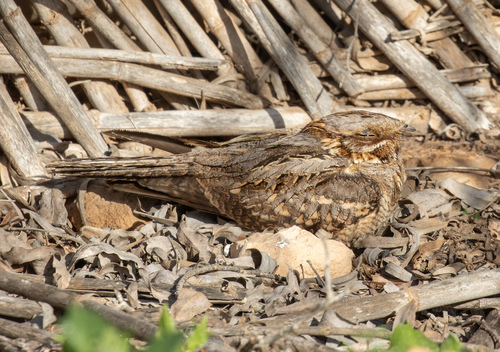
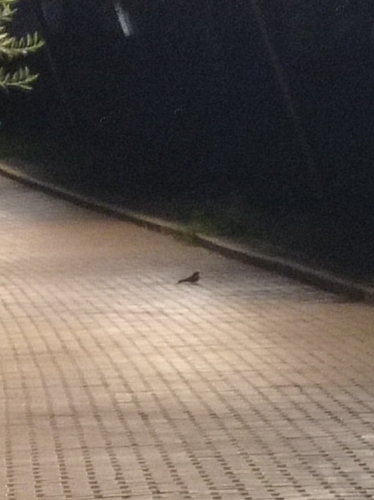

What the Red-necked Nightjar sounds like


ID tip
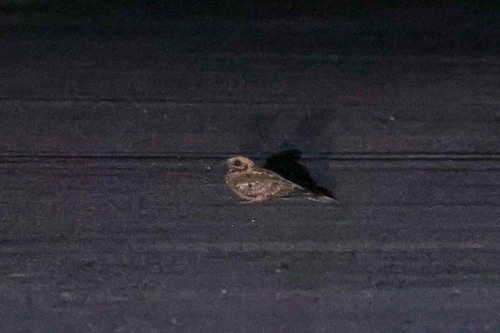
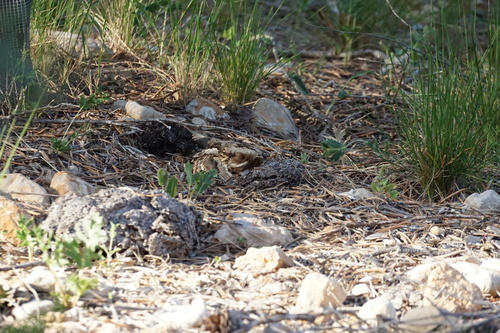
The variegated plumage resembles the European nightjar. The adult is lichen-grey, barred and streaked with buff, chestnut and black. The underparts are barred. It is larger and longer-tailed than the more widespread species, and has a rufous neck-collar. Both sexes have white wing spots, tail sides and throat. During the day this nightjar lies silent upon the ground, concealed by its plumage; it is difficult to detect, looking like a bit of lichen-covered twig or a fragment of bark. The length is 32 cm, and the wingspan 64 cm. Voice: Its call is a repetitive mechanical kyok-kyok-kyok..., which rises and falls as the bird turns its head from side to side. When it churrs, the bird lies or crouches along a branch or rail, but it will sing from a post. During courtship, and occasionally at other times, it uses a mechanical signal, a sharp cracking sound, caused by clapping the wings together over the back.
Text from Wikipedia, licensed CC BY-SA 4.0.
When to see the Red-necked Nightjar
One bar for each month. Filled bars are the 6 months with records; pale bars are months with none. The wide bar is May, the month with the most records.
Where to see the Red-necked Nightjar
The map shades 7 countries with regular records, and 2 more in a lighter tone where the bird turns up only as a stray. Everything unshaded has no records. Countries are listed below the map.
About the Red-necked Nightjar
The red-necked nightjar is the largest of the nightjars occurring in Europe. It breeds in Iberia and North Africa, and winters in tropical West Africa.
Text adapted from Wikipedia, licensed CC BY-SA 4.0.
Easily confused with
 Jerdon's NightjarCaprimulgus atripennisLike other nightjars, it has a wide gape, long wings, soft downy plumage and nocturnal habits.
 Square-tailed NightjarCaprimulgus fossiiVoice: This bird's call is a prolonged churring, which alternates between a fast and slow pace roughly every second.
 Jungle NightjarCaprimulgus indicusThe jungle nightjar is about 21–24 cm long with the Sri Lankan population (ssp. kelaarti) being smaller.
Side by side: Large-tailed Nightjar vs Red-necked Nightjar · Indian Nightjar vs Red-necked Nightjar · Jerdon's Nightjar vs Red-necked Nightjar · Red-necked Nightjar vs Square-tailed Nightjar · Jungle Nightjar vs Red-necked Nightjar
Learn the Red-necked Nightjar in the BeakBrain App
Photo and call practice. Coming soon to iPhone and Android.
Play today's Daily BirdEvery photo and recording on this page is credited to its author under the licence shown. Spotted a problem with this page, or have a better photo? Contribute.