Learn what every symbol on the card means.Full credits and sources at beakbrain.com/symbols


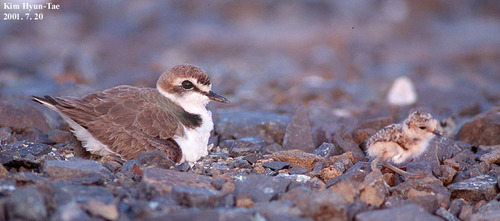
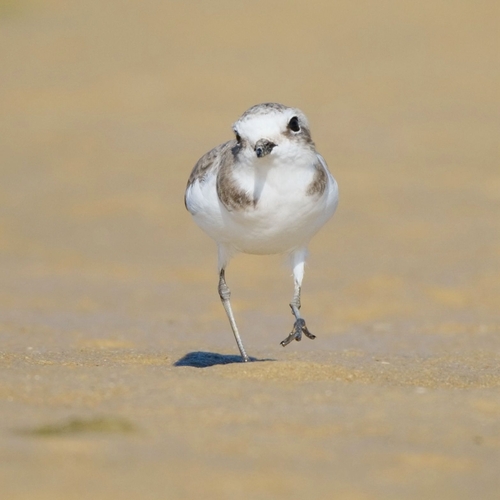
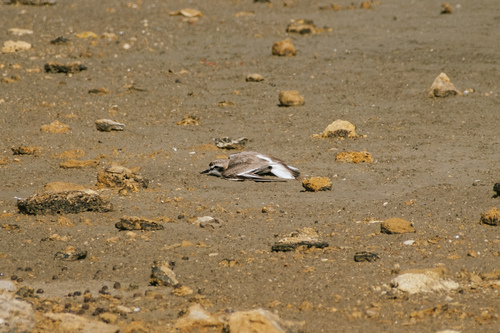
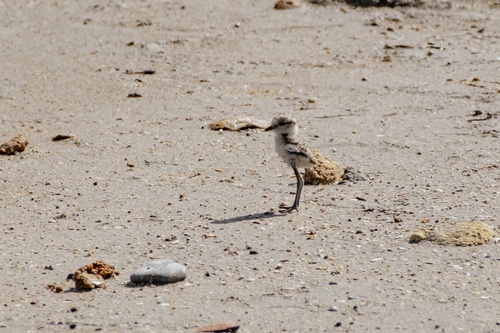
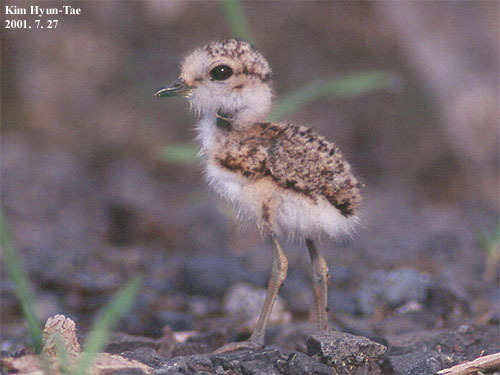
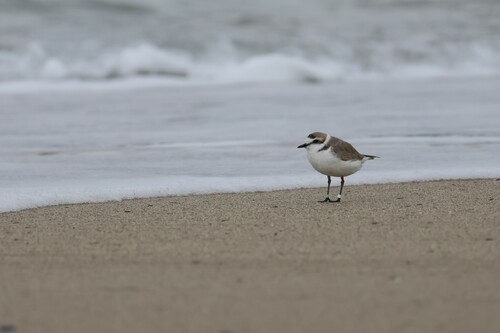
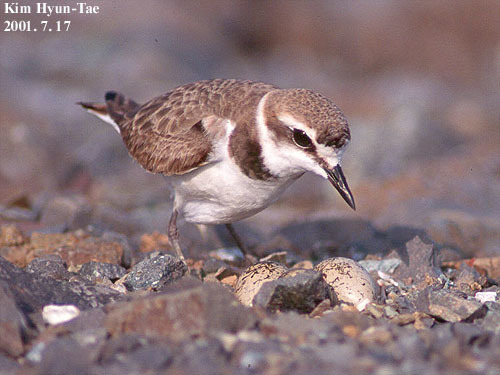
ID tip
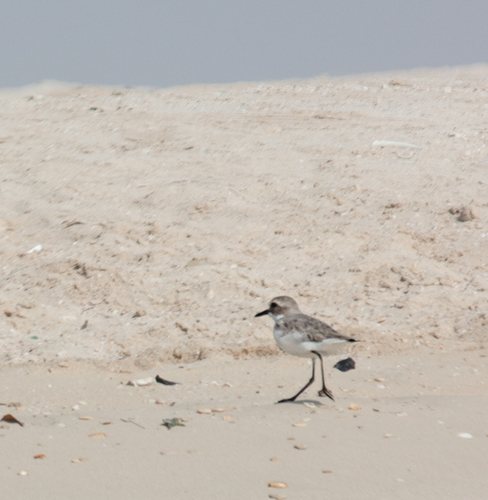
The Kentish plover is a small shorebird weighing around 40 g as an adult. Both male and female birds have black bills and dark legs, however adults have dimorphic plumage. During the breeding season, males have a black horizontal head bar, two incomplete dark breast-bands on each side of their breast, black ear coverts and a rufous nape and crown (although there is some variation between breeding populations), whereas the females are paler in these areas, without the dark markings. Voice: The alarm call, referred to as kittup call, is often heard both on the ground and in the air and can occur on its own, or paired with a tweet, heard as too-eet. The threat note is described as a "twanging, metallic, dwee-dwee-dweedweedwee sound".
Text from Wikipedia, licensed CC BY-SA 4.0.
When to see the Kentish Plover
One bar for each month, and every month is filled: this bird is recorded here in all twelve. The wide bar is April, the month with the most records.
Where to see the Kentish Plover
The map shades 104 countries with regular records, and 13 more in a lighter tone where the bird turns up only as a stray. Everything unshaded has no records. Countries are listed below the map.
Recorded as a rare visitor in United States, Finland, Chile, Colombia, Gabon, Mali, Nigeria, Tajikistan, Côte d’Ivoire, Mayotte, Sierra Leone, St. Barthélemy, Guernsey.
About the Kentish Plover
The Kentish plover is a small wader of the family Charadriidae that breeds on the shores of saline lakes, lagoons, and coasts, populating sand dunes, marshes, semi-arid desert, and tundra. Both male and female birds have pale plumages with a white underside, grey/brown back, dark legs and a dark bill; however, additionally the male birds also exhibit very dark incomplete breast bands, and dark markings either side of their head, therefore the Kentish plover is regarded as sexually dimorphic.
Text adapted from Wikipedia, licensed CC BY-SA 4.0.
Easily confused with
 Greater Sand PloverAnarhynchus leschenaultiiThis chunky plover is 19–22 cm long, slightly larger than a common ringed plover, and is conspicuously long-legged and thick-billed.
 WrybillAnarhynchus frontalisThe wrybill is a small, plump plover, measuring 20 to 21 cm (7.9–8.3 in) in length and weighing between 43 and 71 g (1.5–2.5 oz).
 Oriental PloverAnarhynchus veredusAdult male in breeding plumage: white face, throat and fore-crown; grey-brown hind-crown, hind-neck and back; belly white, demarcated with narrow black band and then broad chestnut breast band merging into white throat.
Side by side: Greater Sand Plover vs Kentish Plover · Kentish Plover vs Wrybill · Kentish Plover vs Oriental Plover
Learn the Kentish Plover in the BeakBrain App
Photo and call practice. Coming soon to iPhone and Android.
Play today's Daily BirdEvery photo and recording on this page is credited to its author under the licence shown. Spotted a problem with this page, or have a better photo? Contribute.