Learn what every symbol on the card means.Full credits and sources at beakbrain.com/symbols
 GrasslandPlatform nestLarge · 1.2 kg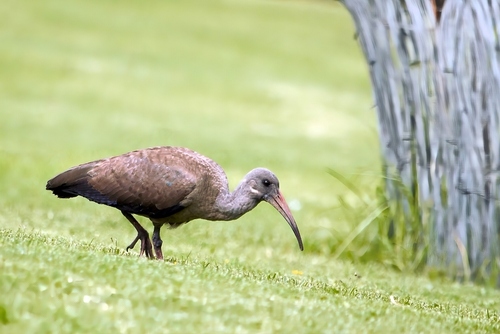


What the Hadada Ibis sounds like

ID tip
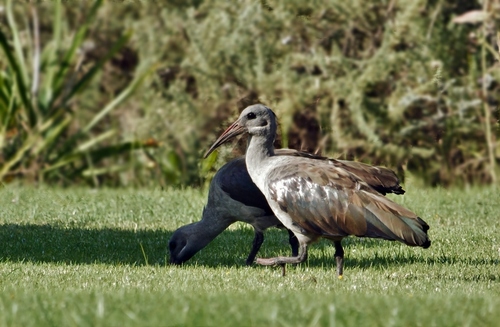
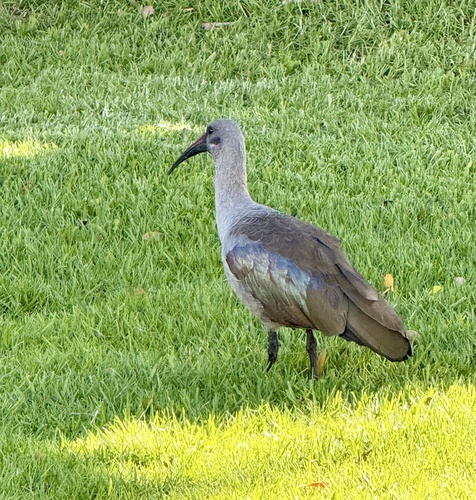
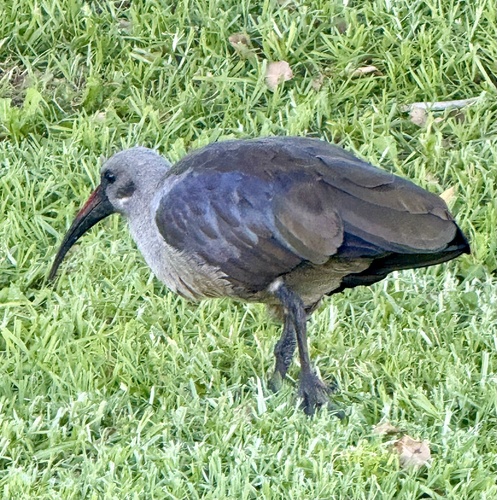
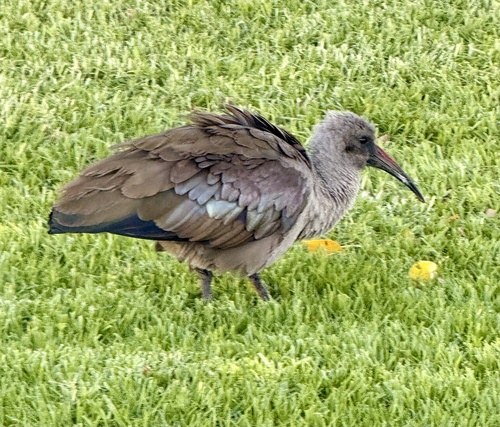
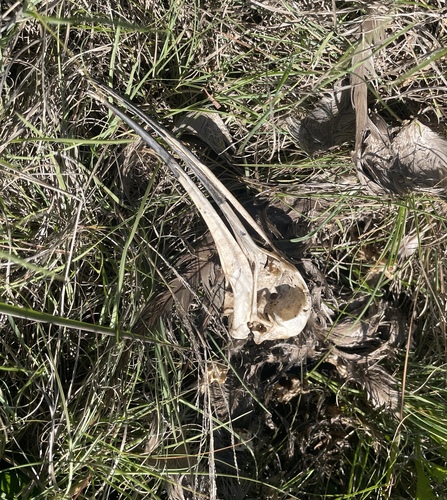
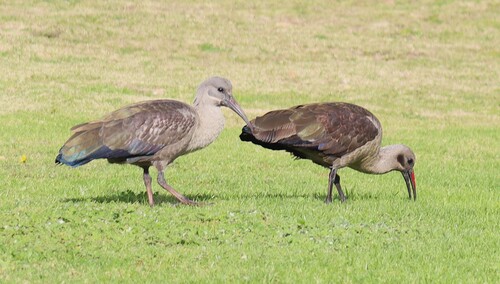
The hadada is a large (about 76 cm (30 in) long), grey-to-partly brown species of ibis. Adults have a mean body mass of 1.2 kilograms (2.65 lbs.). Males and females are alike in plumage. It has a narrow, white, roughly horizontal stripe across its cheeks. This is sometimes called the "moustache" though it does not reach the mouth corners. The plumage over the wings has an iridescent purple sheen produced by optical microstructures within the feathers.
Text from Wikipedia, licensed CC BY-SA 4.0.
When to see the Hadada Ibis
One bar for each month, and every month is filled: this bird is recorded here in all twelve. The wide bar is October, the month with the most records.
Where to see the Hadada Ibis
The map shades 43 countries with regular records, and 1 more in a lighter tone where the bird turns up only as a stray. Everything unshaded has no records. Countries are listed below the map.
Recorded as a rare visitor in Belgium.
About the Hadada Ibis
The hadada ibis or hadeda is an ibis native to Sub-Saharan Africa. It is named for its loud three to four note calls uttered in flight especially in the mornings and evenings when they fly out or return to their roost trees. Although not as dependent on water as some ibises, they are found near wetlands and often live in close proximity to humans, foraging in cultivated land and gardens. A medium-sized ibis with stout legs and a typical down-curved bill, the wing coverts are iridescent with a green or purple sheen. They are non-migratory but are known to make nomadic movements in response to rain particularly during droughts.
Text adapted from Wikipedia, licensed CC BY-SA 4.0.
Easily confused with
 Wattled IbisBostrychia carunculataThe Wattled ibis is a medium-sized, dark brown, crested bird, distinguished by the combination of its dark color, its creast and its extensive white wing-patch.
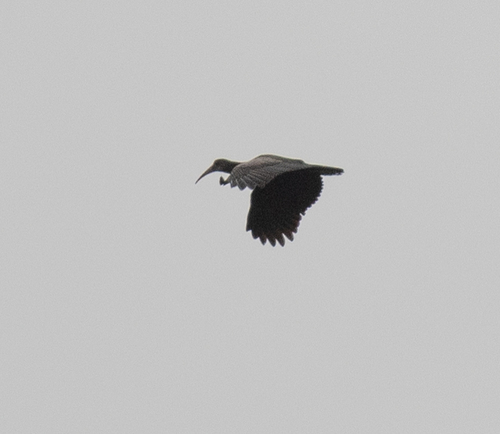 Olive IbisBostrychia olivaceaThis relatively small ibis measures 65–75 cm in length, depending on subspecies.
Spot-breasted IbisBostrychia raraThe spot-breasted ibis is a small, dark ibis (around 47 cm (19 in)), with long legs and a long red bill.
Olive IbisBostrychia olivaceaThis relatively small ibis measures 65–75 cm in length, depending on subspecies.
Spot-breasted IbisBostrychia raraThe spot-breasted ibis is a small, dark ibis (around 47 cm (19 in)), with long legs and a long red bill.
Side by side: Hadada Ibis vs Wattled Ibis
Learn the Hadada Ibis in the BeakBrain App
Photo and call practice. Coming soon to iPhone and Android.
Play today's Daily BirdEvery photo and recording on this page is credited to its author under the licence shown. Spotted a problem with this page, or have a better photo? Contribute.