Learn what every symbol on the card means.Full credits and sources at beakbrain.com/symbols
 WoodlandCup nestMedium · 83 g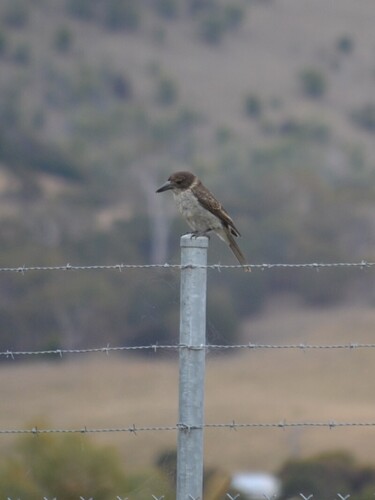
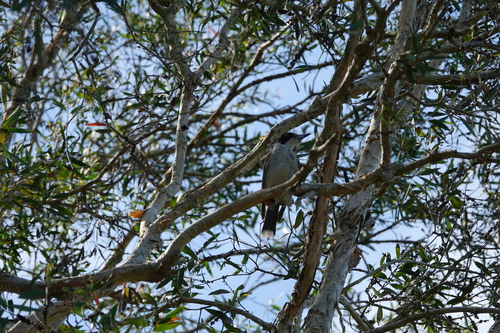


What the Grey Butcherbird sounds like


ID tip
The grey butcherbird is a small grey, black and white bird with a weight of 90 grams (3.2 ounces), a body length between 27 and 30 cm (11 and 12 in) and a wing span expanding 37–43 cm (15–17 in). The grey butcherbird is smaller than the Pied Butcherbird (Cracticus nigrogularis). The adult grey butcherbird has a black head, top and sides; and a white chin and throat through to the lower hindneck. The upperbody is mostly dark grey with streaks of narrow white bands that extends across the uppertail-coverts at the base of the tail. The uppertail is black with narrow white tips. Voice: All members of the territorial group contribute to the territorial song, a loud and rollicking song with both musical and harsh elements. The song can be sung by only one member, but more often it is sung in duet or as a group. Some duets are antiphonal where it is not obvious that two or more birds are singing. Most songs are sung with more than one phase and are sung antiphonally.
Text from Wikipedia, licensed CC BY-SA 4.0.
When to see the Grey Butcherbird
One bar for each month, and every month is filled: this bird is recorded here in all twelve. The wide bar is October, the month with the most records.
Where to see the Grey Butcherbird
The map shades 1 country with regular records, and 1 more in a lighter tone where the bird turns up only as a stray. Everything unshaded has no records. Countries are listed below the map.
Recorded as a rare visitor in Japan.
About the Grey Butcherbird
The grey butcherbird is a widely distributed species endemic to Australia. It occurs in a range of different habitats including arid, semi-arid and temperate zones. It is found across southern Australia, but is absent from the deserts of central Australia and the monsoon tropics of northern Australia. It has a characteristic rollicking birdsong. It appears to be adapting well to city living, and can be encountered in the suburbs of many Australian cities including Brisbane, Melbourne, Perth, Sydney and Hobart. The grey butcherbird preys on small vertebrates including other birds.
Text adapted from Wikipedia, licensed CC BY-SA 4.0.
Easily confused with
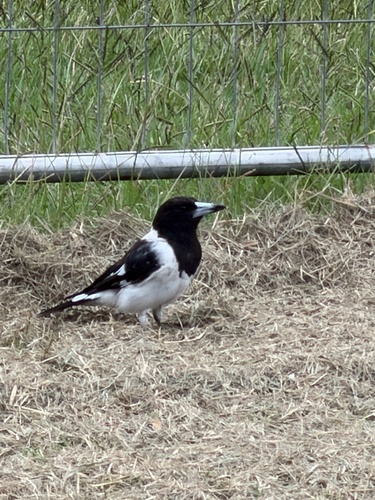 Pied ButcherbirdCracticus nigrogularisLike other butcherbirds, the pied butcherbird is stockily built with short legs and a relatively large head.
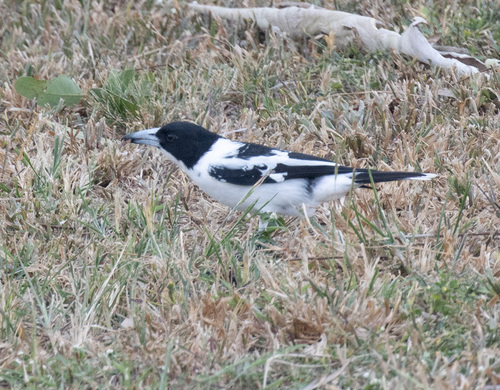 Black-backed ButcherbirdCracticus mentalisLike other butcherbirds, the black-backed butcherbird is a stockily built bird with a relatively large head and short wings and legs.
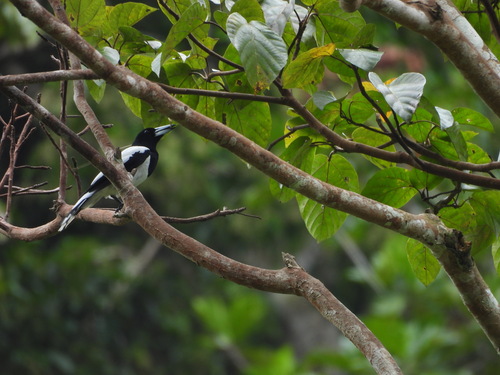 Hooded ButcherbirdCracticus cassicusMeasuring 32–35 cm in length, the male and female are similar in appearance.
Side by side: Australian Magpie vs Grey Butcherbird · Grey Butcherbird vs Pied Butcherbird
Learn the Grey Butcherbird in the BeakBrain App
Photo and call practice. Coming soon to iPhone and Android.
Play today's Daily BirdEvery photo and recording on this page is credited to its author under the licence shown. Spotted a problem with this page, or have a better photo? Contribute.