Learn what every symbol on the card means.Full credits and sources at beakbrain.com/symbols
 ForestCup nestMedium · 142 g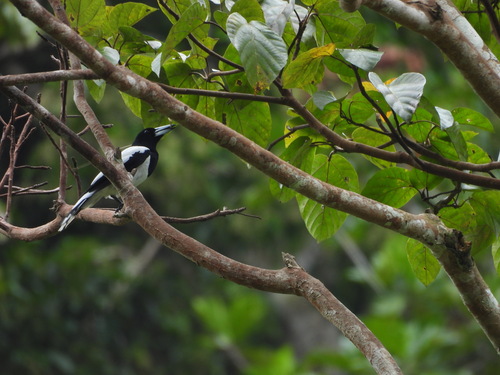
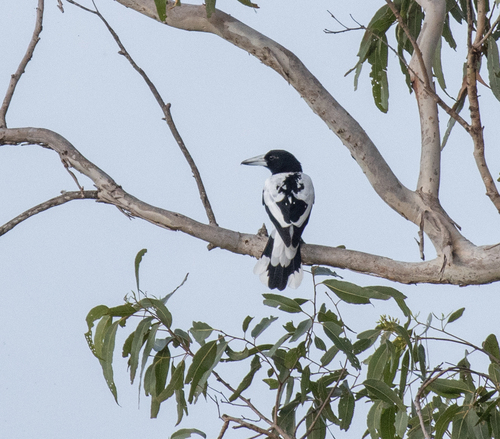
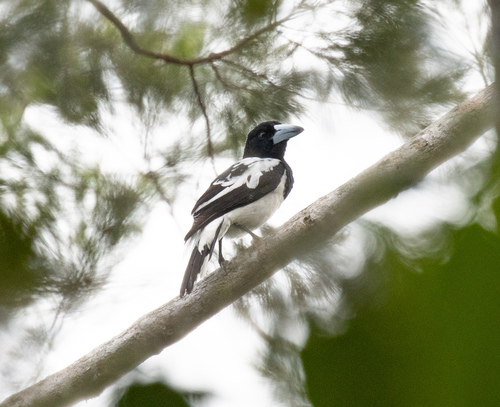
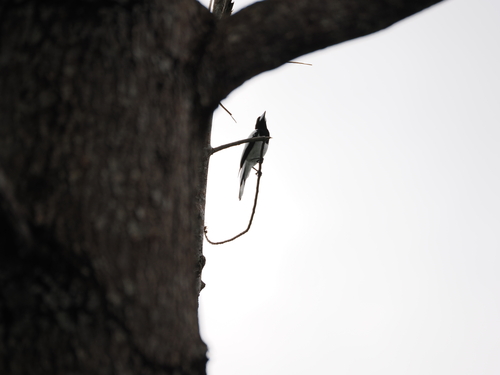
ID tip
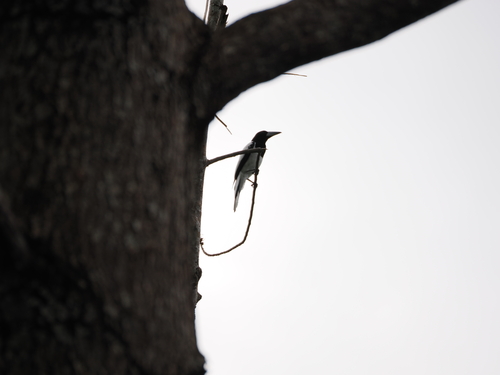
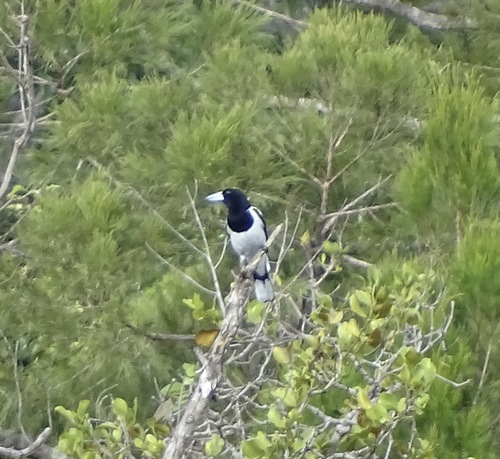
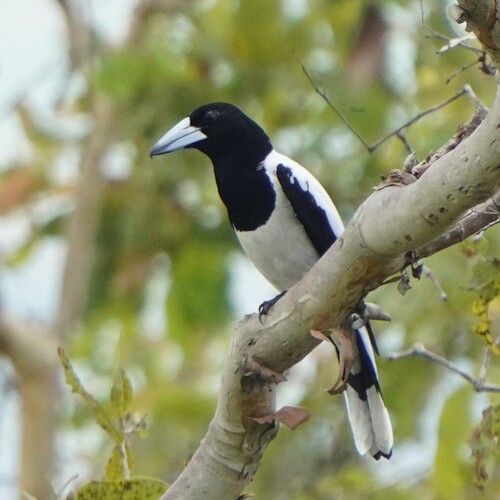
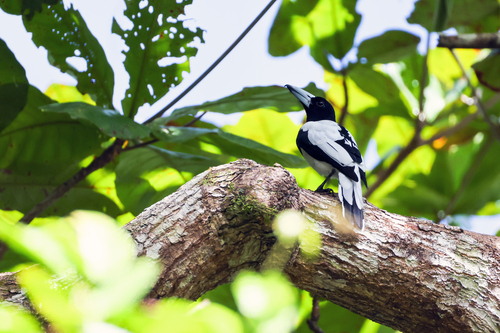
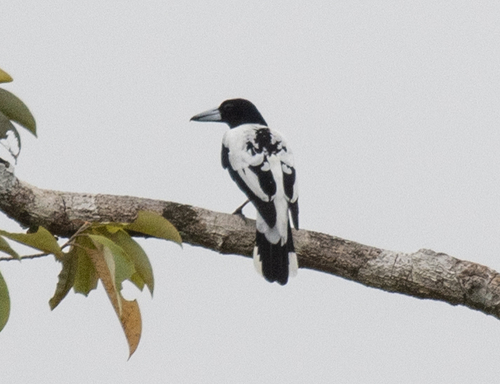
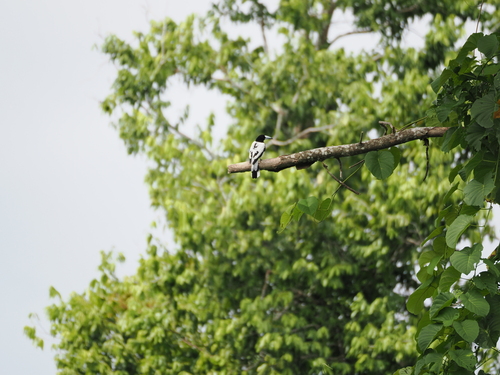
Measuring 32–35 cm in length, the male and female are similar in appearance. The plumage is predominantly black and white, the bird bearing a black head, nape and throat, white underparts, rump, and back, and black and white mantle. The tail is black, with a broad white tip. The robust pale bluish-grey bill is hooked and tipped black. The iris is black or dark brown, and the legs and feet are dark grey to black. It can be distinguished from the black-backed butcherbird by its black throat. The hooded butcherbird has a complex fluting song, made up of many varied components.
Text from Wikipedia, licensed CC BY-SA 4.0.
When to see the Hooded Butcherbird
One bar for each month. Filled bars are the 7 months with records; pale bars are months with none. The wide bar is July, the month with the most records.
Where to see the Hooded Butcherbird
The map shades 2 countries with regular records. Everything unshaded has no records. Countries are listed below the map.
About the Hooded Butcherbird
The hooded butcherbird is a species of passerine bird in the family Artamidae. It is found in New Guinea. Its natural habitat is subtropical or tropical moist lowland forest.
Text adapted from Wikipedia, licensed CC BY-SA 4.0.
Easily confused with
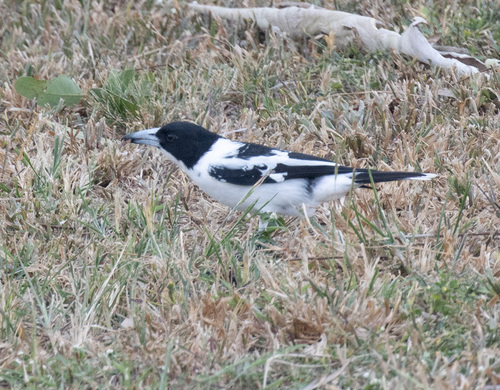 Black-backed ButcherbirdCracticus mentalisLike other butcherbirds, the black-backed butcherbird is a stockily built bird with a relatively large head and short wings and legs.
Tagula ButcherbirdCracticus louisiadensisThe bird is described as large.
Black-backed ButcherbirdCracticus mentalisLike other butcherbirds, the black-backed butcherbird is a stockily built bird with a relatively large head and short wings and legs.
Tagula ButcherbirdCracticus louisiadensisThe bird is described as large.
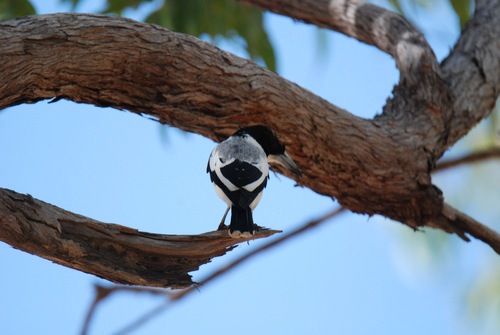 Silver-backed ButcherbirdCracticus argenteusThe silver-backed butcherbird looks similar to the Grey butcherbird, except its back is lighter and silvery.
Learn the Hooded Butcherbird in the BeakBrain App
Photo and call practice. Coming soon to iPhone and Android.
Play today's Daily BirdEvery photo and recording on this page is credited to its author under the licence shown. Spotted a problem with this page, or have a better photo? Contribute.