Learn what every symbol on the card means.Full credits and sources at beakbrain.com/symbols
 ForestCavity nestSmall · 18 g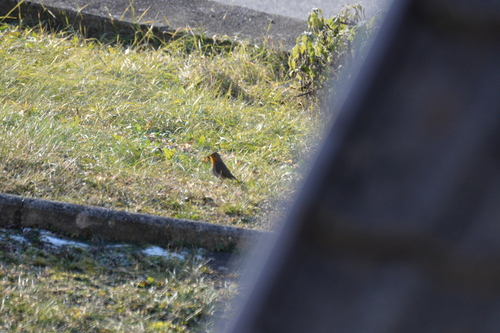


What the European Robin sounds like


ID tip
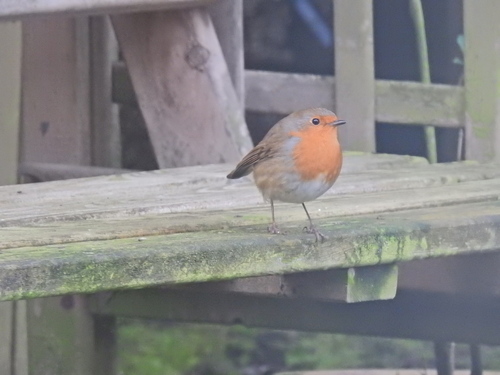
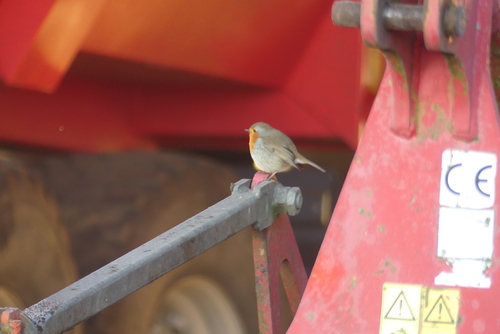
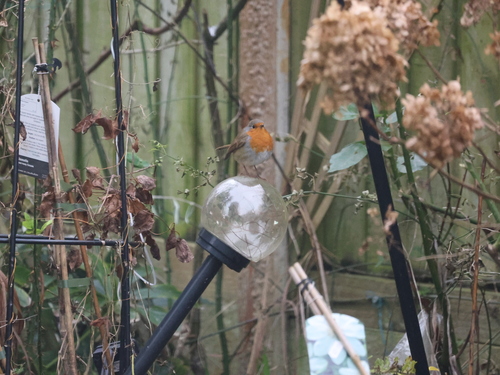
The adult European robin is 12.5–14.0 cm (4.9–5.5 in) long and weighs 16–22 g (0.56–0.78 oz), with a wingspan of 20–22 cm (8–8.5 in). The male and female bear similar plumage: an orange breast and face (more strongly coloured in the otherwise similar British subspecies E. r. melophilus), lined by a bluish grey on the sides of the neck and chest. The upperparts are brownish, or olive-tinged in British birds, and the belly whitish, while the legs and feet are brown. The bill and eyes are black. Juveniles are a spotted brown and white in colouration, with patches of orange gradually appearing. Voice: The robin produces a fluting, warbling during the breeding season. Both the male and female sing throughout the year, including during the winter, when they hold separate territories. During the winter, the robin's song is more plaintive than the summer version. The female robin moves a short distance from the summer nesting territory to a nearby area that is more suitable for winter feeding.
Text from Wikipedia, licensed CC BY-SA 4.0.
When to see the European Robin
One bar for each month. Filled bars are the 11 months with records; pale bars are months with none. The wide bar is April, the month with the most records.
Where to see the European Robin
The map shades 80 countries with regular records, and 6 more in a lighter tone where the bird turns up only as a stray. Everything unshaded has no records. Countries are listed below the map.
Recorded as a rare visitor in United States, Canada, Afghanistan, Japan, Bahrain, South Korea.
About the European Robin
The European robin, known simply as the robin or robin redbreast in the British Isles, is a small insectivorous passerine bird belonging to the Old World flycatcher family Muscicapidae. It is found across Europe, as far east as Western Siberia, and as far south as North Africa. It is sedentary in the west and south of its range, and migratory in the north and east of its range where winters are harsher.
Text adapted from Wikipedia, licensed CC BY-SA 4.0.
Easily confused with
 European Pied FlycatcherFicedula hypoleucaThis is a 12–13.5 centimetres (4.7–5.3 in) long bird.
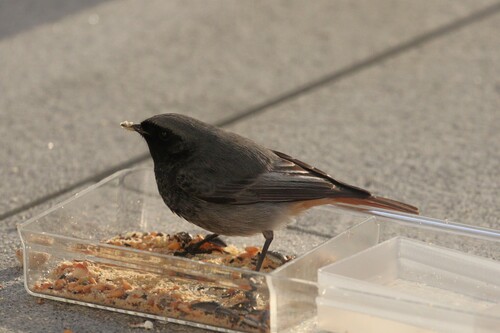 Black RedstartPhoenicurus ochrurosThe black redstart is 13–14.5 cm (5.1–5.7 in) in length and 12–20 g (0.42–0.71 oz) in weight, similar to the common redstart.
 European StonechatSaxicola rubicolaThe stonechat is 11.5–13 cm (4.5–5.1 in) long and weighs 13–17 g (0.46–0.60 oz), slightly smaller than the European robin.
Side by side: European Pied Flycatcher vs European Robin · Black Redstart vs European Robin · European Robin vs European Stonechat
Learn the European Robin in the BeakBrain App
Photo and call practice. Coming soon to iPhone and Android.
Play today's Daily BirdEvery photo and recording on this page is credited to its author under the licence shown. Spotted a problem with this page, or have a better photo? Contribute.