Learn what every symbol on the card means.Full credits and sources at beakbrain.com/symbols
 WetlandPlatform nestLarge · 1.3 kg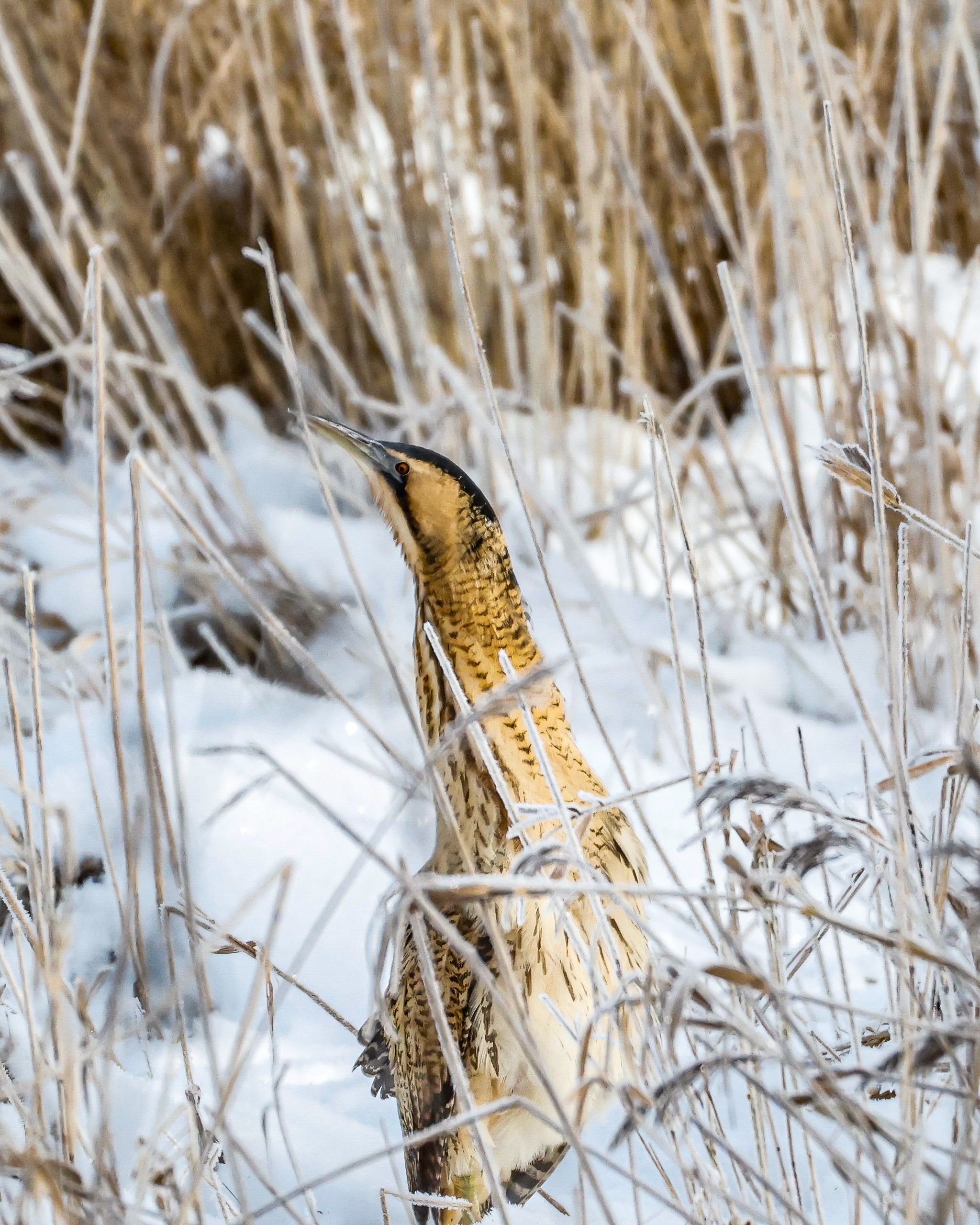
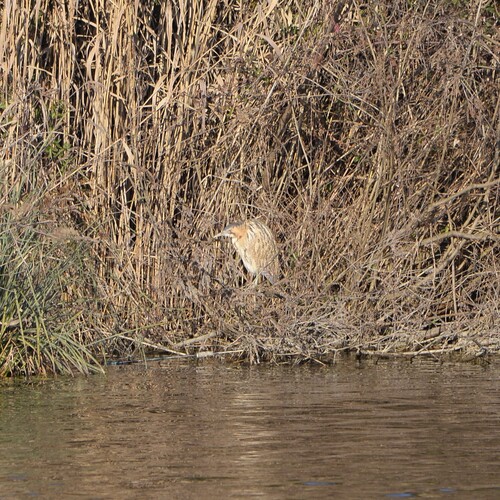
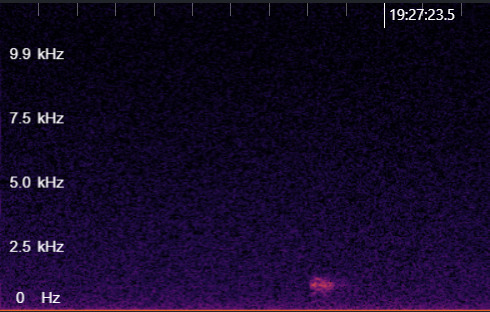
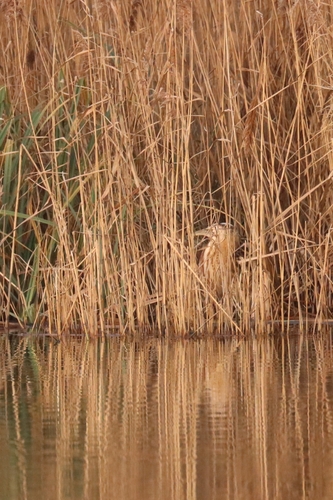
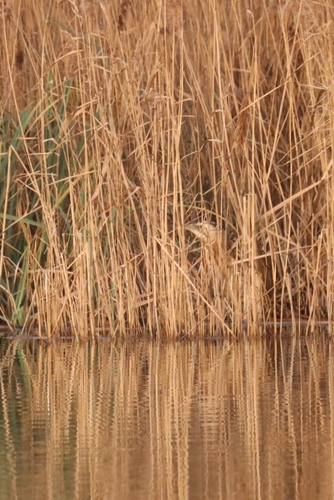
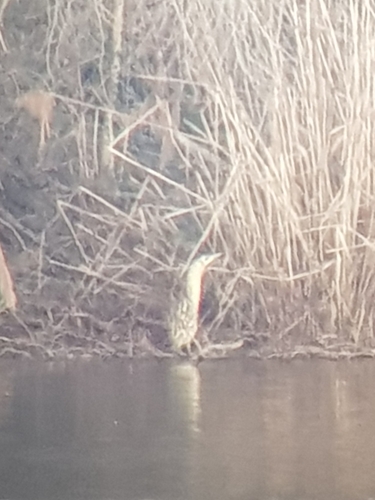
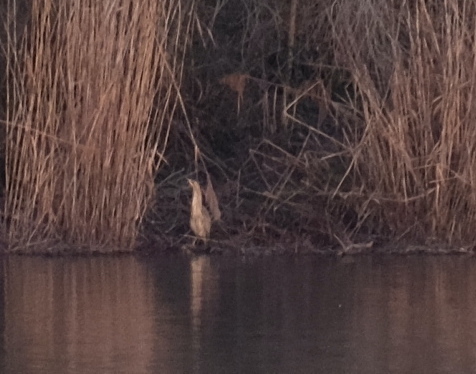


What the Eurasian Bittern sounds like


ID tip
Bitterns are thickset herons with bright, pale, buffy-brown plumage covered with dark streaks and bars. As its alternative name suggests, this species is the largest of the bitterns, with males being rather larger than females. The Eurasian or great bittern is 69–81 cm (27–32 in) in length, with a 100–130 cm (40–50 in) wingspan and a body mass of 0.87–1.94 kg (1 lb 14+1⁄2 oz – 4 lb 4+1⁄2 oz). The crown and nape are black, with the individual feathers rather long and loosely arranged, tipped with buff narrowly barred with black. Voice: The mating call or contact call of the male is a deep, sighing fog-horn or bull-like boom with a quick rise and an only slightly longer fall, easily audible from a distance of five kilometres (three miles) on a calm night. The call is mainly given between January and April during the mating season.
Text from Wikipedia, licensed CC BY-SA 4.0.
When to see the Eurasian Bittern
One bar for each month. Filled bars are the 5 months with records; pale bars are months with none. The wide bar is May, the month with the most records.
Where to see the Eurasian Bittern
The map shades 82 countries with regular records, and 9 more in a lighter tone where the bird turns up only as a stray. Everything unshaded has no records. Countries are listed below the map.
Recorded as a rare visitor in Morocco, Algeria, Cameroon, Kenya, Libya, Seychelles, Tanzania, Palestinian Territories, Guernsey.
About the Eurasian Bittern
The Eurasian bittern or great bittern is a wading bird in the bittern subfamily (Botaurinae) of the heron family Ardeidae. There are two subspecies, the northern race breeding in parts of Europe and across the Palearctic, as well as on the northern coast of Africa, while the southern race is endemic to parts of southern Africa. It is a secretive bird, seldom seen in the open as it prefers to skulk in reed beds and thick vegetation near water bodies. Its presence is apparent in the spring, when the booming call of the male during the breeding season can be heard. It feeds on fish, small mammals, fledgling birds, amphibians, crustaceans and insects.
Text adapted from Wikipedia, licensed CC BY-SA 4.0.
Easily confused with
 American BitternBotaurus lentiginosusThe American bittern is a large, chunky, brown bird, very similar to the Eurasian bittern (Botaurus stellaris), though slightly smaller, and the plumage is speckled rather than being barred.
 Pinnated BitternBotaurus pinnatusThe pinnated bittern is a large heron, measuring between 25–30 in (64–76 cm) with a weight that ranges from 554 to 1,157 g (1.2 to 2.6 lb); males typically weigh considerably more than females.
 Australasian BitternBotaurus poiciloptilusThe Australasian bittern, or Matuku-hūrepo in Māori, is a stocky, sizeable and elusive heron-like bird native to the wetlands of Australia, New Zealand, and New Caledonia.
Side by side: American Bittern vs Eurasian Bittern · Eurasian Bittern vs Pinnated Bittern
Learn the Eurasian Bittern in the BeakBrain App
Photo and call practice. Coming soon to iPhone and Android.
Play today's Daily BirdEvery photo and recording on this page is credited to its author under the licence shown. Spotted a problem with this page, or have a better photo? Contribute.