Learn what every symbol on the card means.Full credits and sources at beakbrain.com/symbols
 WetlandPlatform nestHuge · 5.5 kg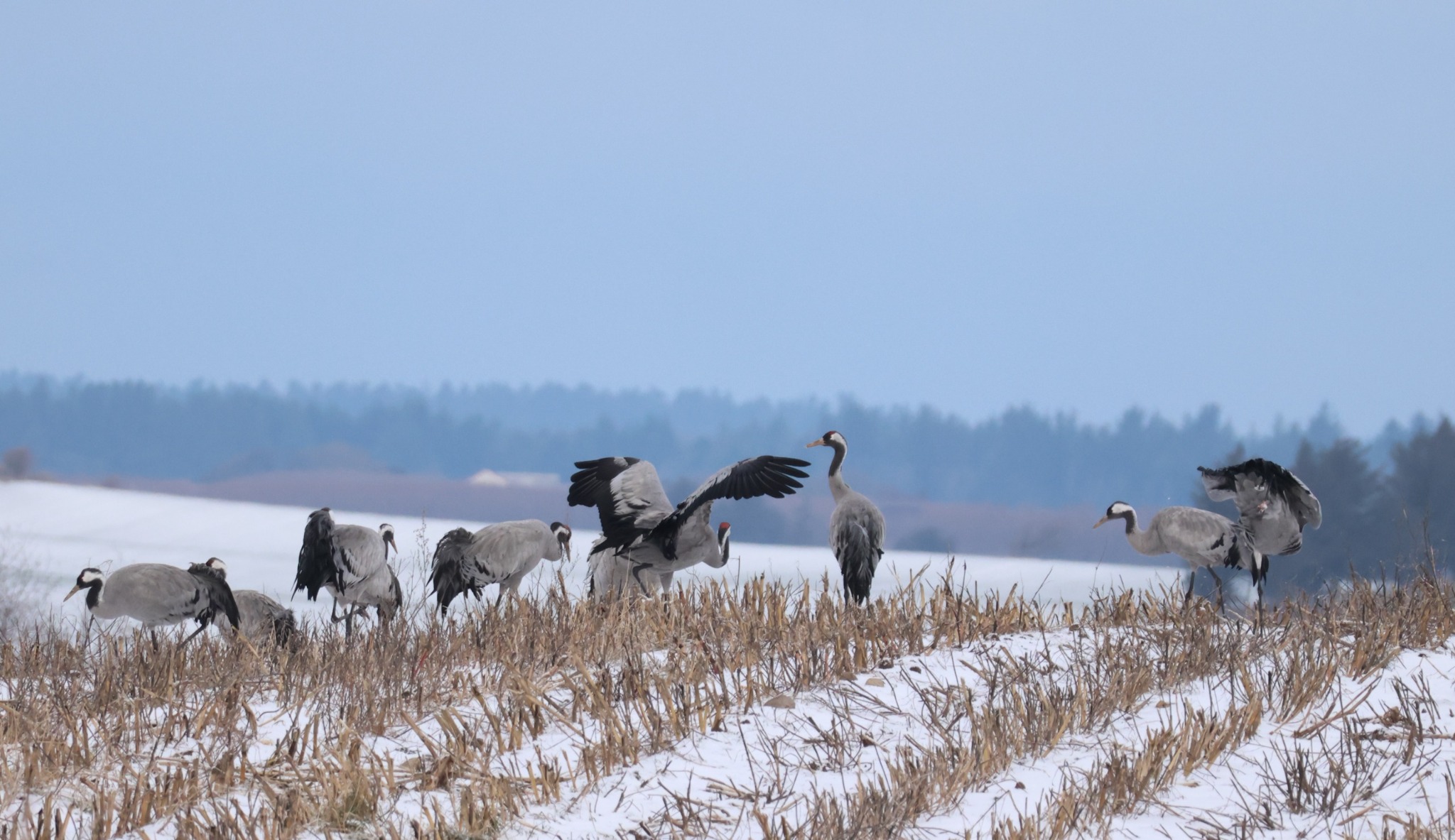




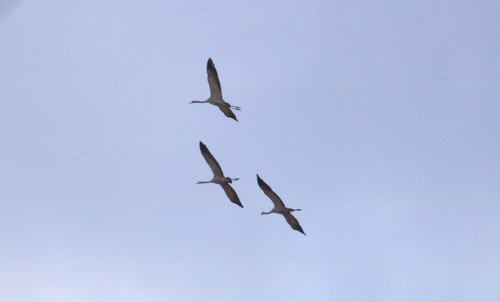
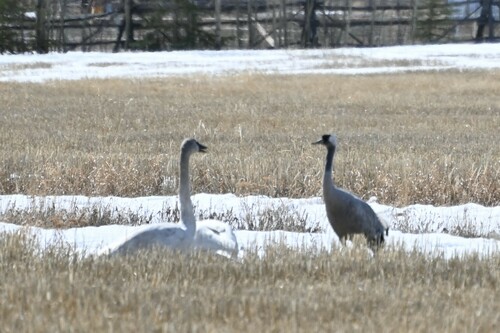
What the Common Crane sounds like


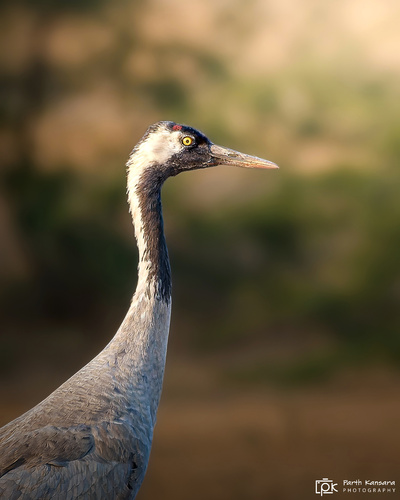
ID tip
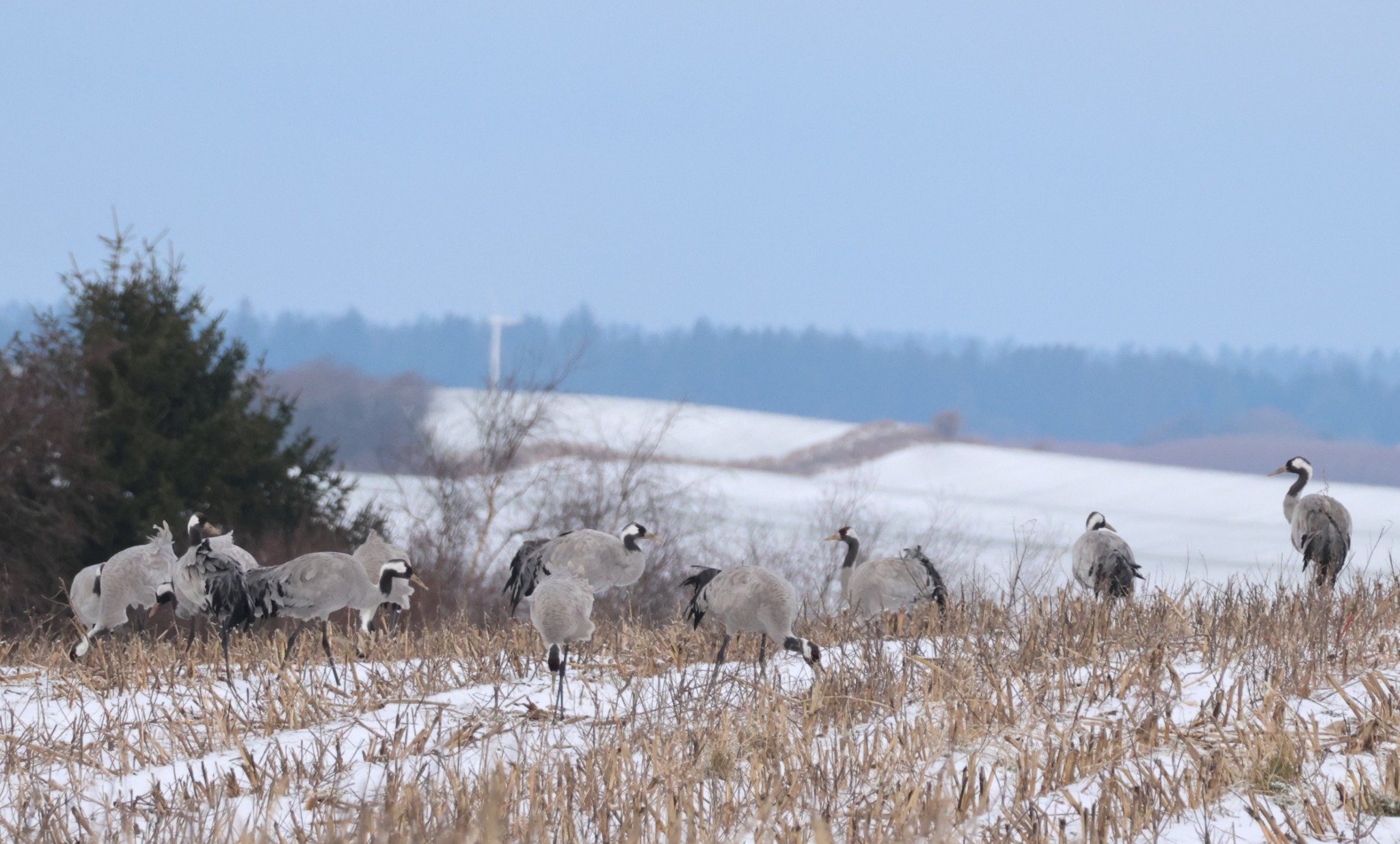
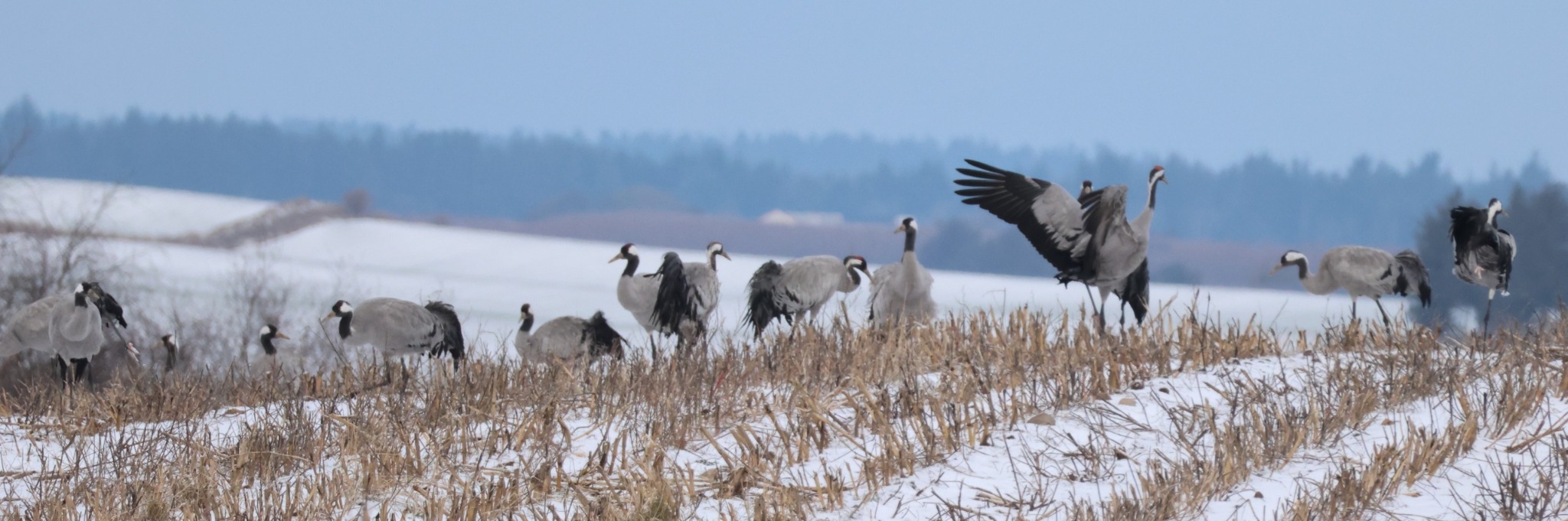
The common crane is a large, stately bird and a medium-sized crane. It is 100–130 cm (39–51 in) long with a 180–240 cm (71–94 in) wingspan. The body weight can range from 3 to 6.1 kg (6.6 to 13.4 lb), with the nominate subspecies averaging around 5.4 kg (12 lb) and the eastern subspecies (G. g. lilfordi) averaging 4.6 kg (10 lb). Among standard measurements, the wing chord is 50.7–60.8 cm (20.0–23.9 in) long, the tarsus is 20.1–25.2 cm (7.9–9.9 in) and the exposed culmen is 9.5–11.6 cm (3.7–4.6 in).
Text from Wikipedia, licensed CC BY-SA 4.0.
When to see the Common Crane
One bar for each month. Filled bars are the 10 months with records; pale bars are months with none. The wide bar is April, the month with the most records.
Where to see the Common Crane
The map shades 79 countries with regular records, and 8 more in a lighter tone where the bird turns up only as a stray. Everything unshaded has no records. Countries are listed below the map.
Recorded as a rare visitor in United States, Canada, Libya, Afghanistan, Gibraltar, Albania, Faroe Islands, Isle of Man.
About the Common Crane
The common crane, also known as the Eurasian crane, is a bird of the family Gruidae, the cranes. A medium-sized species, it is the only crane commonly found in Europe besides the demoiselle crane and the Siberian crane that only are regular in the far eastern part of the continent. Along with the sandhill crane, demoiselle crane and the brolga, it is one of only four crane species not currently classified as threatened with extinction or conservation dependent on the species level. Despite the species' large numbers, local extinctions and extirpations have taken place in part of its range, and an ongoing reintroduction project is underway in the United Kingdom.
Text adapted from Wikipedia, licensed CC BY-SA 4.0.
Easily confused with
 Whooping CraneGrus americanaAn adult whooping crane is white with a red crown and a long, dark, pointed bill.
 Blue CraneGrus paradiseaThe blue crane is a tall, ground-dwelling bird, but is fairly small by the standards of the crane family.
 Demoiselle CraneGrus virgoThe demoiselle is 85–100 cm (33.5–39.5 in) long, 76 cm (30 in) tall and has a 155–180 cm (61–71 in) wingspan.
Side by side: Common Crane vs Whooping Crane · Blue Crane vs Common Crane · Common Crane vs Demoiselle Crane
Learn the Common Crane in the BeakBrain App
Photo and call practice. Coming soon to iPhone and Android.
Play today's Daily BirdEvery photo and recording on this page is credited to its author under the licence shown. Spotted a problem with this page, or have a better photo? Contribute.