Learn what every symbol on the card means.Full credits and sources at beakbrain.com/symbols
 ShrublandCup nestSmall · 28 g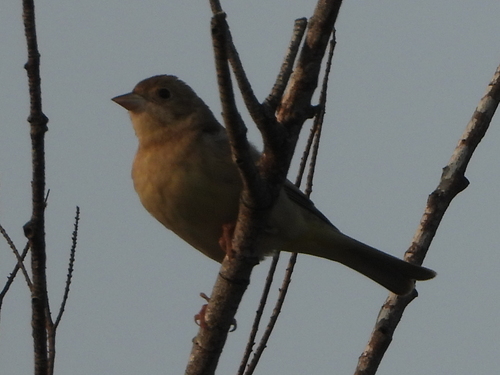


What the Black-headed Bunting sounds like


ID tip
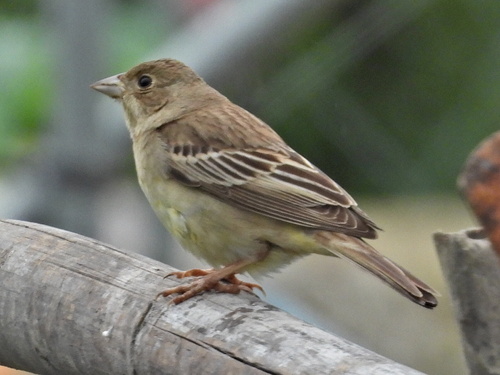
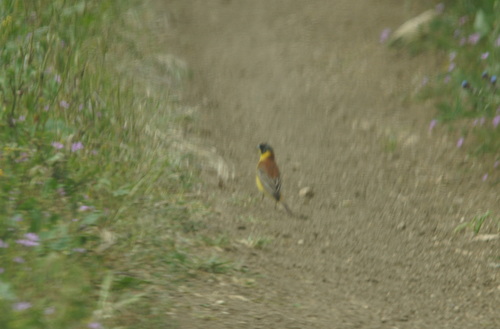
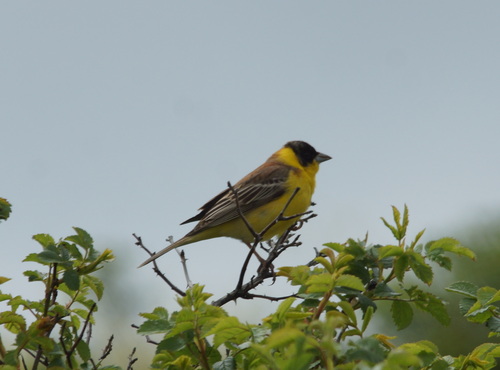
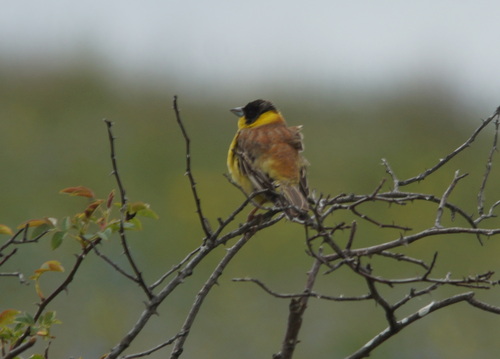
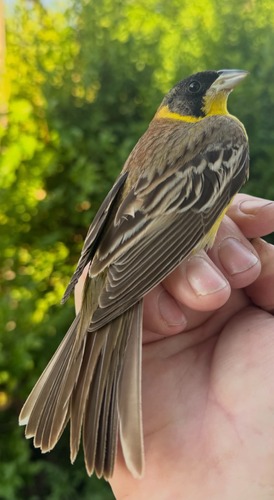
This bird is 15 cm (5.9 in) long, larger than a reed bunting, and with a long-tail. The breeding male has bright yellow underparts, chestnut upperparts and a black hood. The female is a washed-out version of the male, with paler underparts, a grey-brown back and a greyish head. The juvenile is similar but the vent is yellow, and both can be difficult to separate from the corresponding plumages of the closely related red-headed bunting although the black-headed tends to have the cheeks darker than the throat. First year males have a grey crown and the back has patches of chestnut and grey.
Text from Wikipedia, licensed CC BY-SA 4.0.
When to see the Black-headed Bunting
One bar for each month. Filled bars are the 7 months with records; pale bars are months with none. The wide bar is May, the month with the most records.
Where to see the Black-headed Bunting
The map shades 55 countries with regular records, and 9 more in a lighter tone where the bird turns up only as a stray. Everything unshaded has no records. Countries are listed below the map.
Recorded as a rare visitor in United Kingdom, Germany, Finland, Japan, Spain, Netherlands, Ireland, Qatar, Iceland.
About the Black-headed Bunting
The black-headed bunting is a passerine bird in the bunting family Emberizidae. It breeds in south-east Europe east to Iran and migrates in winter mainly to India, with some individuals moving further into south-east Asia. Like others in its family, it is found in open grassland habitats where they fly in flocks in search of grains and seed. Adult males are well marked with yellow underparts, chestnut back and a black head. Adult females in breeding plumage look like duller males. In other plumages, they can be hard to separate from the closely related red-headed bunting and natural hybridization occurs between the two species in the zone of overlap of their breeding ranges in northern Iran.
Text adapted from Wikipedia, licensed CC BY-SA 4.0.
Easily confused with
 Yellow-throated BuntingEmberiza elegansThe yellow-throated bunting, also known as the elegant bunting, is a species of bird in the family Emberizidae.
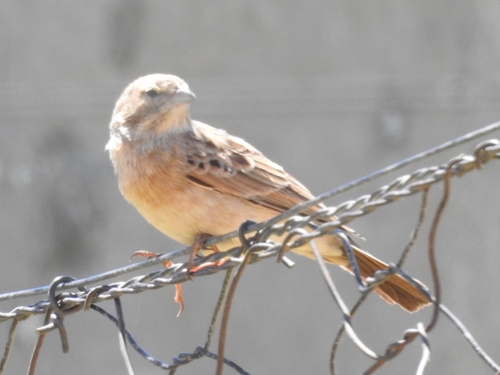 Lark-like BuntingEmberiza impetuaniThe lark-like bunting is a species of bird in the family Emberizidae, which is native to south-western Africa.
 Meadow BuntingEmberiza cioidesThe meadow bunting is 15 to 16.5 cm long.
Side by side: Black-headed Bunting vs Meadow Bunting
Learn the Black-headed Bunting in the BeakBrain App
Photo and call practice. Coming soon to iPhone and Android.
Play today's Daily BirdEvery photo and recording on this page is credited to its author under the licence shown. Spotted a problem with this page, or have a better photo? Contribute.