Learn what every symbol on the card means.Full credits and sources at beakbrain.com/symbols
 ShrublandCup nestTiny · 12 g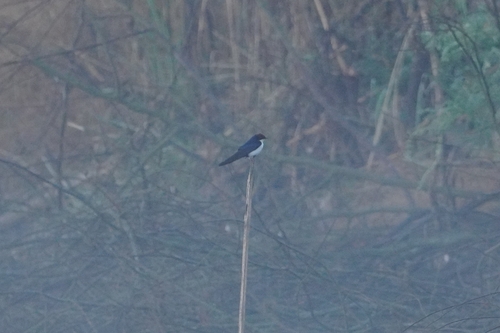




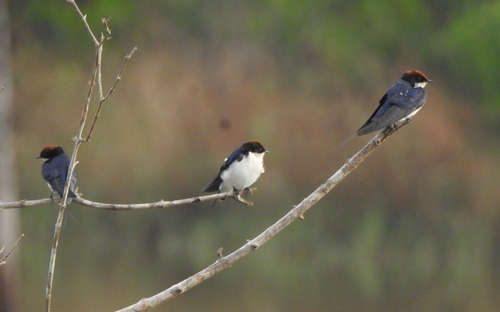
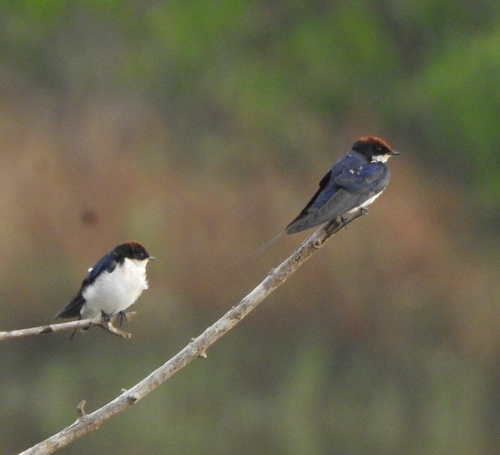
ID tip
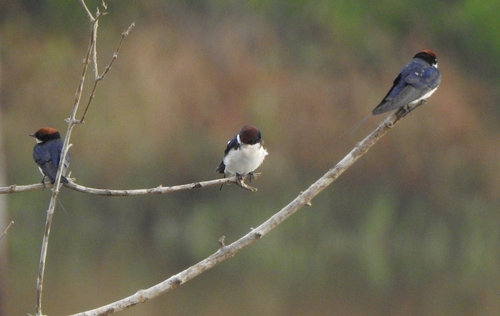
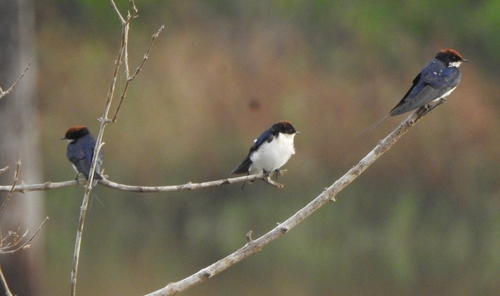
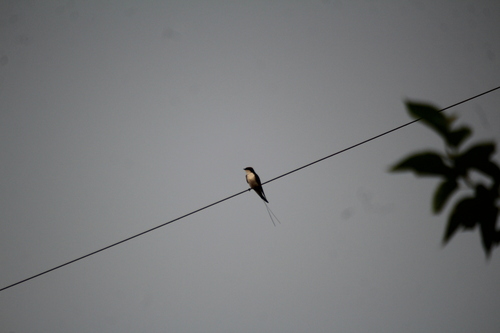
The wire-tailed swallow is a small swallow, measuring 18 cm (7.1 in) in length. It has bright blue upperparts, bright white underparts and a chestnut cap. Immature birds lack tail wires, and have dull brown (rather than chestnut) caps. The species is named for the very long filamentous outermost tail feathers, which trail behind like two wires. The sexes are similar in appearance, but the female has shorter "wires". Juveniles have a brown crown, back and tail. The Asian form, H. s. filifera, is larger and longer-tailed than the abundant African H. s. smithii.
Text from Wikipedia, licensed CC BY-SA 4.0.
When to see the Wire-tailed Swallow
One bar for each month, and every month is filled: this bird is recorded here in all twelve. The wide bar is February, the month with the most records.
Where to see the Wire-tailed Swallow
The map shades 49 countries with regular records, and 4 more in a lighter tone where the bird turns up only as a stray. Everything unshaded has no records. Countries are listed below the map.
Recorded as a rare visitor in Chad, Sri Lanka, Eritrea, Mauritania.
About the Wire-tailed Swallow
The wire-tailed swallow is a small passerine bird in the swallow family. It has two subspecies: H. s. smithii, which occurs throughout Africa, and H. s. filifera, which is found in southern and southeastern Asia. It is mainly resident, but populations in Pakistan and northern India migrate further south in winter. The genus name Hirundo is the Latin word for swallow. The species name smithii commemorates Christen Smith, a Norwegian botanist and geologist.
Text adapted from Wikipedia, licensed CC BY-SA 4.0.
Easily confused with
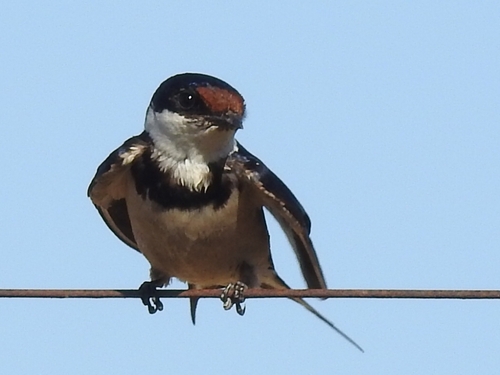 White-throated SwallowHirundo albigularisThe white-throated swallow is 14–17 cm long.
 Pacific SwallowHirundo javanicaThis species is a small swallow at 13 cm (5.1 in) in length.
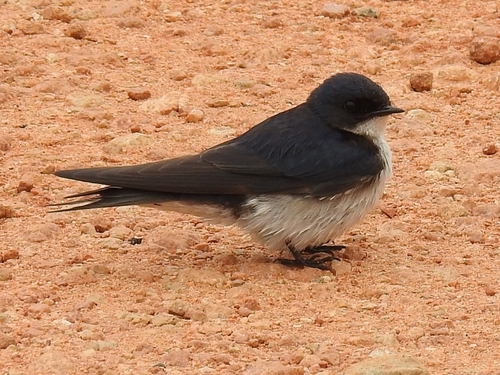 Pearl-breasted SwallowHirundo dimidiataThe pearl-breasted swallow is 13–14 cm long.
Side by side: Barn Swallow vs Wire-tailed Swallow · Welcome Swallow vs Wire-tailed Swallow · Pacific Swallow vs Wire-tailed Swallow · White-throated Swallow vs Wire-tailed Swallow · Pearl-breasted Swallow vs Wire-tailed Swallow
Learn the Wire-tailed Swallow in the BeakBrain App
Photo and call practice. Coming soon to iPhone and Android.
Play today's Daily BirdEvery photo and recording on this page is credited to its author under the licence shown. Spotted a problem with this page, or have a better photo? Contribute.