Learn what every symbol on the card means.Full credits and sources at beakbrain.com/symbols
 ForestCavity nestTiny · 11 g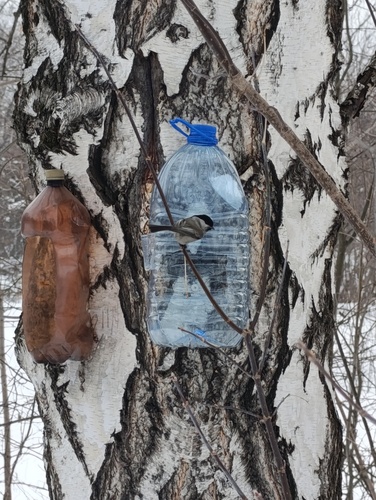

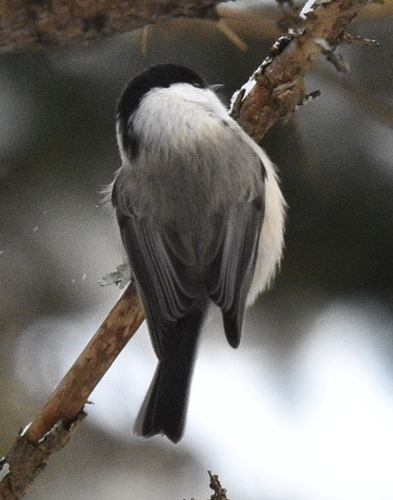
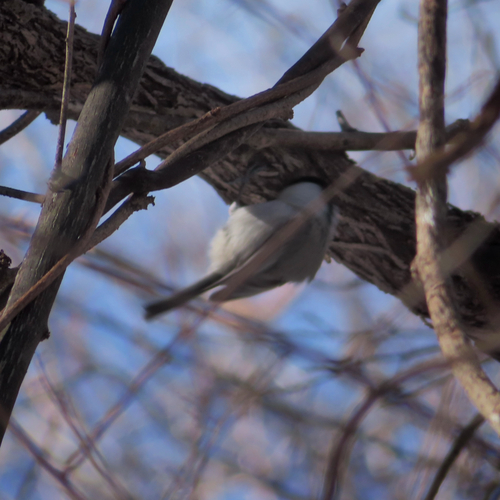
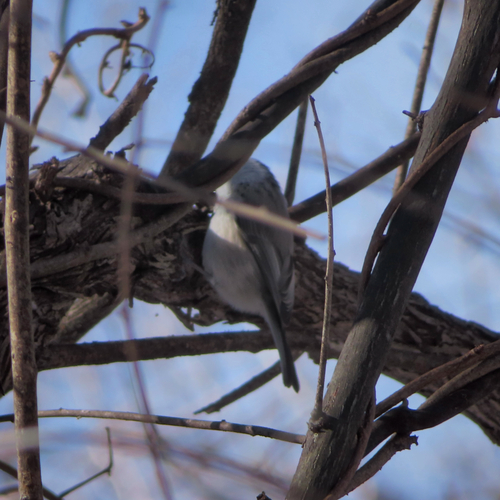
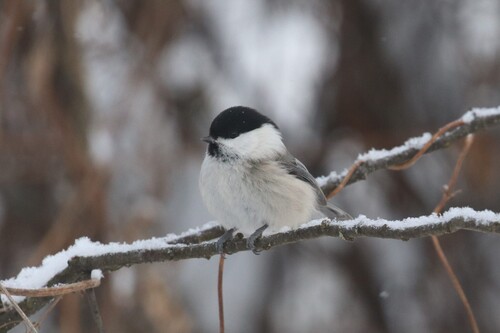

What the Willow Tit sounds like


ID tip
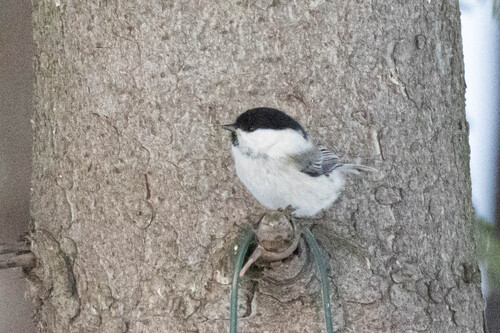
The willow tit is 11.5 cm (4.5 in) in length, has a wingspan of 17–20.5 cm (6.7–8.1 in) and weighs around 11 g (0.39 oz). It has a large head, a thin bill, a long dull black cap that descends to the mantle and a black bib. The sides of the face are white, the back is grey-brown and the underparts are buff. The sexes are similar in appearance.
Text from Wikipedia, licensed CC BY-SA 4.0.
When to see the Willow Tit
One bar for each month, and every month is filled: this bird is recorded here in all twelve. The wide bar is January, the month with the most records.
Where to see the Willow Tit
The map shades 41 countries with regular records, and 1 more in a lighter tone where the bird turns up only as a stray. Everything unshaded has no records. Countries are listed below the map.
Recorded as a rare visitor in North Korea.
About the Willow Tit
The willow tit is a passerine bird in the tit family, Paridae. It is a widespread and common resident breeder throughout temperate and subarctic Europe and across the Palearctic. The plumage is grey-brown and off-white with a black cap and bib. It is more of a conifer specialist than the closely related marsh tit, which explains its breeding much farther north. It is resident, and most birds do not migrate.
Text adapted from Wikipedia, licensed CC BY-SA 4.0.
Easily confused with
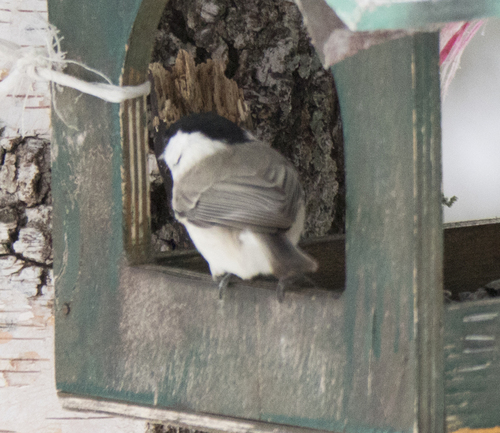 Marsh TitPoecile palustrisThe nominate subspecies has a black cap and nape with a blue sheen visible at close quarters.
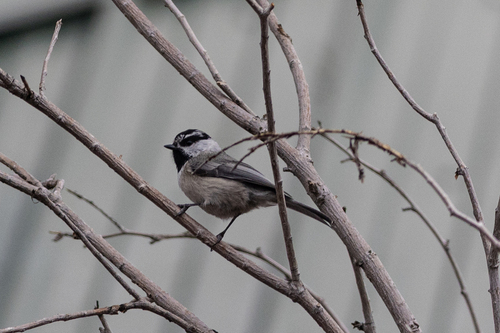 Mountain ChickadeePoecile gambeliAdults of both sexes have a black cap joining a black postocular stripe behind distinctive white eyebrows.
 Boreal ChickadeePoecile hudsonicusAdults are 12.5–14.5 cm (4.9–5.7 in) long with a weight of 7–12.4 g (0.25–0.44 oz).
Side by side: Chestnut-backed Chickadee vs Willow Tit · Mountain Chickadee vs Willow Tit · Marsh Tit vs Willow Tit · Boreal Chickadee vs Willow Tit
Learn the Willow Tit in the BeakBrain App
Photo and call practice. Coming soon to iPhone and Android.
Play today's Daily BirdEvery photo and recording on this page is credited to its author under the licence shown. Spotted a problem with this page, or have a better photo? Contribute.