Learn what every symbol on the card means.Full credits and sources at beakbrain.com/symbols
 ForestCavity nestTiny · 11 g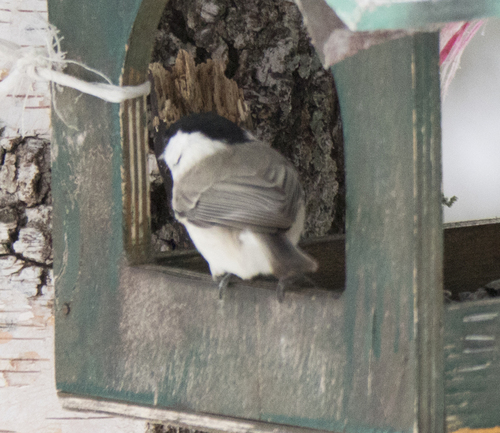



What the Marsh Tit sounds like


ID tip
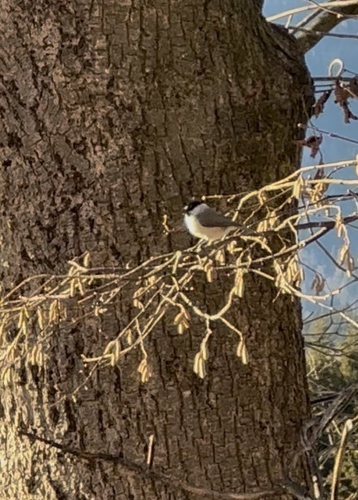
The nominate subspecies has a black cap and nape with a blue sheen visible at close quarters. The black 'bib' below the bill is rather small; the cheeks are white, turning dusky brown on the ear coverts. The upperparts, tail and wings are greyish-brown, with slightly paler fringes to the tertials. The underparts are off-white with a buff or brown tinge strongest on the flanks and undertail coverts. The bill is black and the legs dark grey.
Text from Wikipedia, licensed CC BY-SA 4.0.
When to see the Marsh Tit
One bar for each month. Filled bars are the 11 months with records; pale bars are months with none. The wide bar is January, the month with the most records.
Where to see the Marsh Tit
The map shades 46 countries with regular records. Everything unshaded has no records. Countries are listed below the map.
About the Marsh Tit
The marsh tit is a Eurasian passerine bird in the tit family Paridae and genus Poecile, closely related to the willow tit, Père David's and Songar tits. It is a small bird, around 12 cm (4.7 in) long and weighing 12 g (0.42 oz), with a black crown and nape, pale cheeks, brown back and greyish-brown wings and tail. Between 8 and 11 subspecies are recognised. Its close resemblance to the willow tit can cause identification problems, especially in the United Kingdom where the local subspecies of the two are very similar; they were not recognised as separate species until 1897.
Text adapted from Wikipedia, licensed CC BY-SA 4.0.
Easily confused with
 Willow TitPoecile montanusThe willow tit is 11.5 cm (4.5 in) in length, has a wingspan of 17–20.5 cm (6.7–8.1 in) and weighs around 11 g (0.39 oz).
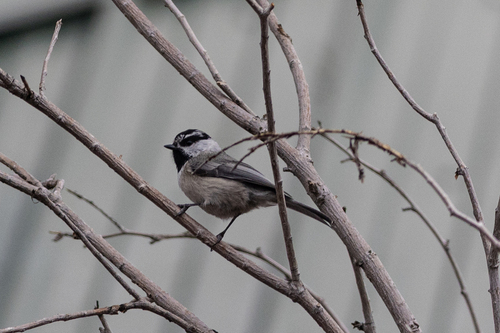 Mountain ChickadeePoecile gambeliAdults of both sexes have a black cap joining a black postocular stripe behind distinctive white eyebrows.
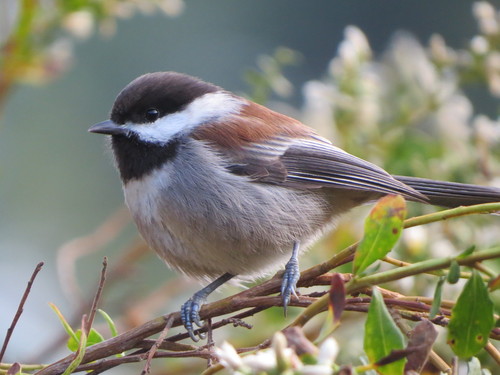 Chestnut-backed ChickadeePoecile rufescensIt is a small chickadee, 11.5–12.5 cm (4.5–4.9 in) long with a weight of 8.5–12.6 g (0.30–0.44 oz).
Side by side: Carolina Chickadee vs Marsh Tit · Chestnut-backed Chickadee vs Marsh Tit · Marsh Tit vs Mountain Chickadee · Marsh Tit vs Willow Tit
Learn the Marsh Tit in the BeakBrain App
Photo and call practice. Coming soon to iPhone and Android.
Play today's Daily BirdEvery photo and recording on this page is credited to its author under the licence shown. Spotted a problem with this page, or have a better photo? Contribute.