Learn what every symbol on the card means.Full credits and sources at beakbrain.com/symbols
 ForestCavity nestTiny · 10 g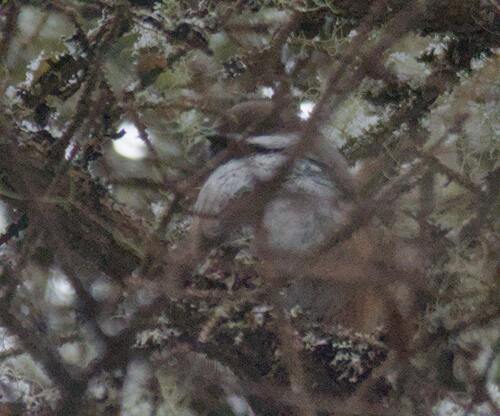


What the Boreal Chickadee sounds like


ID tip
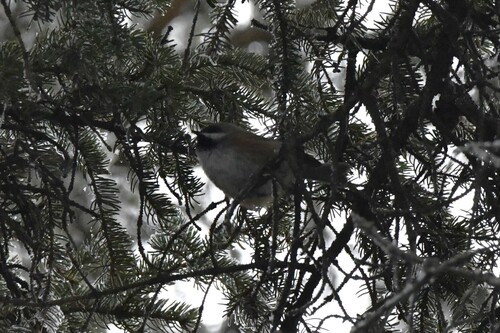
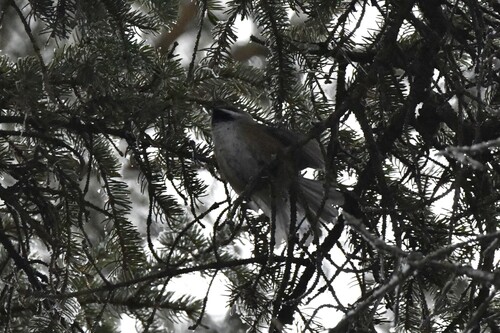
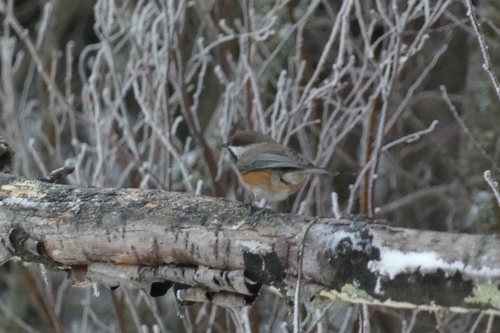
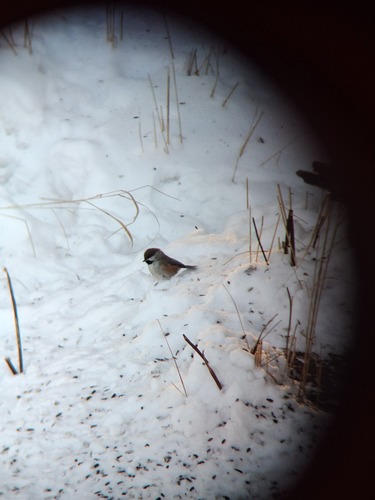
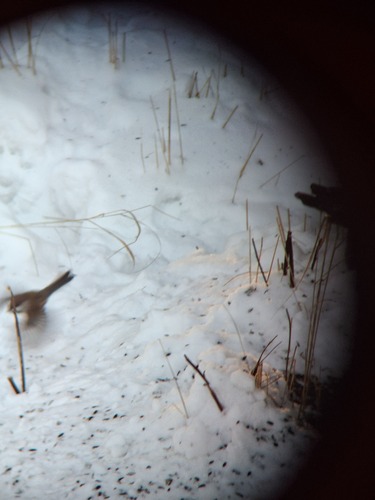
Adults are 12.5–14.5 cm (4.9–5.7 in) long with a weight of 7–12.4 g (0.25–0.44 oz). They have grey-brown upperparts with a brown cap and greyish wings and tail; their face is mainly grey with white on the sides. Their underparts are white with brown on the flanks and a black throat. They have a short dark bill, short wings and a long notched tail. Their flight consists of brief gliding patterns followed by fast and bouncy wing beats as they travel through the air.
Text from Wikipedia, licensed CC BY-SA 4.0.
When to see the Boreal Chickadee
One bar for each month, and every month is filled: this bird is recorded here in all twelve. The wide bar is June, the month with the most records.
Where to see the Boreal Chickadee
The map shades 3 countries with regular records. Everything unshaded has no records. Countries are listed below the map.
About the Boreal Chickadee
The boreal chickadee is a small passerine songbird in the tit family Paridae. It is found in the boreal forests of Alaska, Canada and the northern United States and remains within this range all year. This bird is known for its high pitched trill patterns used in communication with other birds and food storage habits in preparation for winter months.
Text adapted from Wikipedia, licensed CC BY-SA 4.0.
Easily confused with
 Grey-headed ChickadeePoecile cinctusThe grey-headed chickadee or Siberian tit is a passerine bird in the tit family Paridae.
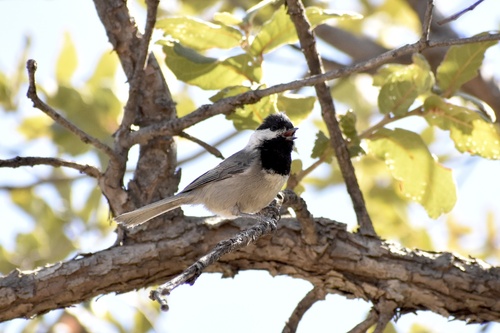 Mexican ChickadeePoecile sclateriThe Mexican chickadee is about 13 cm (5.1 in) long and weighs 9 to 12 g (0.32 to 0.42 oz).
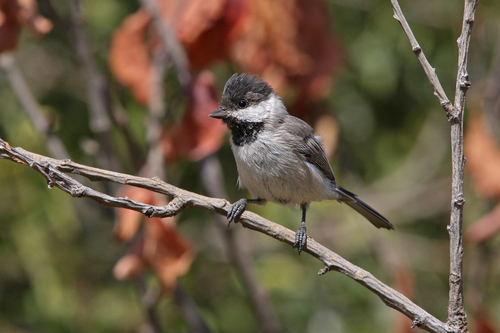 Sombre TitPoecile lugubrisThe sombre tit is slightly smaller than a great tit (Parus major) with similar proportions, although in plumage it most resembles a willow tit (Poecile montanus) but it has a brownish to grey-black cap which extends further into the sides of the head with the off-white cheek patch being restricted to a narrow triangle by the larger bib.
Side by side: Boreal Chickadee vs Willow Tit · Boreal Chickadee vs Mexican Chickadee · Boreal Chickadee vs Sombre Tit
Learn the Boreal Chickadee in the BeakBrain App
Photo and call practice. Coming soon to iPhone and Android.
Play today's Daily BirdEvery photo and recording on this page is credited to its author under the licence shown. Spotted a problem with this page, or have a better photo? Contribute.