Learn what every symbol on the card means.Full credits and sources at beakbrain.com/symbols
 ForestScrapeMedium · 135 g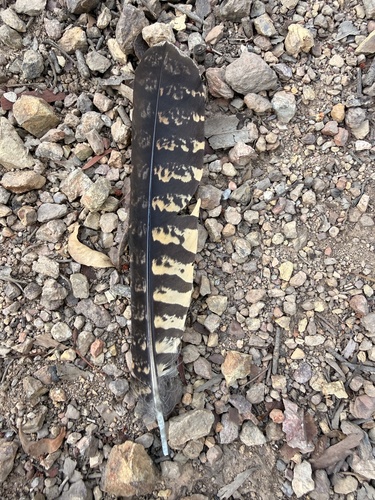
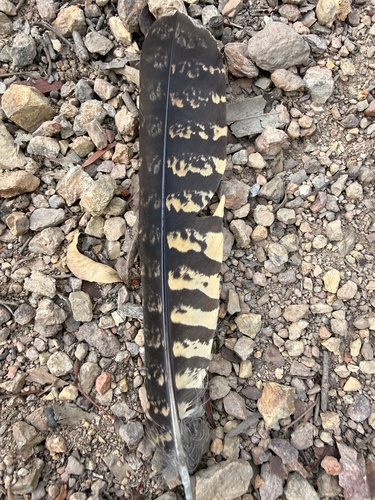
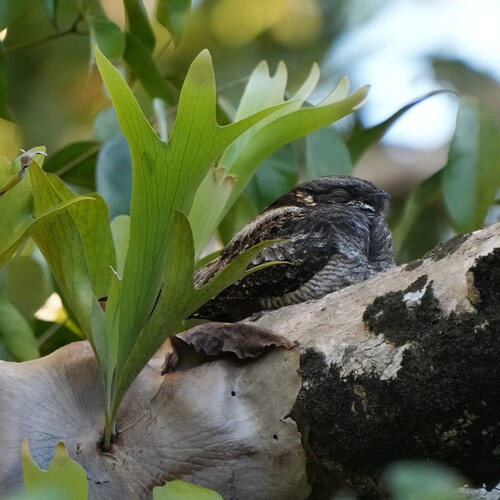
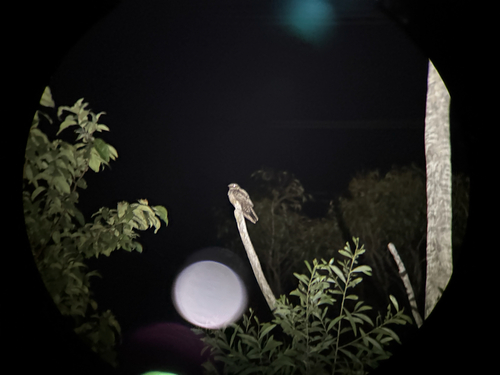
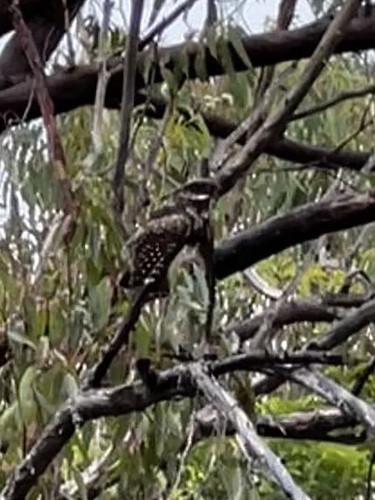
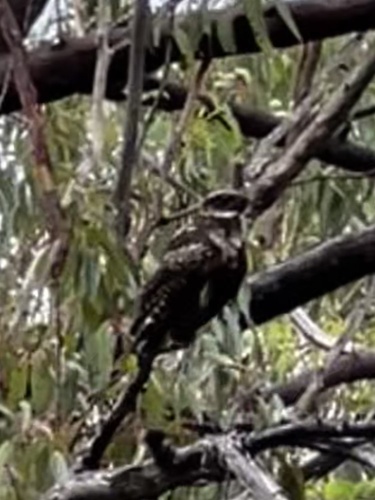
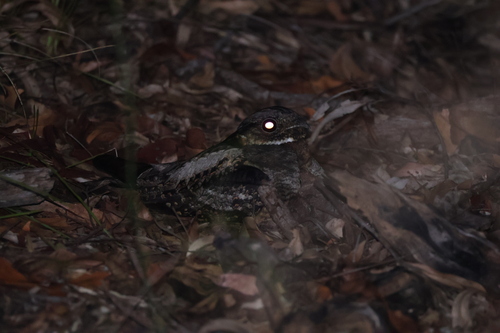
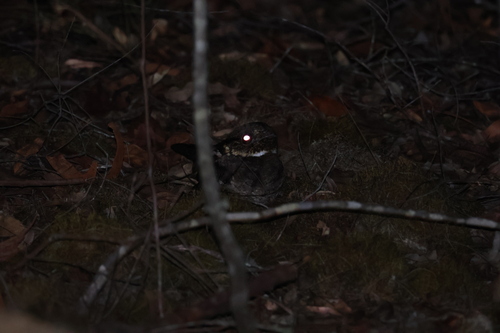
ID tip
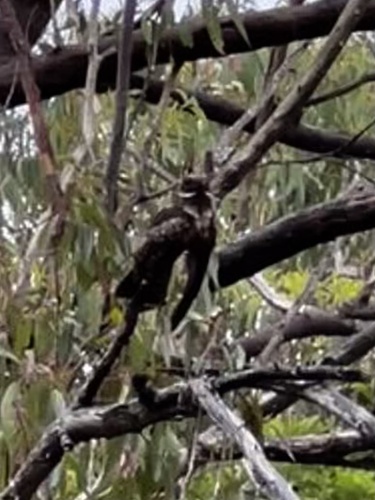
E. mystacalis is the largest Australian nightjar species and measures around 30–37 cm. Males and females are very similar in appearance and display a dark variegated body. The upper body and wings are greyish-brown with broad blackish-brown streaks and spots. The underbody is spotted brown or greyish white and barred rufous. The upper part of the wing is greyish-white but speckled brownish-black as well. Its neck is buff colored with a large white patch on either side of its throat making it appear as if it's wearing a collar. Voice: White-throated nightjars are often heard more than seen. They have a distinct song that help distinguish it from species it was previously conspecific to. Mostly made by males, their song is composed of a series of rapidly ascending bubbling notes. Their song is described as wow-wow-wow-wow-ho-ho ho-ho-o-o-O containing 9-12 notes and lasting for three to six seconds.
Text from Wikipedia, licensed CC BY-SA 4.0.
When to see the White-throated Nightjar
One bar for each month. Filled bars are the 7 months with records; pale bars are months with none. The wide bar is November, the month with the most records.
Where to see the White-throated Nightjar
The map shades 3 countries with regular records. Everything unshaded has no records. Countries are listed below the map.
About the White-throated Nightjar
The white-throated nightjar or white-throated eared-nightjar is a species of nightjar in the family Caprimulgidae. It is endemic to eastern Australia; it is a non-breeding winter visitor in Papua New Guinea. Its natural habitat is subtropical or tropical dry forests.
Text adapted from Wikipedia, licensed CC BY-SA 4.0.
Easily confused with
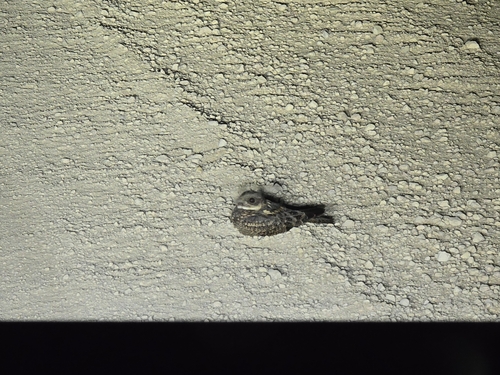 Spotted NightjarEurostopodus argusOne of the larger and more colourful of the nightjars, the intricate, heavily spotted and flecked patterns of the spotted nightjar enable it to blend perfectly where red, grew or brown soils are strewn with rocks, leaves, branches and twigs.
 Satanic NightjarEurostopodus diabolicusThe Satanic nightjar measures about 27 cm (11 in) long.
Papuan NightjarEurostopodus papuensisThe Papuan nightjar is between 28 and 35 cm long, weighting 0.11 kg (female) and 0.12 kg (male) with a wingspan of 55–65 cm.
Satanic NightjarEurostopodus diabolicusThe Satanic nightjar measures about 27 cm (11 in) long.
Papuan NightjarEurostopodus papuensisThe Papuan nightjar is between 28 and 35 cm long, weighting 0.11 kg (female) and 0.12 kg (male) with a wingspan of 55–65 cm.
Side by side: Spotted Nightjar vs White-throated Nightjar
Learn the White-throated Nightjar in the BeakBrain App
Photo and call practice. Coming soon to iPhone and Android.
Play today's Daily BirdEvery photo and recording on this page is credited to its author under the licence shown. Spotted a problem with this page, or have a better photo? Contribute.