Learn what every symbol on the card means.Full credits and sources at beakbrain.com/symbols
 WoodlandScrapeMedium · 93 g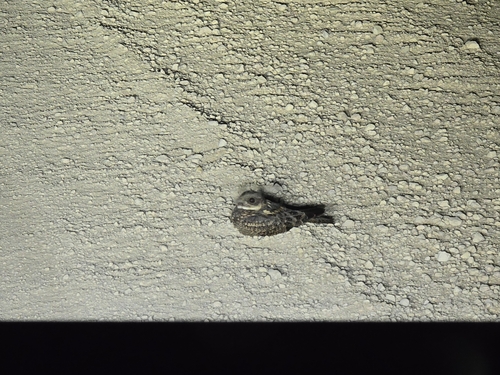
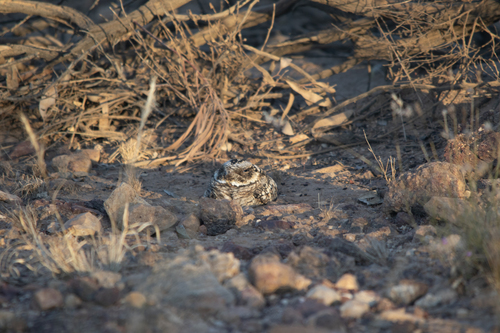
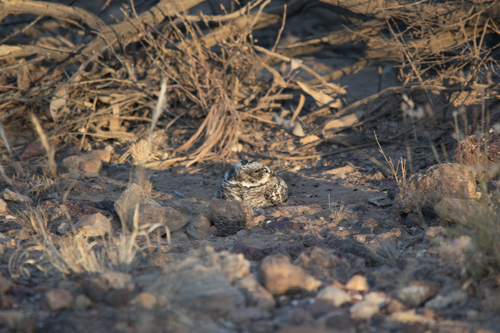
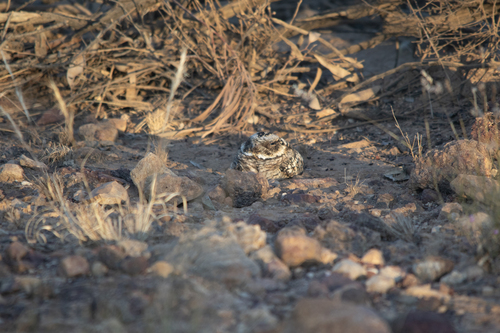
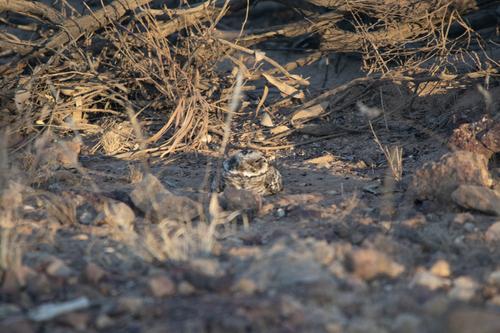
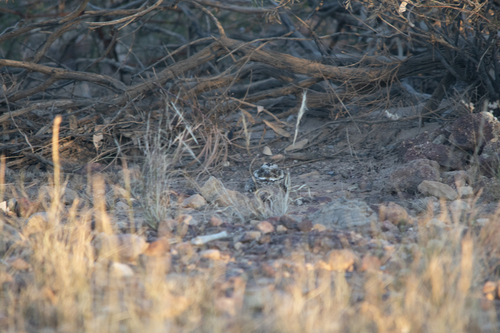
ID tip
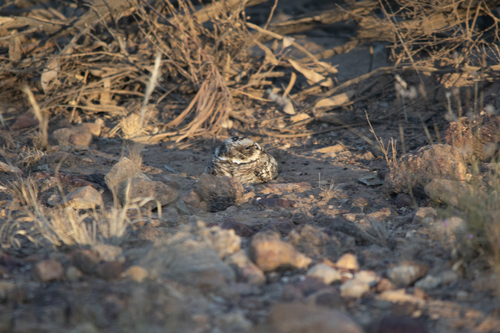
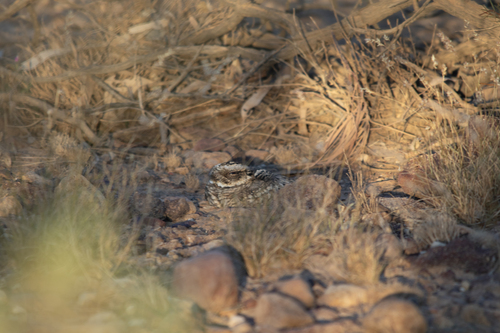
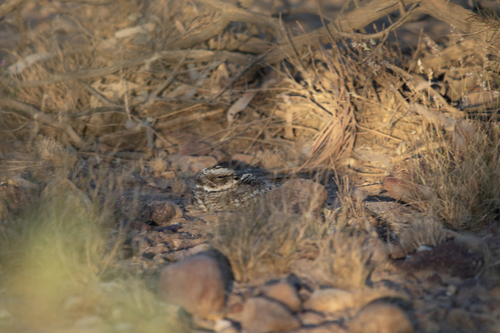
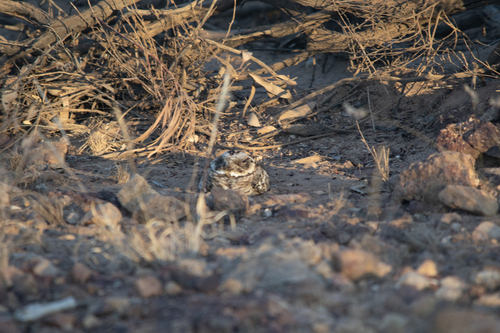
One of the larger and more colourful of the nightjars, the intricate, heavily spotted and flecked patterns of the spotted nightjar enable it to blend perfectly where red, grew or brown soils are strewn with rocks, leaves, branches and twigs. Similar in appearance to two other Australian nightjar species, the large-tailed nightjar (Caprimulgus macrurus) and white-throated nightjar (Eurostopodus mystacalis), an adult spotted nightjar in flight displays large white spots on four outer primary feathers, lacking the white tail markings of the more tropical large-tailed nightjar. Voice: A typical breeding call of the spotted nightjar involves about 9-12 notes, ascending in frequency and pitch, then proceeded by a series of gobbling sounds. When on ground, approaching their nesting area, birds may emit frog-like croaking and low cooing noises.
Text from Wikipedia, licensed CC BY-SA 4.0.
When to see the Spotted Nightjar
One bar for each month, and every month is filled: this bird is recorded here in all twelve. The wide bar is September, the month with the most records.
Where to see the Spotted Nightjar
The map shades 1 country with regular records. Everything unshaded has no records. Countries are listed below the map.
About the Spotted Nightjar
The spotted nightjar or spotted eared-nightjar is a species of nightjar in the family Caprimulgidae. It inhabits much of mainland Australia and has also been found in several Indonesian islands. Its natural habitats are open forests and woodlands, scrub, spinifex and tussock grassland, savannah woodland and mangroves.
Text adapted from Wikipedia, licensed CC BY-SA 4.0.
Easily confused with
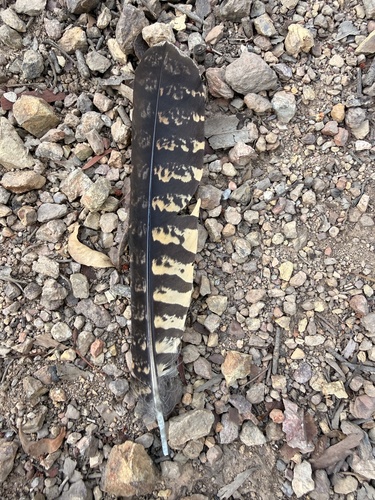 White-throated NightjarEurostopodus mystacalisE. mystacalis is the largest Australian nightjar species and measures around 30–37 cm.
 Satanic NightjarEurostopodus diabolicusThe Satanic nightjar measures about 27 cm (11 in) long.
Papuan NightjarEurostopodus papuensisThe Papuan nightjar is between 28 and 35 cm long, weighting 0.11 kg (female) and 0.12 kg (male) with a wingspan of 55–65 cm.
Satanic NightjarEurostopodus diabolicusThe Satanic nightjar measures about 27 cm (11 in) long.
Papuan NightjarEurostopodus papuensisThe Papuan nightjar is between 28 and 35 cm long, weighting 0.11 kg (female) and 0.12 kg (male) with a wingspan of 55–65 cm.
Side by side: Spotted Nightjar vs White-throated Nightjar
Learn the Spotted Nightjar in the BeakBrain App
Photo and call practice. Coming soon to iPhone and Android.
Play today's Daily BirdEvery photo and recording on this page is credited to its author under the licence shown. Spotted a problem with this page, or have a better photo? Contribute.