Learn what every symbol on the card means.Full credits and sources at beakbrain.com/symbols
 DesertCavity nestSmall · 28 g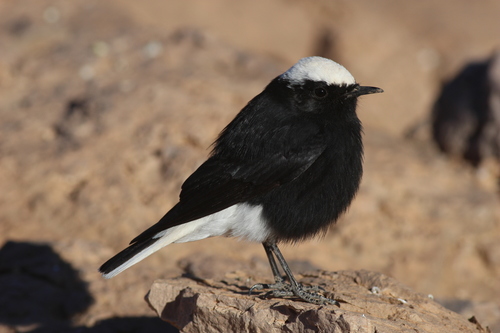


ID tip
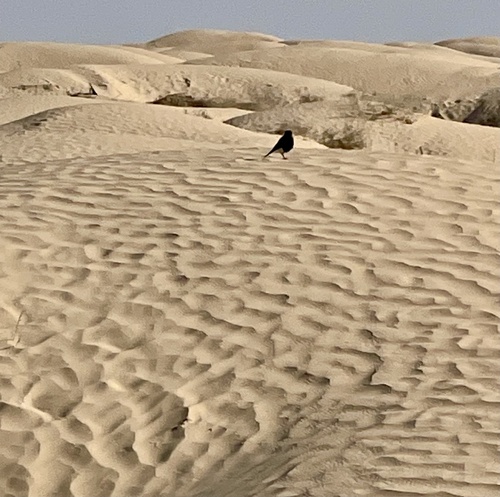
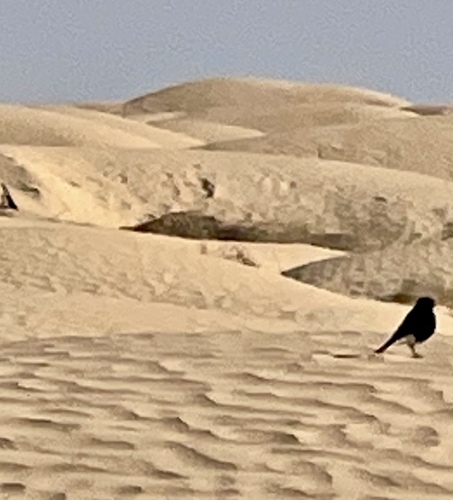
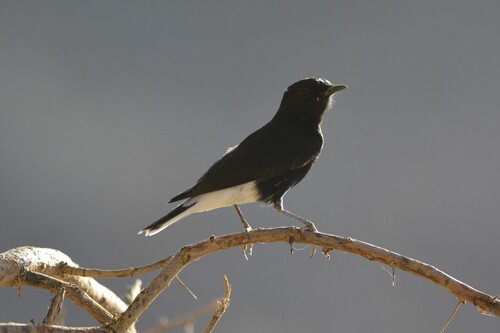
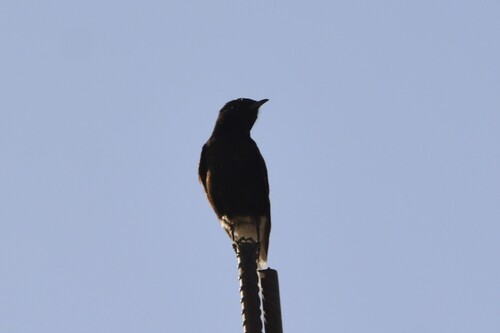
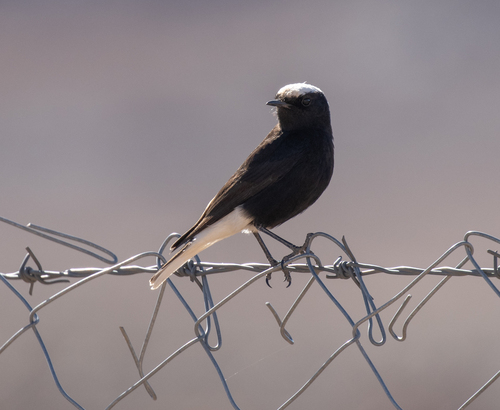
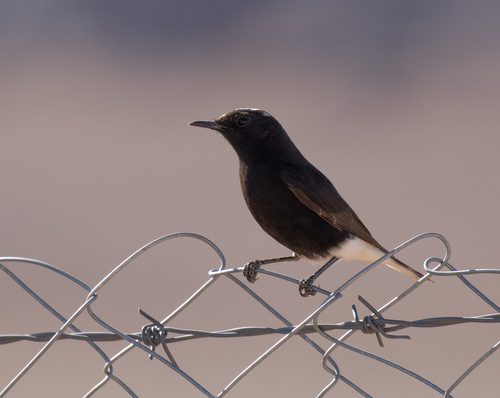
This large 17–18 cm long wheatear breeds in stony deserts from the Sahara and Arabia across to Iraq. It is largely resident but has occurred as a rare vagrant to western Europe as far away as Great Britain. It nests in crevices in rocks or walls laying 3-5 eggs. Although most wheatear species have distinctive male and female plumages, adults of both sexes of this species are black except for a white rump and mainly white tail. Full adults have a white crown, not shown by young birds.
Text from Wikipedia, licensed CC BY-SA 4.0.
When to see the White-crowned Wheatear
One bar for each month. Filled bars are the 9 months with records; pale bars are months with none. The wide bar is March, the month with the most records.
Where to see the White-crowned Wheatear
The map shades 21 countries with regular records, and 8 more in a lighter tone where the bird turns up only as a stray. Everything unshaded has no records. Countries are listed below the map.
Recorded as a rare visitor in Germany, United Kingdom, Türkiye, Denmark, Netherlands, France, Iran, Malta.
About the White-crowned Wheatear
The white-crowned wheatear, or white-crowned black wheatear is a wheatear, a small passerine bird that was formerly classed as a member of the thrush family Turdidae, but is now more generally considered to be an Old World flycatcher, Muscicapidae.
Text adapted from Wikipedia, licensed CC BY-SA 4.0.
Easily confused with
 Variable WheatearOenanthe picataThe variable wheatear is a bird of arid and semi-arid region, and is locally abundant in barren rocky areas, sand dunes with scrub vegetation, cultivation, ravines, outside villages and nomadic encampments.
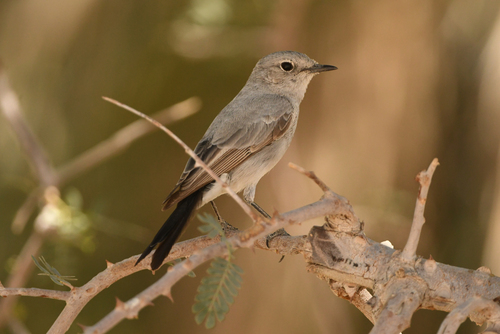 BlackstartOenanthe melanuraThe blackstart is around 14 cm (5.5 in) in length with a wingspan of 23–27 cm (9.1–10.6 in) and a weight of around 15 g (0.53 oz).
 Black WheatearOenanthe leucuraThis large 16–18 cm long wheatear.
Side by side: Pied Wheatear vs White-crowned Wheatear · Black Wheatear vs White-crowned Wheatear · Blackstart vs White-crowned Wheatear · Variable Wheatear vs White-crowned Wheatear
Learn the White-crowned Wheatear in the BeakBrain App
Photo and call practice. Coming soon to iPhone and Android.
Play today's Daily BirdEvery photo and recording on this page is credited to its author under the licence shown. Spotted a problem with this page, or have a better photo? Contribute.