Learn what every symbol on the card means.Full credits and sources at beakbrain.com/symbols
 WoodlandDomed nestTiny · 5 g

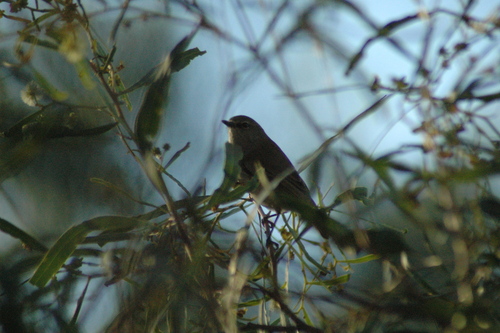
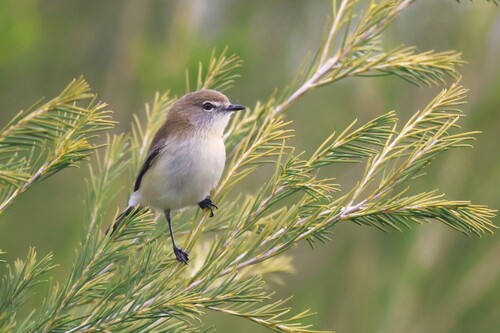
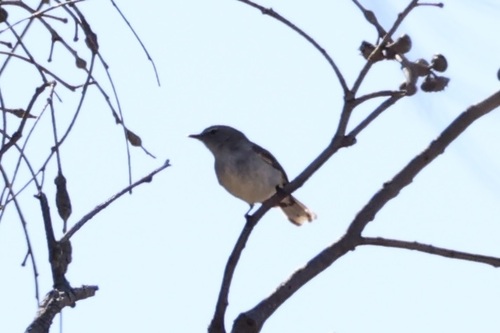
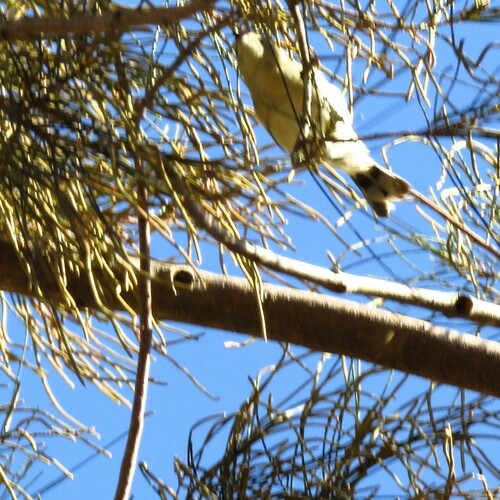
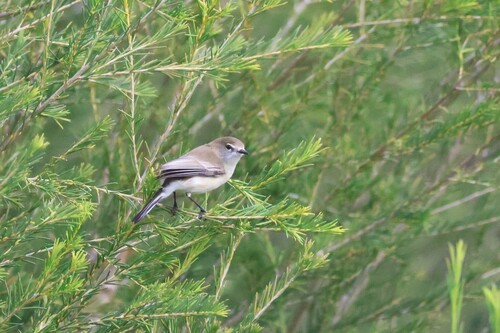
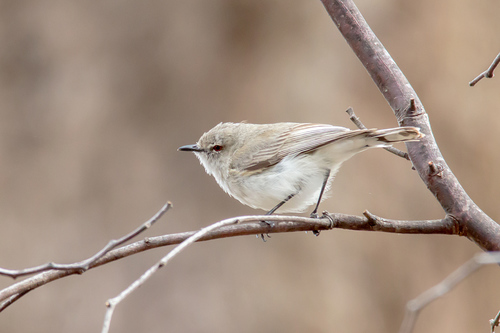
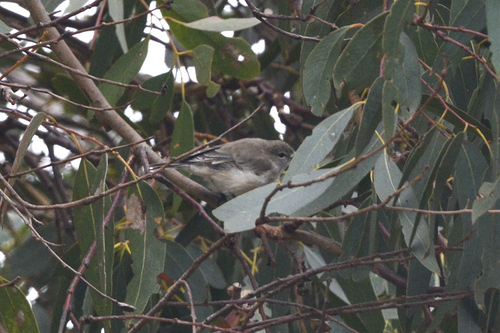
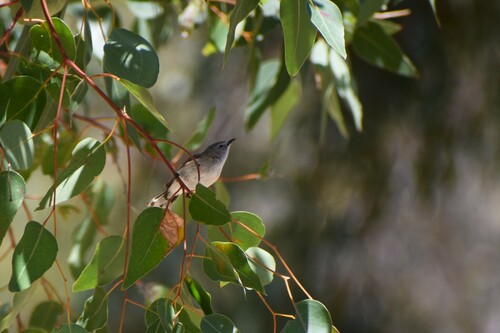
ID tip
The western gerygone has plain, brownish-grey upperparts, with no prominent wing markings. The underparts are whitish, with variable amounts of grey on the throat and breast. The outer tail-feathers are conspicuously marked, with large, white patches at the base, a broad, blackish, subterminal tail band and white tips. It is usually found singly or in pairs, in the mid to upper storey of trees and shrubs and is often located by its characteristic, persistent song. It can be very active when foraging. Voice: The western gerygone's song is an irregular series of clear, high-pitched whistles, with a meandering melody. Each note maintains a consistent pitch and there is a distinct change in pitch between notes. Although the song isn't loud in volume, its persistence and distinctive tonal qualities are often recognizable from long distances.
Text from Wikipedia, licensed CC BY-SA 4.0.
When to see the Western Gerygone
One bar for each month, and every month is filled: this bird is recorded here in all twelve. The wide bar is October, the month with the most records.
Where to see the Western Gerygone
The map shades 1 country with regular records. Everything unshaded has no records. Countries are listed below the map.
About the Western Gerygone
The western gerygone is a small, brownish-grey species of passerine bird, which is found in inland and south-west Australia. It is an arboreal, insectivore of open forest, woodland and dry shrubland. It is not currently threatened with extinction.
Text adapted from Wikipedia, licensed CC BY-SA 4.0.
Easily confused with
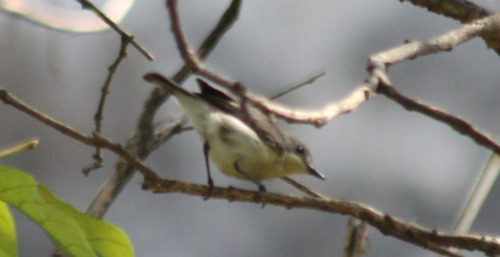 Golden-bellied GerygoneGerygone sulphureaThe golden-bellied gerygone is a species of bird in the family Acanthizidae.
 Mangrove GerygoneGerygone levigasterThe mangrove gerygone is a species of bird in the Australian warbler family Acanthizidae.
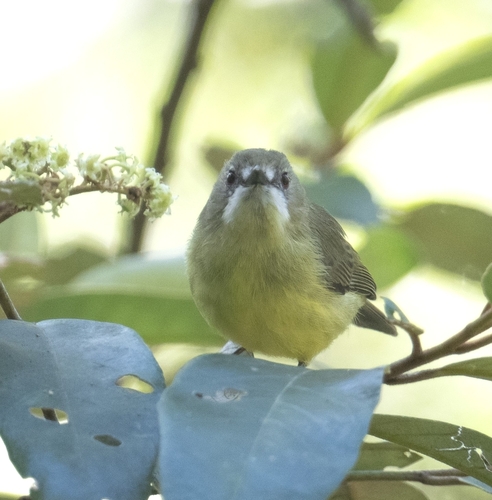 Fairy GerygoneGerygone palpebrosaAdult birds have olive upperparts and yellow underparts, brownish tails, short black bills and legs, and red eyes.
Side by side: Grey Gerygone vs Western Gerygone · Fairy Gerygone vs Western Gerygone
Learn the Western Gerygone in the BeakBrain App
Photo and call practice. Coming soon to iPhone and Android.
Play today's Daily BirdEvery photo and recording on this page is credited to its author under the licence shown. Spotted a problem with this page, or have a better photo? Contribute.