Learn what every symbol on the card means.Full credits and sources at beakbrain.com/symbols
 WetlandScrapeLarge · 796 g


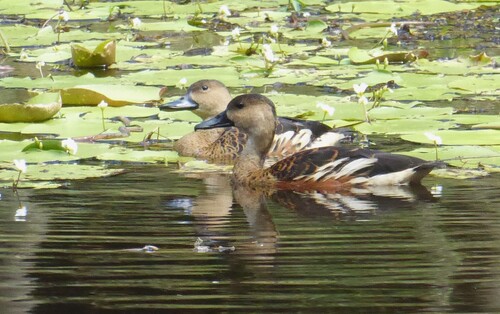


ID tip
Formerly named tree ducks, the wandering whistling duck has its new name because of their loud whistling calls and the whistling noise their wings make during flight. They have long necks and legs and look like a cross between a goose and a duck. They have a strong head and neck with a darker crown and hindneck. The breast contains black spotting and the feathers are mostly dark brown. They range in size from 54–60 cm in height and weigh on average 750 grams. They mainly feed on grasses, waterlilies, water plants and occasionally insects and aquatic vertebrae.
Text from Wikipedia, licensed CC BY-SA 4.0.
When to see the Wandering Whistling Duck
One bar for each month, and every month is filled: this bird is recorded here in all twelve. The wide bar is October, the month with the most records.
Where to see the Wandering Whistling Duck
The map shades 7 countries with regular records. Everything unshaded has no records. Countries are listed below the map.
About the Wandering Whistling Duck
The wandering whistling duck is a species of whistling duck. They inhabit tropical and subtropical Australia, the Philippines, Borneo, Indonesia, Papua New Guinea, Timor-Leste, and the Pacific Islands.
Text adapted from Wikipedia, licensed CC BY-SA 4.0.
Easily confused with
 Plumed Whistling DuckDendrocygna eytoniMeasuring 42–60 cm (16.5–23.5 in) and weighing around one kilogram (2.2 lb), it is a long-necked duck with brown upperparts, paler underparts and a white rump.
 West Indian Whistling DuckDendrocygna arboreaThe West Indian whistling duck is the largest and darkest of the whistling ducks with a length of 48 to 58 cm (19 to 23 in).
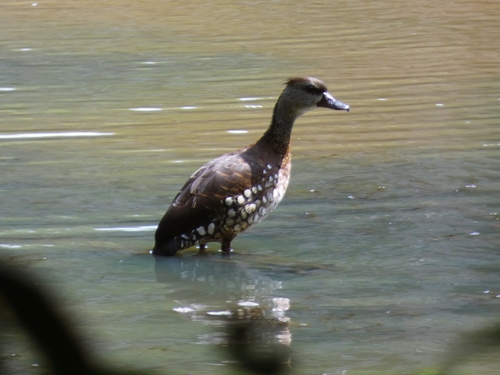 Spotted Whistling DuckDendrocygna guttataThe Spotted whistling duck is one of the smaller species in the genus Dendrocygna.
Side by side: Fulvous Whistling Duck vs Wandering Whistling Duck · Plumed Whistling Duck vs Wandering Whistling Duck · Wandering Whistling Duck vs West Indian Whistling Duck
Learn the Wandering Whistling Duck in the BeakBrain App
Photo and call practice. Coming soon to iPhone and Android.
Play today's Daily BirdEvery photo and recording on this page is credited to its author under the licence shown. Spotted a problem with this page, or have a better photo? Contribute.