Learn what every symbol on the card means.Full credits and sources at beakbrain.com/symbols
 GrasslandCup nestSmall · 39 g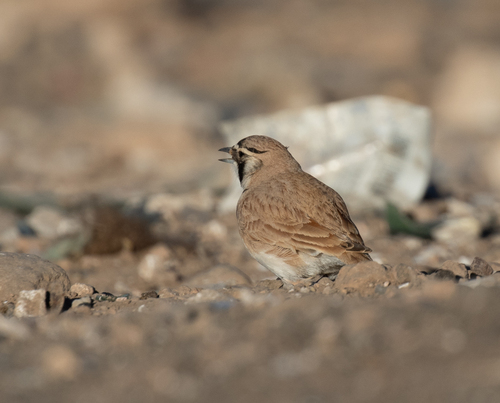
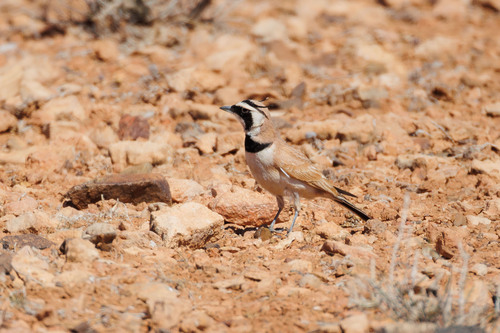
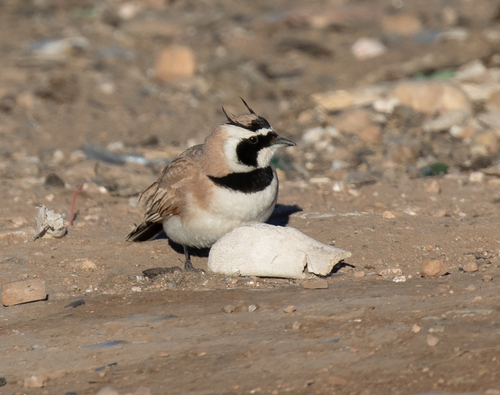
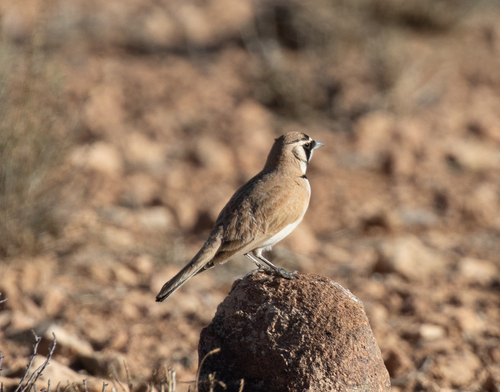
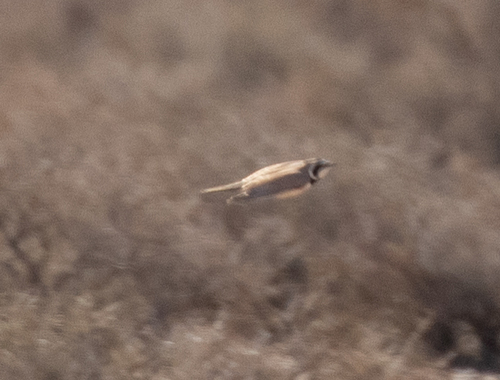
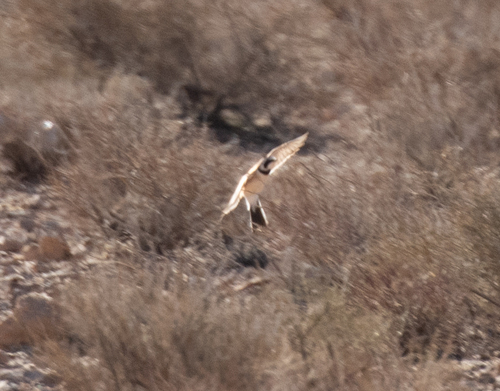
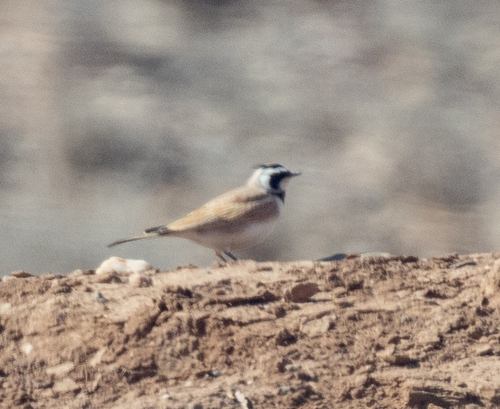
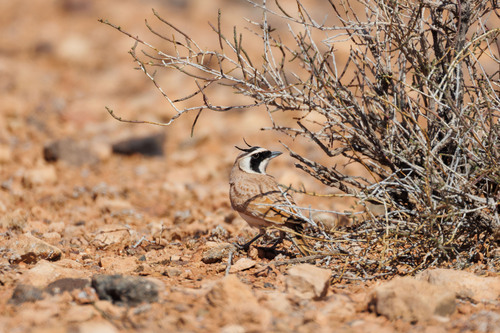
ID tip
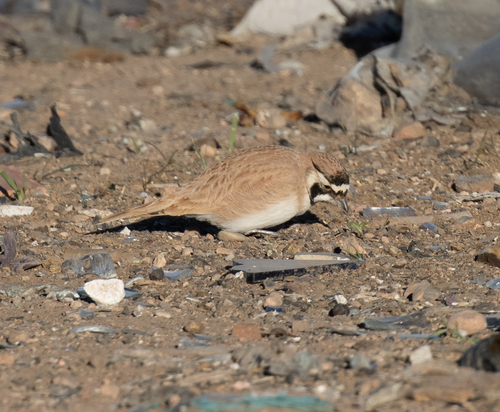
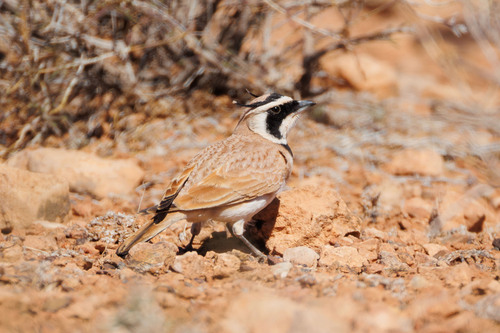
Unlike most other larks, Temminck's lark is a distinctive looking species on the ground, similar to the other, larger, member of its genus, the horned lark. The 14 to 15 cm (5.5 to 5.9 in) adult is mainly reddish brown-grey above and pale below, and it has a striking black and white face pattern and a distinctive black patch on its breast. The summer male has black "horns", which give this species its alternative name. The juvenile of this species is reddish above and pale below, quite unlike the juvenile horned lark.
Text from Wikipedia, licensed CC BY-SA 4.0.
When to see the Temminck's Lark
One bar for each month. Filled bars are the 8 months with records; pale bars are months with none. The wide bar is March, the month with the most records.
Where to see the Temminck's Lark
The map shades 13 countries with regular records, and 2 more in a lighter tone where the bird turns up only as a stray. Everything unshaded has no records. Countries are listed below the map.
About the Temminck's Lark
Temminck's lark or Temminck's horned lark is a bird species of the family Alaudidae. It breeds across much of north Africa, through northern Saudi Arabia to western Iraq. It is mainly resident, but some populations of this passerine bird are partially migratory, moving further south in winter. This bird's common name commemorates the Dutch naturalist Coenraad Jacob Temminck. The population is declining in Israel and may also be declining elsewhere, probably as a result of habitat loss. Nevertheless, this is a common bird in many parts of its wide range and the International Union for Conservation of Nature has rated its conservation status as being of "least concern".
Text adapted from Wikipedia, licensed CC BY-SA 4.0.
Easily confused with
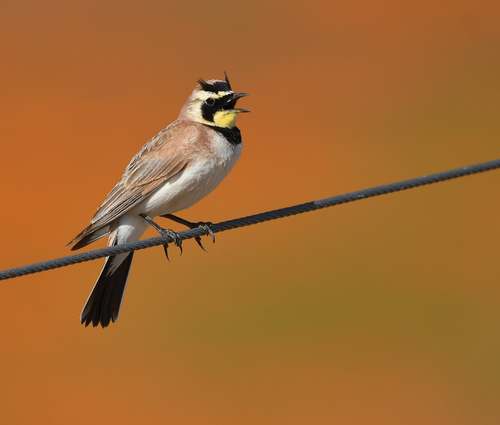
Side by side: Horned Lark vs Temminck's Lark
Learn the Temminck's Lark in the BeakBrain App
Photo and call practice. Coming soon to iPhone and Android.
Play today's Daily BirdEvery photo and recording on this page is credited to its author under the licence shown. Spotted a problem with this page, or have a better photo? Contribute.