Learn what every symbol on the card means.Full credits and sources at beakbrain.com/symbols
 ForestDomed nestLarge · 973 g


What the Superb Lyrebird sounds like


ID tip
The superb lyrebird is a large, pheasant-sized terrestrial passerine, ranging in length from 860 mm (34 in) for the female to 1 m (39 in) for the male. Females weigh around 0.9 kg (2.0 lb), and males weigh around 1.1 kg (2.4 lb). The plumage colour is mainly dark brown on the upper body, with greyish-brown underparts and red-tinged flight feathers, its feathers are brighter tail than that of Albert's lyrebirds. The wings are short and round, and are only capable of weak flight, being mainly used for balance or for gliding from trees to the ground.
Text from Wikipedia, licensed CC BY-SA 4.0.
When to see the Superb Lyrebird
One bar for each month, and every month is filled: this bird is recorded here in all twelve. The wide bar is March, the month with the most records.
Where to see the Superb Lyrebird
The map shades 1 country with regular records. Everything unshaded has no records. Countries are listed below the map.
About the Superb Lyrebird
The superb lyrebird is an Australian passerine songbird, one of two species from the family Menuridae, with the other being the much rarer Albert's lyrebird. One of the world's largest songbirds, the superb lyrebird is renowned for its elaborate tail and courtship displays, and for its excellent mimicry. The species is endemic to Australia and is found in forest in the southeast of the country. According to David Attenborough, the superb lyrebird displays one of the most sophisticated voice skills within the animal kingdom—"the most elaborate, the most complex, and the most beautiful".
Text adapted from Wikipedia, licensed CC BY-SA 4.0.
Easily confused with
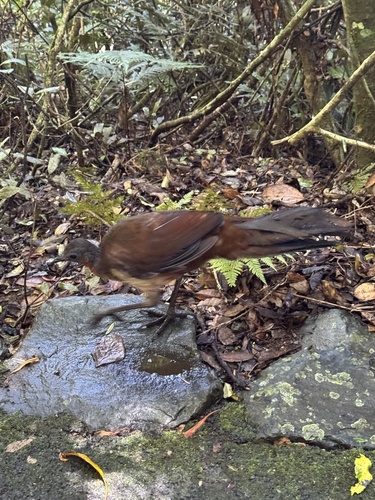
Side by side: Albert's Lyrebird vs Superb Lyrebird
Learn the Superb Lyrebird in the BeakBrain App
Photo and call practice. Coming soon to iPhone and Android.
Play today's Daily BirdEvery photo and recording on this page is credited to its author under the licence shown. Spotted a problem with this page, or have a better photo? Contribute.